


 tawandamusarurwa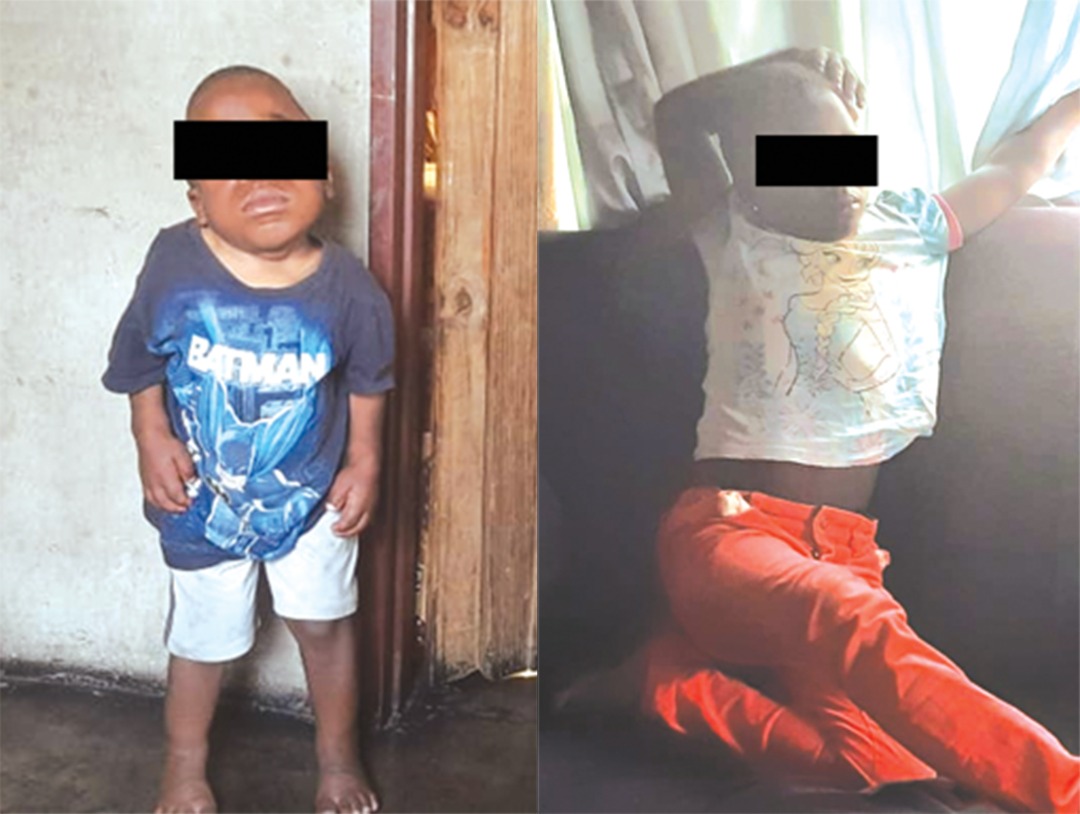
Debra Matabvu
For some time, Tafadzwa Mutumbi of Glen View suburb in Harare struggles to climb onto the living room sofa to take a seat.
He finally manages after two unsuccessful attempts.
Although he is 13-years-old, Tafadzwa is only 50 centimetres (cm) in height.
His diminutive stature is a result of a rare genetic condition called mucopolysaccharidoses, which affects one in 25 000 children globally.
The teenager, who also suffers from a myriad of illnesses such as arthritis and poor eyesight, leads a difficult life.
His mother, Sinikiwe Aaron (38), says the condition has robbed her son of a normal life. “We first noticed the condition when he was a year old after he was diagnosed with umbilical hernia,” she told The Sunday Mail Online recently.
“He was operated on twice between the ages of one and three years.
“Still, he did not get better.
“No one could correctly diagnose what he was suffering from, and we were referred from one doctor to the other; from one hospital to the next.
“When he was three-years-old, he stopped growing. But his head continued to grow in an unusual manner and his joints became stiff.”
Four years ago, Tafadzwa was finally diagnosed with mucopolysaccharidoses, a condition caused by the absence of or malfunctioning enzymes needed by the body to break down sugars and carbohydrates in cells.
Without these enzymes, large amounts of starch and sugars accumulate in the cells, resulting in skeletal abnormalities, stunted growth and stiff joints.
Besides the physical pain, Tafadzwa suffers emotional turmoil due to this rare medical condition.
There is no infrastructure for people of his stature in public places, especially schools.
As a result, he has difficulties accessing rest rooms, as well as using classroom furniture. He also suffers stigma in his community since most people do not understand his condition.
“There are days he does not want to go to school. At times he goes to school only twice a week,” Sinikiwe added.
“The chairs and desks were not designed with people like Tafadzwa in mind.
“Because of his skeletal deformities, he cannot sit for a long time because he suffers a lot of discomfort.
“In addition, other children bully him because of his condition, and this has affected him immensely.”
While local doctors have proposed that he undergoes corrective surgery to place enzymes inside his body in the United Kingdom, his family does not have financial resources to fund the procedure.
Underreported
Tafadzwa is not the only child suffering from rare and underreported diseases.
About 33km from Glen View, five-year-old Natasha Zinyuke from Mabvuku suffers from Congenital Adrenal Hyperplasia (CAH).
CAH is caused by a deficiency of enzymes needed to make specific hormones that gauge the body’s response to illness or injury and regulate salt and water levels.
This condition causes low circulating blood volume, abnormally low blood pressure and early puberty.
The disease affects one in 15 000 children globally.
Although Natasha has normal internal female reproductive organs, she was born with both male and female external genitalia.
In an interview, Natasha’s mother, Anna Zinyuke, said the family cannot afford to fund corrective surgery for their child.
“I understand she will have to take medication for the rest of her life for the low blood pressure and hormones regulation, but for now I would want her to have the corrective surgery,” she said.
“Having both male and female genitalia is confusing her, and I do not know how to explain it to her.
“I can tell that although she is young, the issue worries and confuses her, especially when other young children tease her about her condition.”
Ms Zinyuke also says she can barely afford CAH medication, which costs US$30 a month.
A rare disease is a health condition affecting a small number of people compared to other diseases that commonly affect a community.
According to the World Health Organisation (WHO), there are about 5 000 and 8 000 common diseases in the world affecting an estimated 400 million people.
Zimbabwe has no registry of people suffering from rare conditions; as a result, the actual number of people affected by rare diseases is unknown.
Founder of Child and Youth Care Zimbabwe, Ms Trudy Nyakabangwe, said the absence of data and the minimal number of people living with the conditions has left many suffering in silence.
Child and Youth Care Zimbabwe is an organisation that advocates for needs of people living with rare conditions, and also offers physiological support.
“Most organisations and Governments go for numbers. So, who is going to worry about two people with a rare medical condition?” Ms Nyakabangwe questioned.
“It seems as if people with rare conditions are excluded and not accommodated in national health budgets.
“In addition, when pharmaceuticals are producing for a few people, it is costly for them, as a result, the end user is also going to get the product at a very expensive price.”
Ms Nyakabangwe also bemoaned lack of knowledge of some conditions by medical personnel, as well as members of the community.
Most African countries, she said, have not invested in researching treatment and screening of rare conditions.
“When you are born with a rare condition, not all health professionals are going to know what you have.
“Parents move from one hospital to another and at times it takes five to six years for a person with a rare disease to get a correct diagnosis,” she added.
“This lack of knowledge is also passed down to communities, which then stigmatise the patients and their families.
“In my line of work, I have also realised that people with rare conditions suffer from mental health issues, as their conditions degenerate as they get older.”
She called on Government to fund rare diseases treatment and research through policy frameworks and national budgets.
“The right to health is enshrined in the Constitution and international treaties, which Zimbabwe is signatory to.
“Thus, we call upon the Government to include funds for rare diseases in budgets and national health policy frameworks.”
Sally Mugabe Central Hospital CEO Dr Christopher Pasi, who is also a specialist in Neglected Tropical Diseases, said there is need for regional cooperation when it comes to treating rare diseases.
“Most countries in Africa have inadequate budgets to treat the common diseases, so it becomes very difficult to have budgets for rare diseases, which may be affecting not more than 10 people at a time,” he said.
“Therefore, what we need is a registry of the number of people with rare diseases in the country.
“After that, we put them into groups, and then we cooperate with partners and other countries in the region on their additional diagnostics, treatment and medication.”
Dr Pasi also bemoaned the lack of enough knowledge and expertise on rare diseasesin the health sector.
*This project was produced with support from the National Press Foundation


 Bongani Ndlovu
 Online Reporter