dyton mupawaenda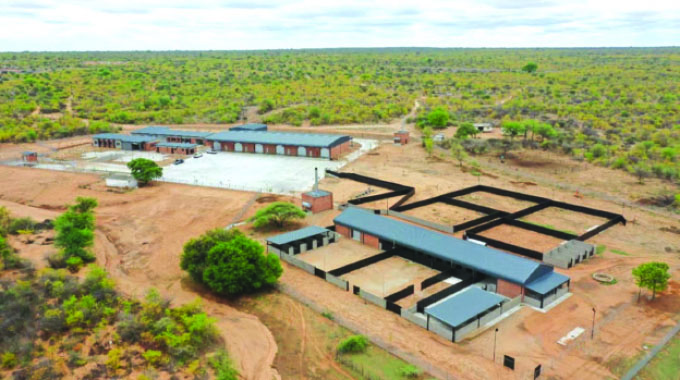
Thupeyo Muleya-Beitbridge Bureau
Local farmers have described the construction of a new plant and animal quarantine facility in Beitbridge as a game-changer on how the country handles imports or exports of agriculture-related products.
The facility is also viewed by many as a boost to the Government’s capacity to manage the spread of imported diseases.
Government, in partnership with the Zimborders Consortium, built the facility as part of the US$300 million Beitbridge Border Post modernisation programme.
The animal and plant quarantine centre is located 5km north of the Beitbridge Border Post, and it is one of the key projects under the border modernisation programme that was completed in June this year.
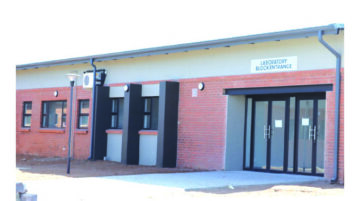
Within the facility, there are various laboratories with a special focus on animal health, general hazards, and farming-related equipment that will be examined for conformity with import and export regulations.
Some of the laboratories will be managed by the Environmental Management Agency (EMA), Veterinary Services, Agriculture Plant, and the National Biotech Laboratory.
These have helped decongest the border, now that such departments are based at the facility full time, to attend to issues as and when they arise.
Beitbridge’s health and plant inspector-in-charge, Mr Levy Gama, recently said the new facility will improve efficiency considering that all laboratory analyses would be done on the spot. Previously, the samples would be sent to other urban areas, especially Harare, which was time-consuming.
“This is a welcome development which will enhance the ease of doing business,” said Mr Gama.
The facility has laboratories and incinerators for them to do the laboratory analysis and destroy rejected products.
The new Animal Plant and Quarantine centre in Beitbridge that was constructed by the Government to decongest the border and to boost exports/imports of quality agriculture related products.
In addition, the institution is good for citrus and horticulture farmers since they are now able to do all the necessary checks for exports and imported raw materials closer to them.
A horticulture and livestock farmer, Mr Suta Sibanda from Khololombe in Beitbridge East’s Ward 3 said: “I think on the animal side, the quarantine centre is useful in combating the spreading of zoonosis diseases like anthrax that can be transmitted between animals and people.
“Also, diseases like foot and mouth can be easily dealt with once biological tests are done and concluded at the quarantine centre.”
Mr Sibanda added that there are some harmful plant species too, which can destroy vegetation, leading to desertification, once they are allowed to thrive.
“So the quarantine centre is of importance in combating those plant species that can destroy the ecosystem,” he said.
Businessman Mr Oscar Chiromo, who operates an abattoir in Beitbridge’s Ward 15 at Lutumba Growth Point, said the completion of the animal and plant quarantine project would go a long way in driving up livestock production in Matabeleland South, which is largely a ranching area. Most farmers are now able to import disease-free breeding stock, he said, adding that the facility would help authorities and the community to detect and control diseases.
“Diseases will quickly be identified without sending samples to Harare. In addition, meat products coming from South Africa will be efficiently checked for compliance, especially poultry,” he said.
Miss Patience Moyo of Ward 12, in the Siyoka area of Beitbridge, said the construction of the facility was long overdue considering that agriculture is one of the major revenue earners through imports and exports.
She said more women should use the centre as a research point when starting agriculture-related projects, including those that want to import animal breeds or plants.
The animal and plant facility will help cut costs for many transporters who convey animal and agriculture-related products, most of whom would previously spend more time at the border awaiting lab results on their products requiring imports or export permits and inspection, said Miss Moyo.
A female farmer from the Tshibidzanani area, Ward 6, Ms Keabetsoe Malutha, said the quarantine centre will assist especially on exploring all the diseases that can affect livestock and spread easily.
“It is also going to help those who are willing to import livestock from outside Zimbabwe to have proper clearance and that they are taking the right animal or plant to the community, which is harmless.
“Locals are going to be equipped with knowledge and skills on how to purchase or breed animals that are of benefit to the community,” said Ms Malutha.
In terms of plants, she said, there are some plants which favour certain climatic conditions, especially heat resistant plants.
She said the Beitbridge community now has access to information on which plants are relevant to the area, and how to care for such plants.
“Such a set up can help save people’s lives and resources since people will consult before they buy and bring the user-friendly product or plant or animal that is beneficial to the community,” she added.
“Our appeal as community members is that the destruction of unwanted or prohibited exports or imports should be done in a transparent manner, or even in their presents, so that they are left satisfied.”
A customs clearing agent, Mr Itayi Misihayirabwi, said the availability of an animal and plant quarantine one-stop-shop has brought relief to them.
He said the move has seen freight forwarders and authorities resolving most queries that have been arising between importers or exporters and authorities on standing rules and regulations.
Mr Misihayirabwi said in some instances, animals and perishable commodities would previously spend a lot of time at the border pending various laboratory checks done elsewhere.
“In this case, every query will be solved on the dot and this will then improve the turnaround time on cargo clearance. This may be locally or regionally destined cargo,” he said.
Acting provincial director for Agricultural Development and Advisory Services, Mr Mkhunjulelwa Ndlovu, said livestock production was a lucrative macro-economic activity, hence disease surveillance was fundamental to sustain the activity.
“The quarantine centre will positively control disruption of the livestock market. Additionally, stock theft and illegal movement will be minimised. “Notifiable economic diseases will be easily managed by the Department of Veterinary Services (DVS),” said Mr Ndlovu.



 Online Reporter