


 Chronicle Editor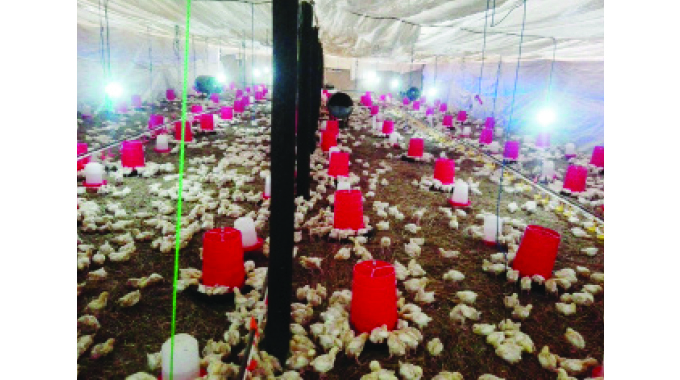
Johnsias Mutonhori, Midlands Correspondent
AN international non-governmental organisation, TechnoServe has come up with programmes that are exciting prospective farmers in the mining town of Shurugwi.
Most people in Shurugwi had abandoned farming for mining — a sector that seemed to have quick returns. Apart from that, the continuous below-average rainfall in Region 4, further suppressed the little hope for farming that has been left in a handful of agriculture enthusiasts.
However, innovation and new farming technologies brought new farming frameworks, where once perceived unproductive areas have been made fecund.
Borrowing from the Government’s smart city concept, TechnoServe introduced the village city concept, an approach that leverages on technology and innovation to improve the quality of life and sustainable development in rural areas.
This includes smart farming techniques, such as precision agriculture, and data analytics, which can help optimise crop productivity and resource management, sustainability and market access.
In Shurugwi South, TechnoServe established an integrated farming that combines poultry, horticulture, and cattle production, a project that involves co-ordinating and managing these three components synergistically to create a well-rounded and sustainable farming operation.
Speaking during the tour of a newly completed biggest pack shade in Shurugwi, TechnoServe Southern Africa region director, Mrs Pamela Chitenhe said: “Our strategic plan is to transform lives and livelihoods to dramatically reduce poverty through sustainable agriculture in communal areas while having a positive impact on the environment.
“We are fostering sustainable farming, in that sense, the poultry project that we are facilitating goes along with cattle rearing as well as runner grass cultivation.
“The runner and star grass we use in chicken fowl run is given to cattle for feeding and the manure from cattle kraals are sent to horticulture gardens.
“As for rural farming we don’t want to depend on commercial nutrients because they are expensive for rural habitats, and that might negatively affect productivity and efficiency,” she said.
The poultry project consists of three groups where 10 women in each group are running a project of about 5 000 chickens at a time which amounts to 1 500 chickens per project from all three groups.
The project can run for a cycle of seven projects per annum which translates to the production of 35 000 chickens per group and 105 0000 collectively.
TechnoServe facilitated the building of a foul run for chickens, drilled solar water boreholes, and a biogas system and gave technical support in partnership with Agritex, with the funds sourced from Unki Mine.
The market has been established in Europe, North America, and some countries in the region for chicken and horticulture products.
The beneficiaries, mainly rural women, organised themselves to mould bricks for the construction of the fowl run and ablution facilities.
This month, TecnoServe with financial aid from Unki Mine, completed a US$350 000 state-of-the-art pack shed with a carrying capacity of 50 tonnes, which is the biggest in the Midlands Province.
The pack shed is set to benefit more than 600 farmers, mainly those who are majoring in horticultural products.
The completion of pack shade comes simultaneously with the acquisition of international Good Agricultural Practices (GAP) certification by communal farmers under TechnoServe, a move that would allow farmers to stock their produce in large quantities, awaiting exportation to the global market.
Speaking during the presentation of GAP certification to farmers recently, Shurugwi Deputy District Co-ordinator Mr Tavonga Mufacharisi said the project complements Government’s effort to commercialise communal farming as well as ending poverty and malnutrition in rural areas.
“I would like to appreciate this project spearheaded by TechnoServe and its partners, for complementing the Government’s effort to transform the livelihoods of rural communities.
“Shurugwi is known for mining, and at times the district trends for wrong reasons such as violence and drug abuse, but with these initiatives I can see a new phenomenon.
“This project is huge, with great potential to transform many people who are going to participate in the agriculture value chain,” he said.
“Our Government supports private-public partnerships, a model which connects private and public business players to work together for the development of our country.
“In that regard, our offices are open for anyone willing to partner with us for developmental initiatives.”
TechnoServe is working with 600 farmers, distributed on five irrigation schemes with each farmer holding at least 0,2 hectares of land.
The farmers are presently focusing on growing peas, beans, chillies, baby corn and passion fruits.
TechnoServe country director Mr William Zirebwa said there was a wide market for horticulture products in the international market for Zimbabwe products.
“When we started working with farmers back in 2019, we consulted them and they identified the market as the biggest challenge that hinders them from considering farming a profitable business.
“We then started by looking for the market so that the market informs production, which means people have to produce for the available market.
“We then discovered markets in countries such as Canada, the United Kingdom and South Africa which were ready to buy horticulture products,” he said.
“The acquisition of GAP certification will make the trade of farming products easy to connect directly with the consumers in the international communities rather than using third parties.
“Farmers can also control the agriculture value chain from cultivating, storage, up to the selling of the product.
“This will also allow value addition, profitability and beneficiation.”
One of the beneficiaries of the project, Mrs Memory Mandishe from Takura Irrigation Scheme said she never anticipated living a better life from the dust lands of Shurugwi.
“I wanted to give up on farming after my first attempt when I joined this project. I earned only US$260 and I felt like I wasted my time and energy.
“My second attempt motivated me when I earned US$760 and this is when I started to see the green light.
“Last season I earned US$1 001 net profit and I would like to tell you that I am now able to send my children to university,” she said.



 derick.khumalo
 Online Reporter