Tinaye Agere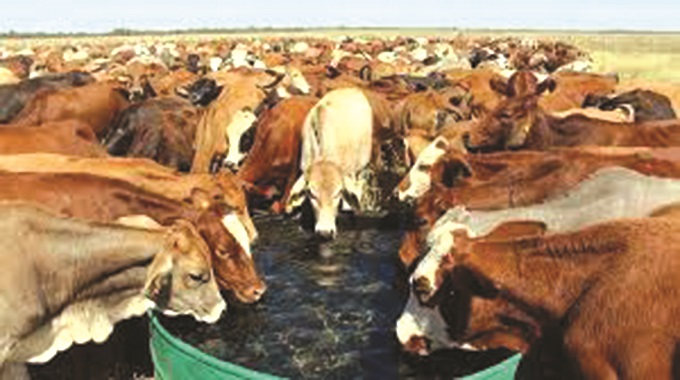
Theseus Shambare in BULAWAYO
Today, the Food and Agriculture Organisation (FAO) launched a training workshop in Bulawayo to enhance Zimbabwe’s capacity to address climate change within the livestock sector.
The workshop, conducted in collaboration with the Ministry of Lands, Agriculture, Fisheries, Water and Rural Development and the Ministry of Environment, Climate and Wildlife, is part of the second phase of the sub-programme “Scaling up livestock climate actions to enhance nationally determined contributions – Phase II.”
The initiative seeks to equip participants with the necessary skills to improve their contributions to national reporting requirements under the Enhanced Transparency Framework (ETF) of the Paris Agreement.
By strengthening national capacities in greenhouse gas (GHG) inventory, mitigation and adaptation measures, the training will contribute to Zimbabwe’s efforts to enhance its obligations in addressing climate change, including the Biennial Transparency Report.
The workshop will provide participants with a comprehensive understanding of climate-smart livestock practices, enabling them to identify mitigation and adaptation options.
It will also strengthen the capacity of Zimbabwe’s technical experts in preparing and reporting livestock emissions in GHG inventories using the tier 2 methodology according to the Intergovernmental Panel on Climate Change (IPCC) Guidelines reporting requirements.
Additionally, participants will acquire hands-on skills to assess GHG emissions from livestock and identify potential methane mitigation strategies.
“This training is crucial for Zimbabwe to effectively address climate change in the livestock sector,” said Ms Saskia Reppin, FAO Livestock and Climate Change Specialist.
“By equipping participants with the necessary skills, we can enhance national capacities and contribute to the country’s efforts to achieve its climate goals.”
Livestock Research Director, Mr Andrew Chamisa said the workshop will be conducted over four days, featuring presentations, group discussions, practical exercises and field visits.
“It is designed to be highly interactive and encourage discussions among participants with diverse experiences.
“The training is expected to have several outcomes, including enhanced understanding of climate-smart livestock practices, strengthened capacity in GHG inventory and emissions reporting, and improved ability to identify mitigation and adaptation options,” said Mr Chamisa.
“Ultimately, the workshop aims to contribute to Zimbabwe’s efforts to achieve a low-emission, climate-resilient livestock sector.”



 Online Reporter