admin
admin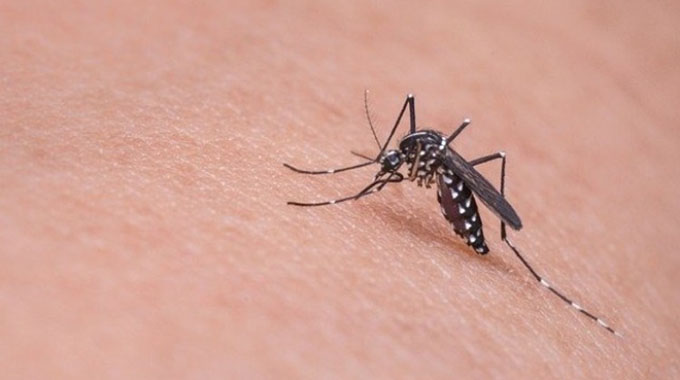
Clifford Mutero and Jeremy Herren
A species of mosquito that can carry malaria — known as Anopheles stephensi — has invaded eastern Africa and is quickly moving across the region.
How did Anopheles stephensi come to Africa?
This mosquito species is widespread in South-East Asia and parts of the Arabian Peninsula.
It is common in India, Pakistan, Iran, Iraq and Afghanistan.
In the last couple of years there have been increasing reports of it in Africa.
It was initially reported in Djibouti in 2013.
Recent reports indicate that it is spreading rapidly through the Horn of Africa.
It was reported in Ethiopia in 2016 and in Sudan in 2017 and is likely being spread along major transportation routes.
As a result, the World Health Organisation (WHO) has issued an alert for intensified surveillance to track the spread.
We expect that it will eventually be found in other major African cities.
Surveillance data is needed to confirm further spread but, based on the timeline of its travel to Ethiopia and Sudan, we speculate that three years is how long it would have taken to reach Kenya and Tanzania.
They are now within that risky time-frame.
Kenya and Tanzania may be at a particularly high risk due to their close proximity to the Horn of Africa. They also have large coastal cities whose weather conditions (warmer and more humid) are similar to the mosquitoes’ native range.
Other cities further away, including some in West Africa, are deemed to have a suitable environment for Anopheles stephensi.
Generally the spread of mosquitoes to new areas is facilitated by people through ground, air and ocean transport systems.
Increased international travel and human migration leads to vectors and pathogens emerging or re-emerging in regions where they had diminished or been eradicated.
Unique
There are over 100 species of Anopheles mosquitoes in Africa, but only six species are considered “primary” vectors of malaria.
Anopheles stephensi is very effective at transmitting malaria. What is worrying is that it thrives in urban areas, unlike the various African Anopheles species.
Anopheles mosquitoes require water to complete their life cycle: a female mosquito lays its eggs on the surface of a water source, where they hatch and finally develop into adult mosquitoes.
Female mosquitoes suck blood from people and other hosts to enable them to lay eggs.
It is the blood-feeding that enables mosquitoes to transmit parasites — such as malaria — from one person to another.
Typically, the main African Anopheles vector species are found in rural landscapes, which is why the majority of Africa’s malaria cases are also in rural areas.
They breed in various water habitats such as puddles, footprints and hoof prints along the edges of ponds and irrigated farmland.
These habitats do occur in some urban areas, but they are often polluted and less suitable for these mosquitoes. Reports do now indicate, though, that some African Anopheles are becoming more adapted to these conditions.
By contrast, while they can also survive in rural areas, Anopheles stephensi thrive in urban areas — such as plastic and cement containers that hold water. This means that this species poses a threat both in cities and in rural areas.
New challenges
The main issue is that if the invasion becomes widely established, malaria could become more prevalent in African cities and this would put many more people at risk of infection.
Consequently, malaria control efforts will be spread even thinner on the continent as malaria expands into cities.
There are already many challenges such as a lack of resources.
Currently, about half of the US$6,5 billion needed to meet the 2030 malaria targets is available. There were an estimated 219 million cases of malaria in 2017 and 92 percent of these occurred in the WHO African region.
The funding shortfall is likely to grow if the Anopheles stephensi increases malaria cases in Africa.
Another major challenge is that both Anopheles stephensi and African malaria vectors are developing resistance to some of the insecticides used against them.
These insecticides are deployed on bed-nets or used for indoor spraying.
Finally, the Anopheles stephensi presents a new challenge because it is harder to access mosquito breeding and resting sites in urban areas and deploy control measures.
In particular, it is more challenging to identify and map breeding sites in urban areas, which makes it more difficult to control larvae. In addition, indoor residual spraying is less straightforward due to the high density of dwellings and challenges accessing them all.
Precedent
The spread of Anopheles stephensi is reminiscent of a similar invasion by Anopheles gambiae, a mosquito species commonly found in Africa, which spread to Brazil in the 1930s and 1940s and caused devastating malaria outbreaks. For example, over a period of just eight months there were 150 000 cases of malaria and 14 000 deaths.
This was recognised as one of the most serious threats to health in the Americas and an aggressive eradication campaign was initiated.
The Brazilian government reacted with an integrated control programme.
Insecticide spraying targeted larvae and adult insects. Cars or trucks leaving endemic areas were sprayed and there was a massive effort to improve drainage and remove the stagnant water that provided breeding sites.
This concerted effort is an important example in successful vector control and resulted in the species being eradicated in South America by the 1940s.
Stopping the spread
Action is needed immediately if there is to be a chance of curtailing the spread of Anopheles stephensi. The longer we leave it the harder it will be to contain, and unfortunately there seems to have already been significant spread with reports from across the Horn of Africa.
Though mosquitoes can travel long distances and are dispersed on high altitude winds, the pattern of Anopheles stephensi spread suggests the importance of human transportation routes.
Vector surveillance is key.
We need to know where Anopheles stephensi has spread and then quickly and strategically focus resources on restricting spread and locally eliminating Anopheles stephensi before it establishes a foothold. Surveillance should be carried out by National Vector and Malaria Control Programmes with support from research institutions. Overall, a combination of environmental management to eliminate larval habitats and eco-friendly biopesticides to control adult and larval stages of the mosquito is considered the most effective strategy for control of Anopheles stephensi.
Other appropriate interventions include: use of long-lasting insecticide treated nets, screening of houses to stop entry by adult mosquitoes, proper covering of water storage containers to prevent mosquitoes from laying eggs in them, and removal of any unused water receptacles that may offer suitable breeding habitat to mosquitoes.
Clifford Mutero and Jeremy Herren are consultant scientists with the International Centre of Insect Physiology and Ecology. This article first appeared on The Conversation.



 Online Reporter