


 Chronicle Editor
RECENT statistics of Zimbabwe’s monthly export earnings show that there was a surge of 29,7 percent from US$698,1 million recorded in October 2024 to US$905,2 million in November 2024, driven by strong performances in gold and tobacco exports, according to the Zimbabwe National Statistics Agency (ZimStat).
Gold and tobacco exports constituted over 50 percent of November’s total export value, the figures show.
Gold exports soared to US$361,09 million, accounting for 39,7 percent of all exports for the month.
Tobacco exports were valued at US$280,3 million, contributing 30,5 percent to the overall export figure.
When combined, tobacco and gold exports amounted to US$641,496 million, translating to 70,86 percent of the total export value for November.

This is just a tip of the iceberg on the country’s exports that have continued rising, positioning Zimbabwe as a key source of quality products in Africa and beyond.
This growth is largely attributed to President Mnangagwa’s economic diplomacy, which can be defined as the use of the country’s resources to promote the growth of an economy by increasing trade, promoting investments and collaboration on bilateral and multilateral trade agreements.

The agenda is spearheaded by the Ministry of Foreign Affairs and International Trade, which aims to enhance Zimbabwe’s competitiveness on the global stage, boost trade and help drive the engagement and re-engagement approach to international relations.
Our Business Reporter, Judith Phiri (JP) spoke to Foreign Affairs and International Trade Minister, Professor Amon Murwira (Prof Murwira) to get more on the economic diplomacy agenda and explain why new markets are key for Zimbabwe’s overall economic growth.
JP: Minister, why is it important for Zimbabwe to seek new markets?
Prof Murwira: President Mnangagwa has consistently emphasised Zimbabwe’s untapped export potential, urging businesses to explore opportunities in sectors like agriculture, manufacturing, construction and engineering services. In pursuit of these, President Mnangagwa has articulated three foundational doctrines to guide his vision, the first one is that a country is built by its people, the second one is being a friend to all and an enemy to none and the third one is the Zimbabwe is Open for Business policy. These position Zimbabwe as a welcoming destination for investment, showcasing its readiness to engage with the international community and foster economic partnerships. Zimbabwe expanding its export markets, yields positive outcomes for the economy.
JP: Where can Zimbabwe look for these new markets?
Prof Murwira: As I have said, Zimbabwe is a friend to all and an enemy to none. This means in seeking international ties as Zimbabwe, we are not looking at a certain direction but rather everywhere around the globe to ensure that we establish economic partnership agreements that are mutually beneficial. Zimbabwe is committed to peaceful coexistence and collaboration with all nations, while this reflects the country’s desire to maintain friendly relations while avoiding adversarial stances. This strategic shift is increasingly placing Zimbabwe at the centre of global supply chains.
JP: What role is your ministry playing in assisting local companies acquire foreign markets?
Prof Murwira: The vision of the Ministry of Foreign Affairs and International Trade is to create the necessary conditions for a prosperous, peaceful nation and an effective participant in the community of nations. Local production has to go to export markets. Now, if local production has to go to export markets, we must devise mechanisms that makes it possible and the logistics for it. It then means that the job of the Ministry is to pave the way to the markets. It acts as a bulldozer or road-clearing equipment that clears the road towards the markets. These markets are motivated or gotten through attending international trade fairs and expos.
JP: What role does local, regional and international trade fairs and expos play in acquiring new markets?
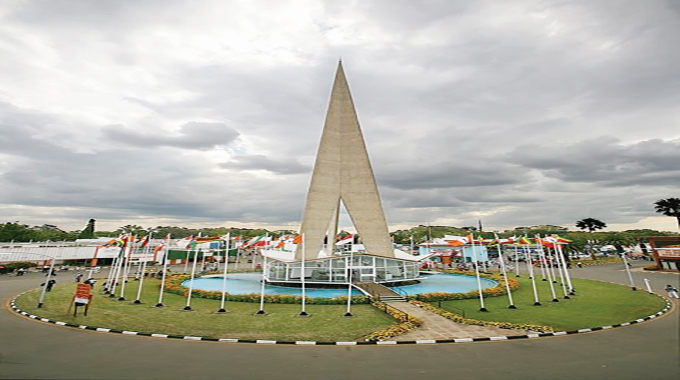
Prof Murwira: Expos such as the Expo 2025 Osaka to be held this year or the Expo 2020 Dubai, as well as our very own Zimbabwe International Trade Fair (ZITF) held in Bulawayo or any other trade fair outside the country, play an important role in acquiring new markets. Once goods are produced they have to be exported and the bigger the exports the more the export earnings.
Last year, we exported more than US$6 billion to US$7 billion, which is the work that has been done through President Mnangagwa’s efforts of Zimbabwe is Open for Business policy, a friend to all and an enemy to none. When we approach the production aspect, we say Nyika inovakwa nevene vayo/Ilizwe lakhiwa ngabaninilo, which makes the industry tick and by doing that we look for markets for that industry. The places to look for markets for big industries are trade fairs and expos be it locally, regionally or internationally. We diversify into both traditional and non-traditional markets to expand our exports trading.
JP: How can local companies make their products more competitive for export markets?
Prof Murwira: Exposure is very important and product qualification from the Ministry is also very important. Product qualification is a key step in product development and helps ensure that a product meets the quality and reliability requirements of its intended use. Quality assurance of goods and services in our production when they are streamlined and technologically oriented makes them more competitive. Zimbabwe is on that upward trajectory in terms of its disposition towards the world market. I am sure that exposure to these expos and trade fairs as well as quality control processes are very important. Another aspect is knowing exactly what different markets require and how we can improve our production processes using technology, is very important. Zimbabwe has very intelligent people and we must use this intellect to make sure that we access those markets.
JP: Is there anything else you would like to add?
Prof Murwira: Yes, through the President’s instructive philosophy that it’s the duty of Zimbabweans to build Zimbabwe, we are employing integrity and dignity for prosperity, we are pursuing the Zimbabwe is Open for Business policy and we wish to leave no one and no place behind as we strain for more access to the world markets to achieve the vision of an upper-middle-income economy by 2030. We are not one-directional, we are a friend to all and an enemy to none and we hope through this approach our companies will be able to prosper and more investors will be coming to Zimbabwe. The ultimate goal is to ensure that people are happy, prosperous and have fulfilling lives. But this can only be achieved through economic development. As a result, economic diplomacy has become a defining feature of Zimbabwe’s foreign policy.


 Online Reporter