admin
admin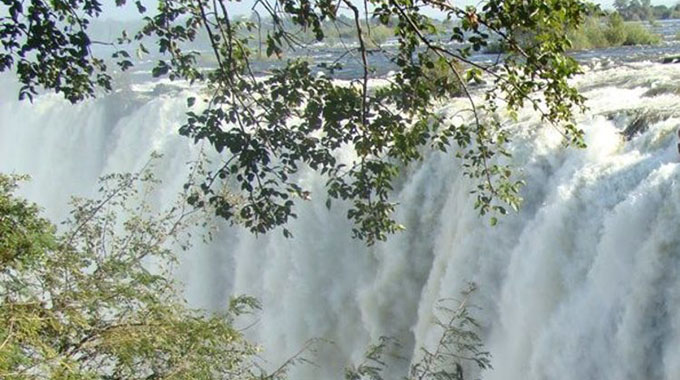
Isdore Guvamombe
Reflections
Tourism is a low hanging fruit that is very sensitive in times of world pandemics such as the coronavirus, also referred to as Covid-19.
Typical of low hanging fruits, their proximity makes them very susceptible to disease, rodents and the greedy ones among us, whose finger tips continue to test their ripeness.
Back in my village, elders with cotton tuft hair always say a man who grows a fruit tree by the road side and one with the most beautiful wife, face similar problems; everyone wants to taste.
So far so good with that illustration, any further input on the village allegory is subject for another day and another forum.
From the craggy magnificence of the Eastern Highlands to the pristine wildlife in our national parks to the Victoria Falls and little everything else, Zimbabwe can hold its own as one of the best tourist destinations in the world.
We have also nature and God’s grandeur on our side, for, He so gifted us with a good climate and natural water bodies like the Zambezi River.
That combined with our man made tourism tapestries such as Lake Kariba, gives us a smooth plinth to rise up and shine again after the Covid-19 lockdown.
But first things first!
Grounded in travelling, leisure and trinkets, it is very easy for tourism to be a major conduit of disease transmission, hence it was totally shut down under Covid-19 containment measures.
The world over when such pandemics break, tourism is brought to its knees. It is shut down.
Tourism is very sensitive.
In the current Covid-19 matrix, the tourism and hospitality industry in Zimbabwe has been hard-hit and has been left in a coma.
But it will rise if we deal with fundamentals correctly, if we look hard at ourselves and be real.
And, indeed if we do not fool ourselves as an industry, like we have done in the near past. We must be hard on ourselves, face each other as an industry and do the things correctly.
We have the product. What we need is a strategy. A strategy that involves a thought process, method and vision. We need something very solid.
In the aftermath of Covid-19 lockdown, it is going to be a new normal, not business as usual.
That means most of our business models will have to change or we will not rise and make it again. Our business models, from pricing regimes to modus operandi, must all change.
In fact, before we go into the new normal, I hope the hiatus has given us time to think and rethink about our business models. Our greatest undoing as an industry is that we have overpriced ourselves and let people spent more money in other countries.
Our neighbours have become bedroom towns, while we get the crumbs because we have been too expensive.
“Come to South Africa, Visit Victoria Falls” has killed our industry. I am no diplomat, so it works for me.
Our accommodation too expensive. Our night tourism has been as good as dead because tourists come to visit our products like Victoria Falls during the day and retreat to South Africa, Zambia, Botswana and Namibia where they spent more money on night life, food, beer and accommodation.
And where are we all that time, as an industry — dormant and sulking. Blaming each other even. No comrades, no!
The other reason why the tourism and hospitality industry was hit hardest in Zimbabwe is that over the years, we have, all of us — not Zimbabwe Tourism Authority, not the Tourism Ministry, not the Zimbabwe Tourism Business Council, not individuals — but all of us, failed to make our domestic tourism contribute a big chunk of our earnings.
It is obvious that when we open in the aftermath of the lockdown, we will start with domestic tourism before we open up to the international community.
It is tomfoolery to think that we are going to have a sudden surge of international tourists once we open to the international community because our international tourist wholesale markets have been hit most probably harder than us. Let me quickly point out to one very important factor, the elderly.
It is the elderly in Europe who make the bulk of tourists for, they will have worked long years and saved, but unfortunately for us it is this population that has been hit the hardest by the virus.
Worse still, the lockdown by its nature eats into your savings and leaves you incapacitated to go leisure.
Covid-19 has destroyed whole economies in Europe and they will need time to recover before they can spend a lot of travel and tourism.
This time around our rise from the ashes of Covid-19 will be underpinned by our take on domestic tourism.
We have an economy that is not performing well and we need to come up with a pricing regime that speaks to that. We must push volumes. Our people have been under lockdown for too long. They need to travel and refresh, but we need to capture that momentum through a price regime that keeps them going.
Before we even think of Europe, Asia and beyond, let us unlock our domestic tourism.
It is going to be a while for international airlines to operate full throttle. We have to deal with our own situation. We have to circulate the money among us. We have to sacrifice a lot of our ego, a lot of our pride and a lot of our hatred for each other.
The politics of wire-snaring each other between the sector and the regulatory authority must end.
Just before Covid-19 hit us, I was very impressed by the position taken by Tourism and Hospitality Industry Minister Managliso Ndlovu, acting ZTA chief executive Mr Givemore Chidzidzi and Zimbabwe Tourism Business Council president Winnie Muchanyuka to unite the industry and come up with comprehensive national tourism awards.
That spirit must continue as we find our way in the new normal after lockdown.
If we just wait for the Government to lift the lockdown, which it will eventually do, without working on the industry’s fundamentals we will surprise ourselves with our level of failure to take off.
Our focus should be on dealing with fundamentals that have been our major setback over the years.
We will not go anywhere until we price our products competitively with others in the region. We must also deal with fuel availability in our resorts.
We have to be honest and own up and say these are our problems.


 Online Reporter