Online Reporter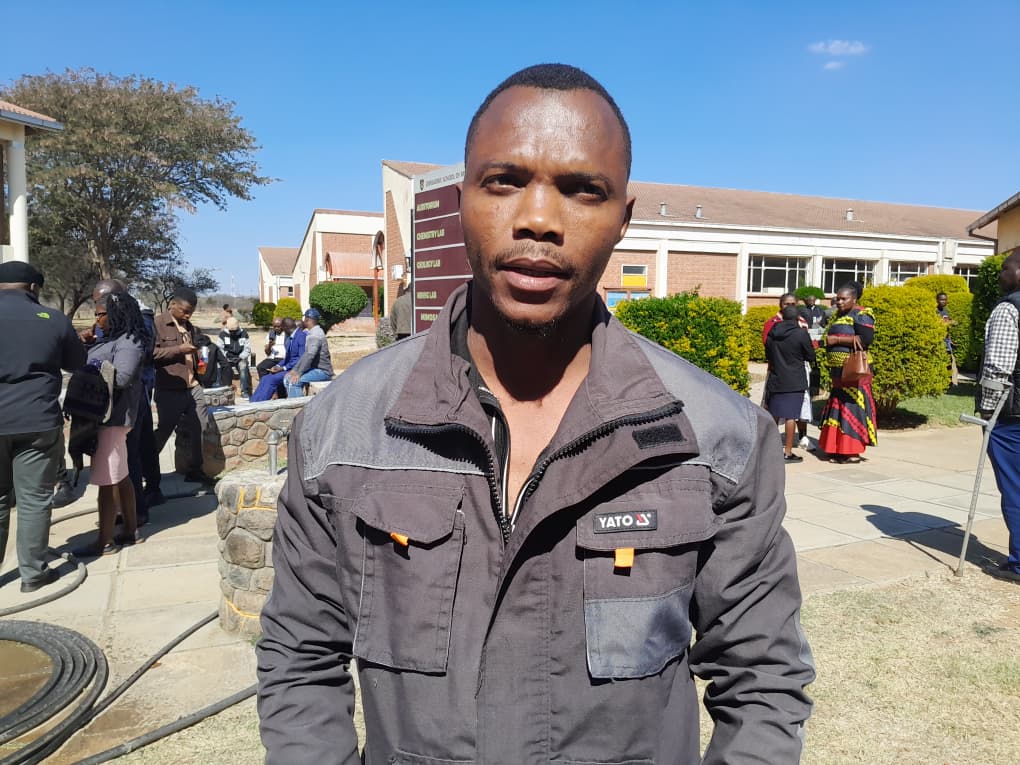
Sikhulekelani Moyo [email protected]
A NEW Certificate in Training of Trainers for Responsible Small-Scale Mining of Precious and Base Minerals has been launched to build capacity for safer, more productive and legally compliant artisanal and small-scale mining across Zimbabwe.
The programme is designed to prepare selected trainers, extension officers, technical personnel, regulators, cooperative leaders and institutional facilitators to deliver high-quality training to artisanal and small-scale miners operating in the precious and base minerals value chains.
According to the concept note, the course is intended to develop both technical mining competence and instructional delivery capacity.
It equips participants with the knowledge, tools and facilitation methods required to train miners in safe, productive, legally compliant, environmentally responsible and economically viable small-scale mining practices.
The curriculum places emphasis on practical mine operations, occupational safety and health, mineral identification, geology, mine planning, basic surveying, drilling and blasting controls, mineral processing, environmental management, mining law and responsible mineral trading.
The training also incorporates mineral-specific case studies on gold, copper, gemstones and other precious and base minerals to strengthen practical relevance and application.
One of the participants, Mr Samson Ncube from Mberengwa in Midlands Province, applauded Zanu-PF, the Zimbabwe School of Mines and other stakeholders for organising the training, saying it had exposed participants to critical aspects of mining that many had previously overlooked.
“Some of the minerals are deep and some are not even worth to be mined by a small-scale miner, so this training taught us that exploration and geo surveying are important as this will help us not to worst resources for nothing,” said Mr Ncube.
He said the programme had highlighted the importance of exploration and geological surveys in identifying viable mineral deposits.
As a Training of Trainers programme, it goes beyond subject-matter instruction by equipping participants with skills to design learning sessions, facilitate adult learning, conduct demonstrations, manage group exercises, assess learner competence and adapt technical content for field-based artisanal and small-scale mining (ASM) contexts.
The methodology integrates lectures, participatory learning, case studies, simulations, practical demonstrations, peer teaching, micro-teaching sessions and field-based learning where feasible.
Another participant, Mr Nigel Shamhu, said the training had broadened miners’ understanding of geological mapping and the use of historical exploration data.
“Trainings are important because some of us have started learning about geological mapping, old EPO information and that alone has helped us that we can not only rely on exploration but old information which is already available.”
“This also helped us to study vegetation, soil type and rock type, which helps us to reduce costs looking for things that we already have.”
Mr Shamhu said the training would also encourage small-scale miners to invest in mineral beneficiation and value addition.
Midlands Provincial Secretary for Mines and Energy, Mr Act Chauke, said the programme would play a critical role in rolling out responsible mining practices across the province.
“I’m sure once we are done, we’ll also be in a good position to go and disseminate the information and teach others on how to operate our small-scale and artisanal mines,” said Mr Chauke.
He said the training would also improve miners’ prospects of accessing funding.
“Once you have done your exploration and resource definition for your mine, you can use your Appraisal Report because you’ve got a competent certificate which shows that there is a resource which can be beneficial to the country. So, in that position you’ll be able to be funded.”
The programme also covered gold recovery methods, including vat leaching and heap leaching for processing dump tailings.
Mr Chauke called for the training to be held regularly and expanded to include higher-level mining qualifications.
“I believe that this is a very important training which is supposed to be done time and again.
We also call upon the Government and other stakeholders to continue with this initiative and also help us get even diplomas and degrees in mining,” he said.