

 admin
admin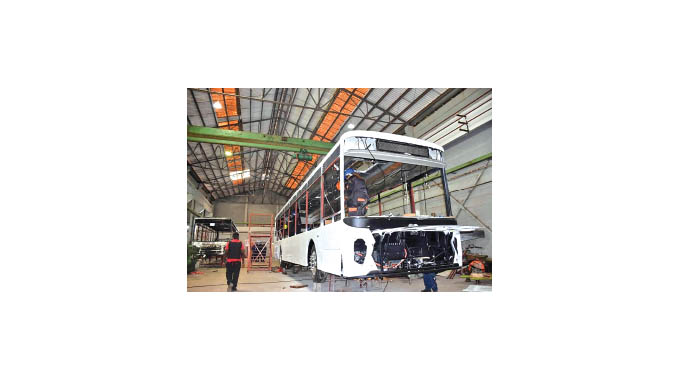
Business Reporter
THE Zimbabwe Industrial Reconstruction and Growth Plan (ZIRGP), a short-term economic manufacturing blueprint, has outlined specific policy interventions designed to stimulate domestic production of buses and trucks.
The ZIRGP, running from October 2024 to December 2025, proposes repealing Statutory Instrument 138 of 2022, reimposing a 40 percent duty on Completely Built-up Units (CBUs).
It also suggests a 10 percent duty waiver on imported Semi Knocked Downs (SKDs) kits for local assembly, enforcement of local procurement of assembled vehicles and securing an offtake agreement to secure markets.
The plan also aims to attract private investment into tyre manufacturing and offer incentives to maximise return on investment.
If implemented, the plan projects 100 locally assembled buses and 80 trucks per year, saving US$12 million and creating over 300 jobs across the value chain. For instance, the tyre sector, primarily composed of retreaders, importers, distributors, and retailers, is currently operating at below capacity due to low demand.
This has resulted in annual tyre imports of approximately US$52 million.
Established about 50 years ago, the local automobile industry has historically proved to be a strategic sector in terms of meeting motor vehicle demand in the country.
“Government is the single largest importer of finished buses and deliberate efforts to scale local procurement will be pursued,” said ZIRGP.
“Through Dinson, the sector will be able to manufacture chassis and frames for trucks and buses by mid-2025.”
Zimbabwe launched the Motor Industry and Development Policy (MIDP) in 2018, targeting to attract 10 percent of total foreign direct investment (FDI) into the automotive assembly and components manufacturing sector by 2030.
The policy also seeks to achieve full capacity utilisation and boost employment levels. Despite these ambitious goals, the MIDP has yet to significantly stimulate the industry.
The automotive sector continues to face challenges, hindering its growth and development. Zimbabwe’s three main vehicle assemblers, Quest Motors, Willowvale Motor Industries, and Deven Engineering, have long advocated for policies promoting local truck and bus procurement, especially by Government entities.
While a 2014 Government directive mandated local bus and truck procurement, many State-run entities continued importing. Analysts believe a deliberate policy promoting local bus production and procurement is crucial, especially as the country seeks to revamp public transport through recapitalisation and ZUPCO, now under Mutapa Investment Fund.
Mr Carlos Tadya, a Harare-based economist, said a well-crafted policy framework that incentivises local assembly and procurement could revitalise the Zimbabwean automotive industry.
By supporting local manufacturers and creating a conducive business environment, the country could unlock significant economic potential and contribute to national development, he added.
“While the Government’s intentions are commendable, the success of these policies hinges on effective implementation and enforcement,” said Mr Tadya.
“Addressing challenges such as access to affordable financing, reliable energy supply, and a skilled workforce will be crucial to realising the full potential of the automotive sector. However, past policies have often fallen short due to a lack of consistency and inadequate enforcement.”
The ZIRGP, which largely focuses on import substations, serves as a transitional framework to align industrial policy with the National Development Strategy 2 (2026-2030), aligning with Integrated Development Planning (IDP) and Integrated Results-Based Management (IRBM).
It seeks to address immediate challenges in manufacturing and commerce while laying the foundation for accelerated industrial development under Zimbabwe National Industrial Development Policy 2 to achieve Vision 2030 aspirations.


 Online Reporter