


 Sundaymail Editor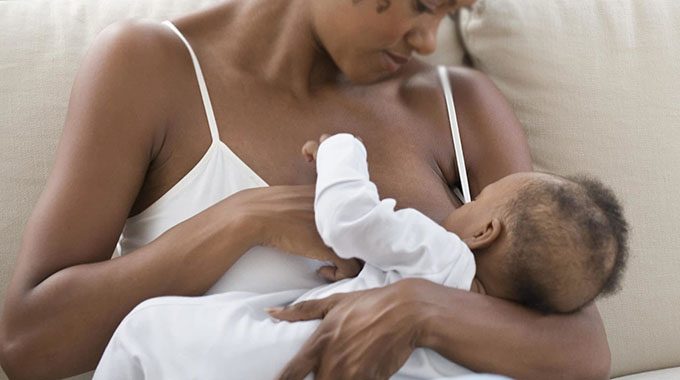
Fatima Bulla-Musakwa
WHEN Ms Chengetai Mujakachi gave birth to her second child while working at Unilever Zimbabwe, her breastfeeding experience was the best any working mother could ever have dreamt of.
The company had introduced a mother’s room where breastfeeding employees were allowed to express milk or take a nap for an hour or two as her child was on the way.
This was premised on the need to promote exclusive breastfeeding of a newly born child for the first six months and continuously up to two years or even beyond, as recommended by the World Health Organisation (WHO) and the United Nations Children’s Fund (Unicef).
Further, there was some understanding that mothers often have sleepless nights while attending to their babies.
The company had also instilled in the workers a sense of value in breastfeeding. Once an employee left for the mother’s room, she was granted ample time to either express milk or rest.
Ms Mujakachi – who was granted a fully paid four-month maternity leave, a breastfeeding hour taken after 3.30pm following a return to work and permission to work from home when the child fell sick – believes the conducive environment enabled her to execute her duties with commitment and energy.
With additional leave days adding up to two months, she managed to breastfeed her child exclusively while at home. She, however, failed to continue breastfeeding up to two years as she had secured a new job that kept her on her toes due to probation demands.
“It’s one of my favourite work experiences because that’s where I had all my children. I performed beyond my expectations because I was fully supported. I knew if there was something wrong with the baby, I could easily work from home, dash out or take a day off,” said Ms Mujakachi.
“It made me perform more than I could ordinarily have done, even though I was nursing a little child. There was this performance appraisal they conducted annually through which you could get a good bonus in March. I actually had a very high rating that year, though I was nursing.”
Breastmilk is the only food recommended for a baby for the first six months of its life as it ensures adequate physical growth and cognitive development.
It also helps prevent malnutrition, provides immunity and protects young children against infections and childhood illnesses.
It is also readily available, safe and does not cost anything. Despite this background, the 2019 Multiple Indicator Cluster Survey (MICS) report shows that in Zimbabwe less than two thirds of children are breastfed within the first one hour of birth and less than half of the children aged 0 to six months are exclusively breastfed.
There are many reasons women stop breastfeeding early, and one of them is resuming work.
After giving birth, Mercy, who did not want her full name revealed, wanted to exclusively breastfeed her baby girl as recommended by health professionals.
She also felt obliged to do so because of her sister, a health professional in a Government department.
When she went back to work, she was keen on expressing milk to ensure the baby got her daily feeds. However, with work pressure and the absence of a mother’s room, ensuring the baby got her daily feeds was not easy.
“Milk supply decreased because of the stress, which meant I could not express enough milk for her. So, I had to dash home during lunch time to breastfeed and then express more milk for one more feed to ensure that she had enough until my return.
“I was fortunate because I was mobile. However, at one point, I was not, so using public transport to go back home during lunchtime and dash back to work, then eventually travel back after knocking off at 3pm was very expensive.
“I thought of giving up on exclusive breastfeeding,” she said.
Eventually, she managed to exclusively breastfeed her baby for six months. Now that the baby is nine months old, she wants to breastfeed her until she is two years old.
Having breastfeeding rooms at workplaces will go a long way in ensuring working mothers fulfil their breastfeeding duties and also perform well at work because they will be mentally stable and milk supply will improve, Mercy reckons.
Unicef has a global guide for employers, which has recommendations that are aimed at helping employers establish breastfeeding rooms and supportive workplace environments for workers and their families.
In the document, the UN agency states that the provision of breastfeeding rooms, paid nursing breaks and an enabling breastfeeding environment and culture are low-cost interventions that can contribute towards better breastfeeding, job productivity and employee retention.
Ms Tariro Chivonivoni, a professional, concurred with these views. She said it can no longer be business as usual, as the realities of breastfeeding working mothers do not match with speeches that continue to be made about ensuring inclusivity in society.
Ms Chivonivoni further said women fail to attend important meetings that could see them earn some much-needed allowances or promotions simply because they continue breastfeeding their children. She felt the corporates the women work for are not doing enough to match that important role.
“A company cannot simply allow the breastfeeding worker to be accompanied by her infant and nanny to share the single room in which she is accommodated!
“The woman who has been granted maternity leave is the same woman who has gone back to work and needs to express milk for her baby. So, the way issues of equal pay, menstrual hygiene and maternity have been factored in company policies is the same way issues of breastfeeding must be considered,” Ms Chivonivoni said.
She said setting aside a mother’s room does not cost much for a company. What is simply needed in the room is a couch to sit on, a sink to wash hands and a fridge for storing the expressed milk, she added.
Statistics reveal that continued breastfeeding up to two years stands at just 13 percent in Zimbabwe.
Unicef notes that the private sector has an important role to play in promoting exclusive breastfeeding and continuous breastfeeding until infants are two years old.
Nutrition manager with Unicef Zimbabwe, Ms Mara Nyawo, said research had shown that the length of maternity leave and payment have an effect on the duration of breastfeeding, and lack of support mechanisms to continue breastfeeding at work hampers optimal breastfeeding practices,
“All mothers should be able to breastfeed freely for as long as they choose. As per WHO/Unicef recommendations, this is exclusive for six months, with continued breastfeeding up to two years or beyond.
“Through the adequate scaling up of breastfeeding to recommended levels (at least 50 percent of children receive exclusive breastfeeding for six months and continued breastfeeding to two years or longer), the lives of more than 820,000 children below the age of five years could be saved and 20,000 cases of breast cancer could be prevented annually,” added Ms Nyawo.
Ms Annie Msauki, a nutritionist, said support is crucial in exclusive breastfeeding. A woman cannot do it alone; the support of the husband, the whole family and workmates is needed, she added.
She said having childcare rooms at company premises where mothers can express milk privately, or can leave their children of up to two years old under the care of minders is necessary.
Having policies that support breastfeeding employees, ensuring flexible scheduling to support milk expression during work or giving mothers options to work from home are other options corporates can implement, Ms Msauki noted.



 Bongani Ndlovu
 Online Reporter