Online Reporter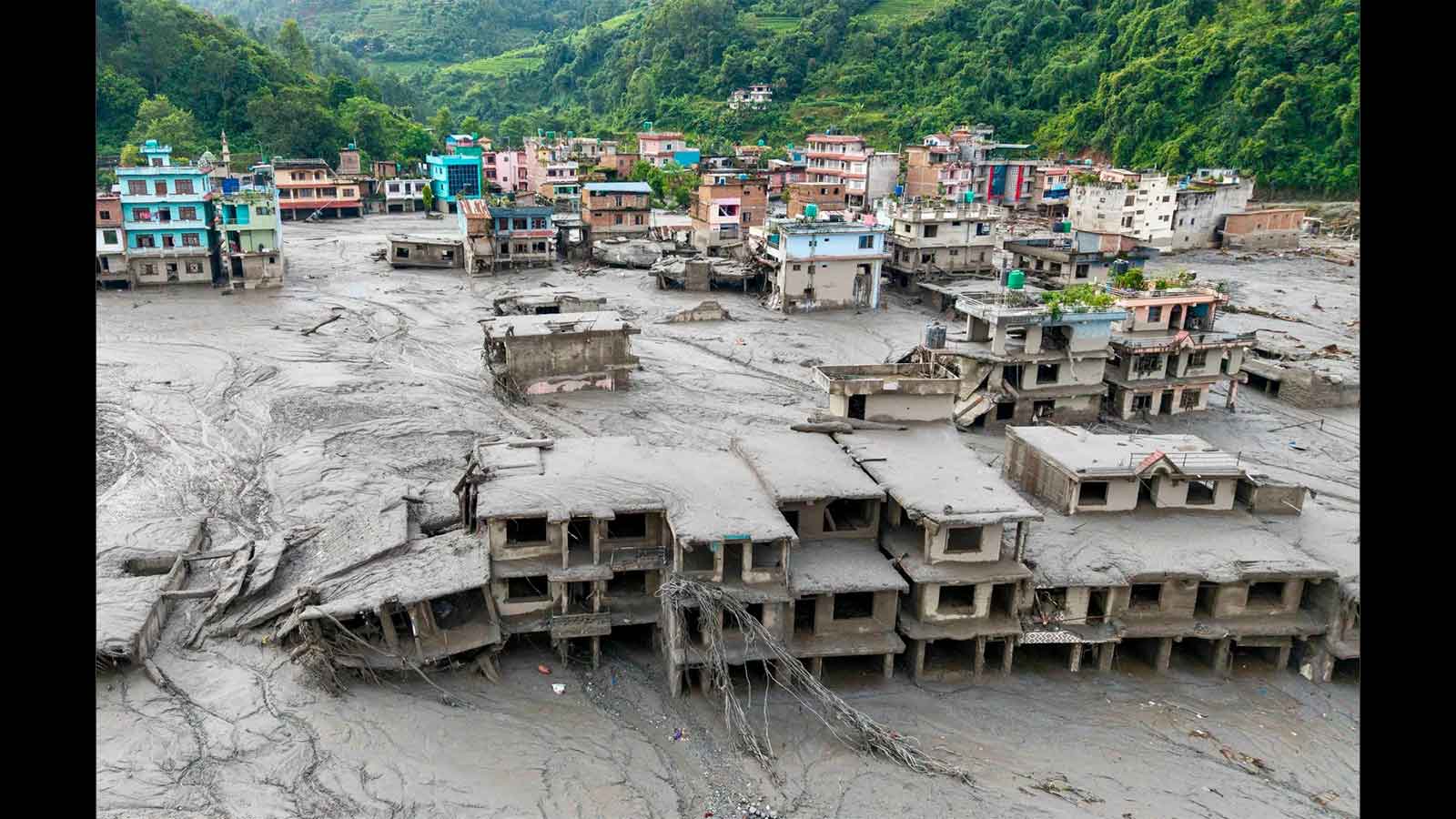
Dr Mike Juru-Dollars and Sense
In 2008, the world learned what a financial property crash looks like. Bad loans, inflated values, banks collapsing.
We learnt our lessons and the chapter was closed. The next one will come but looking different. No Lehman Brothers issues. No subprime mortgages. Nothing financial.
It will start with a dry borehole. A roof that hits 45°C. A dam that doesn’t refill.
An insurance company that refuses to renew.
The next property crash won’t be financial. It will be climatic. And Nepal just gave us the preview.
In July 2026, Nepal’s monsoon turned deadly. Floods and landslides wiped out roads, homes and hydropower in three days. The estimated damage: $400 million. The World Bank now models a 2,1 percent drag on Nepal’s GDP by 2050.
The economics were simple. Growing population and urbanisation. Nepal response was to build fast, regrettably on floodplains, with codes on paper but no enforcement.
When the water came, the assets became liabilities overnight. Banks were left with collateral under mud.
Insurers with claims they couldn’t pay. Councils with a rates base that washed away. It was not a market failure. It was a climate failure priced too late.
Zimbabwe: The Same Math, Different Hazard
Zimbabwe is not flooding like Nepal, it is drying, yet, the balance-sheet risk is identical.
Our hazards: drought, heatwaves, erratic rainfall, Cyclones Idai and Freddy.
Our triggers: new suburbs approved without water security, warehouses in Bulawayo hitting 40°C and spoiling stock, farms planted with no irrigation backup, roads cracking in heat.
Our cost: Agriculture will loose over $300m due to El Nino effect. Power costs are up 40 percent for commercial buildings running generators.
The World Bank estimates Zimbabwe could lose 1,5 percent – 2,8 percent of GDP annually by 2050 if we don’t adapt.
This is already showing up.
A house in Harare North with a borehole and solar now sells 15-20 percent faster than one without. A factory that cannot operate above 38°C is a higher default risk for its bank.
Councils in water-stressed towns are watching their rates base erode as residents drill private boreholes and disconnect.
The reality is that we are not waiting for a crash. We are living through a slow devaluation. The crash is looming.
This is happening everywhere; Zimbabwe is not alone. The market is repricing climate risk globally.
In the United States; Florida and California, the insurers are pulling out of high wildfire and flood zones. In Miami, some beachfront condos have lost 10 percent of value in 2 years because of flood insurance premiums.
The risk moved from the environment to the mortgage.
In Australia, after repeated bushfires and floods, banks now require climate risk disclosures for commercial loans.
Properties with poor resilience are seeing lower LTVs. As for Kenya and South Africa, Green Building is becoming a lending condition.
Absa and Standard Bank offer “green mortgages” with better rates for solar, water harvesting, and efficient design. Valuers must certify it.
In Europe, The EU’s Green Deal means buildings must meet energy standards or face “stranded asset” discounts. A 2024 study found inefficient EU buildings could lose up to 30 percent of value by 2030.
The pattern is clear. Capital is moving. And it is punishing assets that cannot cope with heat, water stress, and energy insecurity.
Why This Is a Valuation Problem
For 50 years, we valued property on three things: location, size, and comparables.
We did not value water security. We did not value thermal performance. We did not value energy independence.
That must change because if we don’t measure climate risk, the market can’t price it. If the market can’t price it, banks can’t lend against it, and Treasury can’t budget for it.
The valuation profession sits at the centre.
Today, two houses on the same street get the same valuation, even if one has a tested borehole yield, rainwater harvesting, and passive cooling, and the other has none. That is no longer credible.
What Zimbabwe Must Do Now
1. Price Resilience into Finance
Banks and valuers should introduce “Climate-Resilient Valuation” as standard practice. Every report should score:
– Water risk: Municipal reliability, borehole yield, storage
– Energy risk: Solar readiness, exposure to load-shedding costs
– Heat risk: Roofing, shading, ventilation
When resilient properties qualify for better LTVs and lower rates, developers will build to that standard. This is how we shift capital without a law.
2. Enforce a Climate Building Code
Nepal had a code and ignored it. Zimbabwe is revising its Model Building By-laws, the sections on climate will have to be clear.
For any development over 10 units, make rainwater harvesting, greywater reuse, and stormwater recharge mandatory. No occupancy certificate without it. Drought is our flood. Councils and ZINWA must treat it that way.
3. create a Zimbabwe Property Index With Climate Data
We cannot manage what we cannot measure. A national property index, housed with the Valuer General, Valuers Council and ZimStats, must include climate variables.
Which suburbs are water stressed? Which commercial nodes are heat islands? Investors and policymakers need this data to avoid stranded assets.
Build Once, Build Right
Nepal is paying for building wrong in a wet climate. We will pay for building wrong in a dry, hot one. The upfront premium for resilient design is 10-15 percent: rain tanks, reflective roofs, solar-ready wiring, local materials. The avoided cost is lower operating expenses, insurability, and a property that still has value in 2030.
By 2030, a building without water and power resilience will be worth less. Literally. Markets are already starting to say so.
The 2008 crash was about debt.
The next one will be about drought, heat, and infrastructure that can’t cope.
As valuers, bankers, developers and policymakers, we are at the centre of that decision.
We can keep valuing assets the old way. Or we can reset, and start valuing the economy we need to survive in.
Because the next crash won’t announce itself with a bank run. It will announce itself with no water supplies and expensive energy.