Tinaye Agere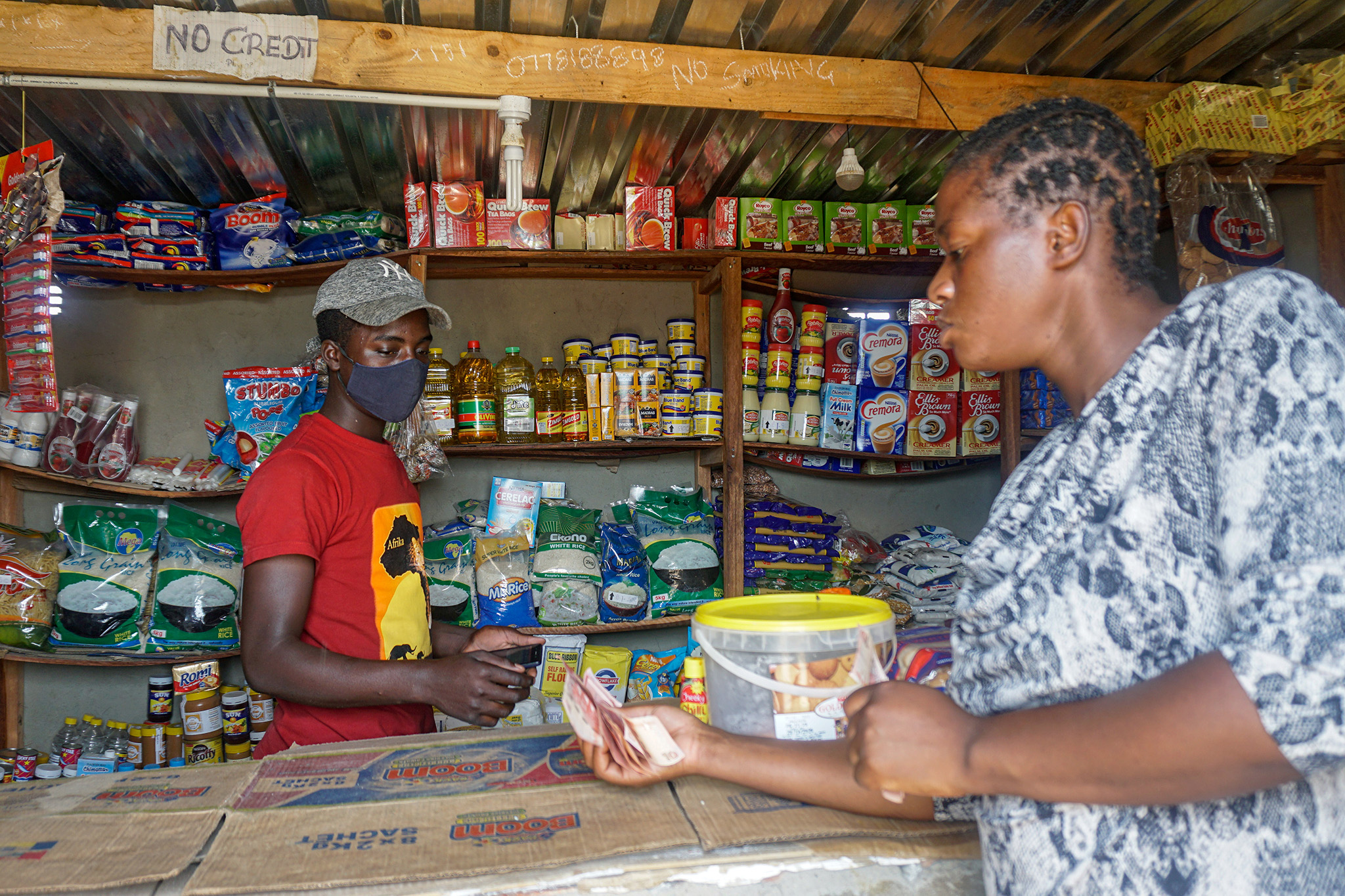
Business Reporter
KEY players in industry and commerce have welcomed proposals in the 2024 National Budget Statement that will require all local traders wishing to procure goods from manufacturers to be licensed, as well as have tax compliance certificates.
Registered retail operators from diverse sectors of the economy — including food, clothing, textile and footwear — had lately fallen victim to the activities of the fast- growing informal traders, who were getting priority in terms of the supply of goods by manufacturers.
The formal operators implored Government to address the situation, which was threatening the viability of wholesale and retail companies. The informal traders also sold grossly discounted goods because they did not pay taxes and smuggled goods.
However, once they become registered and compliant with taxation requirements, the shadowy operators may no longer be able to maintain the unfairly low prices that attracted hordes of customers and gave them an advantage over registered businesses.
Compliance with national tax requirements is critical as it is the biggest avenue through which Government mobilises revenue used to finance key programmes that include construction of roads, schools and health facilities.
According to the key business leaders, formalising the retail and wholesale sector is a critical step towards achieving sustainable economic growth, employment creation and an improved business environment in Zimbabwe as the country moves towards attaining National Development Strategy 1 (NDS1) targets.
The Government was losing 25 percent of the revenue collections due to lack of tax compliance.
Confederation of Zimbabwe Industries president Mr Kurai Matsheza said the 2024 National Budget would see the Government improving on its revenue enhancement measures.
“For example, only traders registered for value added tax purposes and are in possession of valid tax clearance certificates will be eligible to procure goods from manufacturers. Such a policy will improve the revenue base for Government,” he said.
Presenting the $58,2 trillion 2024 National Budget statement, Minister Ncube said the growth of the micro and small enterprises was undermining domestic resources mobilisation efforts due to informal traders that predominantly conduct business only in foreign currency.
The minister’s latest budget statement, presented against the backdrop of tight fiscal space, a slowing global economy and the threat of the El Niño weather phenomenon, sought to consolidate gains of the last five years, maintain stability and drive modest growth.
The 2024 National Budget — themed “Consolidating Economic Transformation” — builds on socio-economic achievements that have been made over the past five years and seeks to place the country on a solid foundation for further development and growth.
The budget has projected economic growth of 5,5 percent from the 5,3 percent predicted earlier, while the growth is expected to slow down to 3,5 percent next year due to the negative impact of El Niño on agriculture.
Minister Ncube noted that the informal business model structurally avoids regulatory requirements that include compliance with taxation and local authority by-laws on operating infrastructure.
He said achieving an “empowered and prosperous upper middle-income economy by 2030” is largely dependent on the country’s ability to mobilise domestic resources, in the absence of concessionary external finance and grants.
“In order to restore the supply chain from the manufacturer, wholesaler to retailer, I propose that only licensed and tax-compliant operators procure goods from manufacturers and wholesalers.
“I, further, propose that only traders registered for VAT purposes and in possession of valid Tax Clearance Certificates be eligible to procure goods from manufacturers,” said Minister Ncube.
The proposed supply of goods only to tax-compliant operators will be effected from January 1, 2024.
Retail sector players say they now await the implementation.
Minister Ncube noted that micro and small enterprises have, over the years, contributed significantly to the Gross Domestic Product and employment, hence remain an important source of livelihoods.
“The growth of the micro and small enterprises has, thus, undermined Domestic Resources Mobilisation efforts, particularly as formal businesses deliberately informalise operations and trade through tuckshops that predominantly trade in foreign currency.
“It is, thus, crucial to restore the trading structure, where the bulk of goods are retailed through the formal sector that contributes to the Fiscus.”
To encourage the retail players’ compliance (formalisation), Minister Ncube proposed to review the VAT registration threshold downwards, to US$25 000, or local currency equivalent, with effect from 1 January 2024.
“Currently, operators with a minimum annual turnover of US$40 000, or local currency equivalent thereof, are required to register for Value Added Tax.
“The high registration threshold, however, precludes micro and small enterprises from registering for VAT purposes,” he said.
Retailers Association of Zimbabwe (RAZ) representative Mr Themba Ndebele hailed the Government’s decision, saying it would give a lifeline to the formal retail enterprises, which were slowly sinking because of the informal sector proliferation.
“This is a step in the right direction and it is something we have been waiting for, implementation is always the issue we now wait for how the Government will implement this, and we wait to hear about the issue.
“This is also a plus for the Government, as this will enhance Government revenues and resource mobilisation,” said Mr Ndebele.
Confederation of Zimbabwe Retailers (CZR) president Mr Denford Mutashu said shadow economy was one of the threats to national development, as it has been growing at an alarming rate. He said that the enterprises should be approached with an accommodative hand rather than a heavy hand, which could promote increased informalisation.
“The attempt to restore supply chain through compelling manufacturers to sell only to licensed and tax compliant operators is welcome although the Government has to come up with a presumptive taxation model that will accommodate SMEs who may largely struggle to comply with current legislation,” said Mr Mutashu.
Minister Ncube stressed it was fundamentally important to have transparent and equitable domestic resource mobilisation mechanisms, including an efficient tax system to drive the inflow of Government revenues.
This, the minister said, was critically important at a time when Zimbabwe has little latitude to access affordable external long-term credit due to its arrears with global lenders and the impact of sanctions imposed by Western countries.
He pledged the Government’s commitment to fostering a more equitable society, consolidating stability and driving economic growth.
Minister Ncube thus proposed to raise the monthly tax-free threshold from $500 000 to $750 000, resulting in an annual tax-free threshold of $9 million and adjusting other tax bands so that the highest tax rate of 40 percent applies only to annual income exceeding $270 million.
Regarding the local currency bonus tax-free threshold, he proposed to increase it from $500 000 to $7,5 million, meaning that almost everyone in formal employment will get their entire bonus tax free.
The proposed new tax thresholds would be effective from January 1, next year while the bonus tax-free threshold would take effect from November 1, 2023.
In terms of resource mobilisation, Minister Ncube also proposed to introduce a 1 percent levy on the gross proceeds of lithium, black granite, cut or uncut dimensional stones and quarry stones. This levy will be directly channelled towards community development initiatives and ensure the benefits of mining activities are shared equitably among those most impacted.
The Finance Minister proposed to enact international rules on the Domestic Minimum Top-up Tax (DMTT) rules to prevent ceding taxing rights to foreign jurisdictions on top-up tax arising from tax incentives that are provided to those investments. The DMTT is part of the Global Rules, which aim to ensure that global profits of large multinational enterprises are taxed at a minimum corporate income tax rate of 15 percent.
Granting tax incentives results in an effective tax rate of less than 15 percent for some multinationals, but now their Zimbabwe subsidiaries will have to pay the difference for local operations.
To secure the necessary funding for road infrastructure development, the strategic reserve levy would be raised by 3US cents a litre for diesel and 5UScents a litre for petrol, from January 1. The extra money is added to the pool for road infrastructure.
Minister Ncube proposed an increase of toll fees on premium roads, including the Harare-Beitbridge, Plumtree-Mutare, and other designated routes with effect from January 1, 2024. The revenue generated from these increased fees will be directly deposited into the Consolidated Revenue Fund, ensuring its allocation towards road infrastructure.
To discourage consumption of high sugar content beverages, the minister proposed to introduce a levy of US$0,02 per gramme of sugar contained in beverages from January 1, 2024 with the money assigned to cancer health services. This has become common around the world.
Minister Ncube proposed the introduction of a Wealth Tax levied at a rate of 1 percent of market values of residential properties with a minimum value of US$100 000. Those over 70 will not pay this on their principal residence. Another tax again aimed at the rich imposes a series of duty surcharges on vehicles valued at more than US$120 000 on import.


 Online Reporter