Chronicle Editor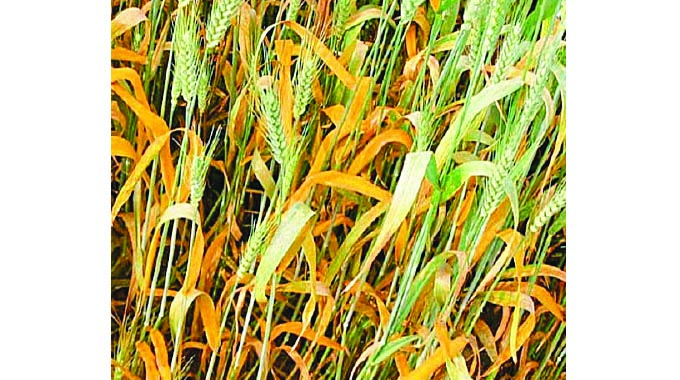
Patrick Chitumba, [email protected]
WINTER wheat farmers should be on the lookout for a new strain of yellow rust disease that has the potential to devastate crops, agronomist Mr Ronnie Chigombe has said.
Commenting on the state of the winter wheat in the Midlands Province, Mr Chigombe urged farmers to also be on the lookout for quelea birds, which may drastically reduce yields if not attended to.
As of last week, about 70 percent of the winter wheat crop in the Midlands province was at the flowering stage while the remainder is at grain filling stage as the province expects a bumper harvest this season.
This positive development comes after farmers successfully put over 10 000 ha under winter wheat, 1 000ha above target. Last year the province planted 7 378ha.
Mr Chigombe said this year’s winter crop was looking good across the provinces and the country is poised for another bumper harvest.
“It’s because farmers started with the right seed. Most farmers increased their hectarage this year and in the Midlands province farmers exceeded target,” he said.
Farmers who planted early expect to start harvesting at the end of this month.
“One of the key considerations for the adoption of double cropping is early planting and early harvesting for both summer and winter crops.”
Mr Chigombe, who works for the giant seed producer, SeedCo, said critical stages for wheat include crop establishment, flowering and grain filling.
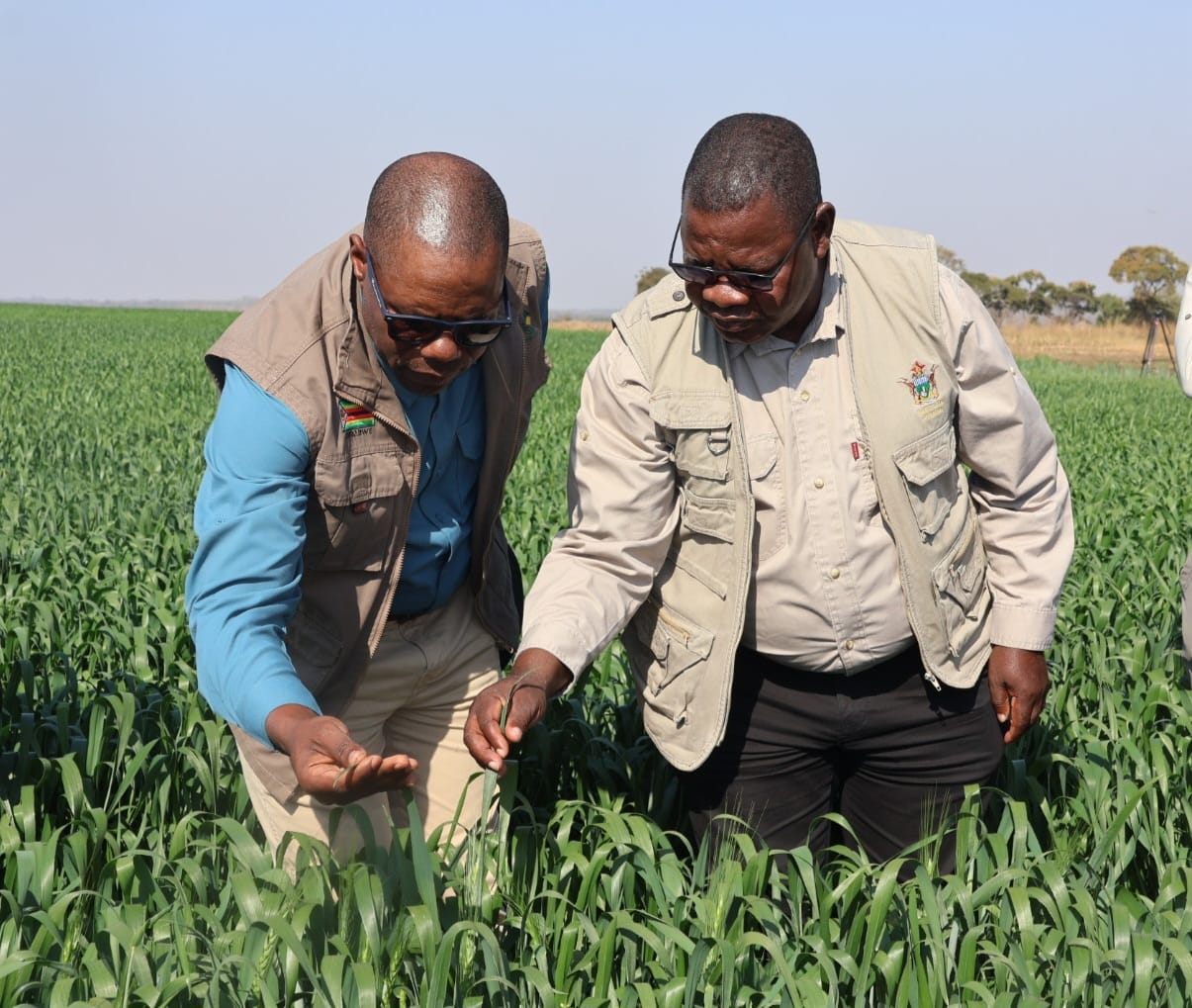
The bulk of the crop in the Midlands Province, he said, is at grain filling stage and encouraged farmers to scout for pests and diseases like rust.
“Farmers should watch out for a new strain of yellow rust, which spreads very fast and more dangerous than the usual leaf rust, this new disease is or was promoted by the warm winter, which was experienced this year in some areas.
“This yellow rust has been observed in one or two farms in Kwekwe but is under control,” said Mr Chigombe.
He encouraged farmers to use the same fungicides used in controlling the normal rust.
“Farmers are also encouraged to maintain their irrigation schedules. Farmers should take note and report to the relevant authorities if they face challenges from quelea birds. If not controlled, quelea birds reduce yields quite drastically,” said Mr Chigombe.
“Farmers should work closely with their local extension workers and us as a SeedCo company so that the country achieves its goal of national wheat and flour self-sufficiency.”
Last year, the province harvested about 36 000 tonnes of wheat. The crop is mainly grown in the Sherwood block. There are also some irrigation schemes in Mberengwa, Lower Gweru and Shurugwi, which contribute to the provincial target.
Leading farmers such as Mr Douglas Kwande, of the fast-growing Douglas and Claris Kwande (DCK) Investments, which own DCK Farm in Kwekwe have put 750ha under wheat. At Sherwood Park Estate,
Mr Daniel Burger has a flourishing crop on a 280ha and is expecting to harvest an average nine tonnes per/ha.
Last year the farm averaged 8,5t/ha. At Precabe Farm owned by the First Family, there is also over 600ha under winter wheat. Zimbabwe produced 375 000 tonnes of wheat in 2022, against a national demand of 360 000 tonnes and the Government is targeting to increase the production levels to 408 000 tonnes this year.
Last year’s production made Zimbabwe and Ethiopia the only two wheat-secure nations on the continent. Farmers are already responding to the Government’s initiatives as they have ramped up preparations for the farming season.
The bulk of the planting was done under the Government’s guaranteed CBZ Agro-Yield programme, while the other hectares were funded by private contractors as well as the Presidential Winter Wheat Scheme.


 Online Reporter