

 admin
admin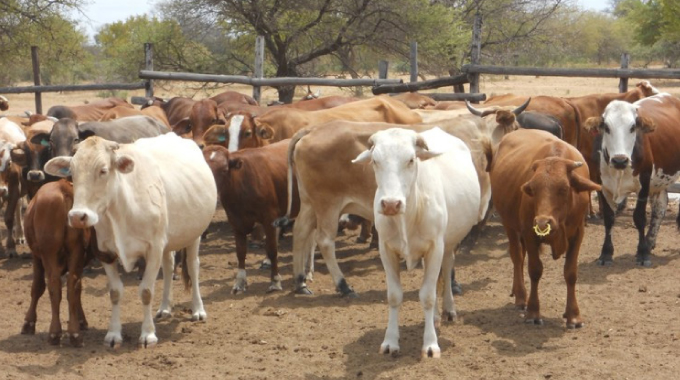
Elita Chikwati
Senior Reporter
THE Government has pledged to work on improving the livestock sector and come up with a strategy to boost the national herd and small livestock.
Livestock farmers have raised concern over the number of cattle succumbing to drought, especially in Matabeleland provinces and have called on the Government to assist in saving the livestock.
Farmers say there is a serious shortage of pastures and water.
The farmers said hay bales were in short supply while stock feeds had become expensive.
Zimbabwe Farmer’s Union president, Mr Abdul Nyathi, confirmed that the livestock situation was now dire, with the decline in dam water levels worsening the situation.
He said boreholes had dried up, making it difficult for farmers to supply water to their animals.
“Livestock is now in a bad State, especially in Matabeleland, due to drought,” said Mr Nyathi. “Farmers are having challenges supplying feeds for the livestock, while some are being forced by the situation to sell.
“We wish we could get assistance from Government, especially in areas where boreholes have dried up.”
The water levels in the country’s dams have remained on a downward trend, with Midlands, Matabeleland North and Harare provinces being the worst affected.
The Zimbabwe National Water Authority (Zinwa) latest statistics show that national dam levels are averaging below 68,8 percent, which is normally expected during this time of the year.
Zinwa corporate communications manager, Mrs Marjorie Munyonga, said the authority and other agencies working in the water, sanitation and hygiene sector (WASH), were already on the ground instituting drought response measures to mitigate the impact of the water situation.
“The mitigatory measures include borehole drilling and borehole rehabilitation,” she said. “Flows in major rivers have significantly declined with no flows in Runde, Gwayi and Mzingwane rivers. In cases where flows are still ongoing, the same are quite below the flows expected in the same rivers during this time of the year.”
Mrs Munyonga attributed the decline in dam water levels to below normal rains received in the previous rainfall season and ongoing drawdowns by local authorities and other raw water users.
Lands, Agriculture, Water and Rural Resettlement Department of Veterinary Services chief director, Dr Josphat Nyika, confirmed that the livestock condition had deteriorated.
He said farmers could save their animals by securing water, instead of letting them go to the dams and rivers.
“Cattle should not be left to go to the muddy areas because they can get stuck,” said Dr Nyika. “If an animal gets stuck for more than 12 hours, it will die. So, farmers should look for the water themselves and water the animals.
“Farmers should provide supplementary feeding and also destock to salvage something from the remaining herd. Farmers can also look for alternative grazing. Water levels in the dams have gone down and farmers should make deliberate efforts to pump water for the livestock and this has worked over the past years.”
Presenting the 2020 Mid-Term Fiscal Policy Review Statement and Economic Review to Parliament recently, Finance and Economic Development Minister Mthuli Ncube said previously, more effort had been put on crop yields, but now the State was strengthening its efforts to improve the national herd.
In 2017, Government introduced Command Livestock to boost the national herd and small livestock.



 Online Reporter