Online Reporter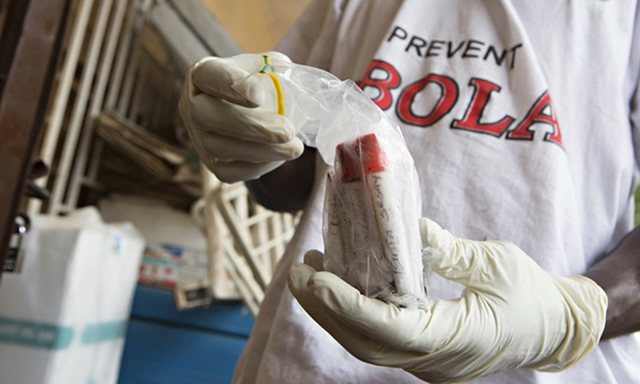
Rumbidzayi Zinyuke
Senior Health Reporter
ZIMBABWE has approached the World Health Organisation (WHO) for a limited supply of Ebola testing reagents to enable local screening of suspected cases, as the country strengthens preparedness against the deadly viral disease amid ongoing outbreaks elsewhere in Africa.
The specialised reagents are essential chemical substances used in laboratory testing to detect the presence of the Ebola virus in patient samples.
Although Zimbabwe has the laboratory infrastructure and trained personnel to conduct Ebola tests, it does not routinely stock the reagents because they have a short shelf life and would likely expire before use, given that the country has never recorded a confirmed Ebola case.
Health and Child Care Minister Dr Douglas Mombeshora said Zimbabwe currently sends samples from suspected Ebola cases to a regional reference laboratory in South Africa for confirmation, in line with established regional outbreak response protocols.
“We have strengthened our laboratory systems. As Zimbabwe, we are able to test for the Ebola virus, but what we didn’t have are the reagents.
“Currently, specimens are sent to South Africa. It is not our choice to say that we send all our specimens to South Africa. It is that regions have laboratories which are identified to deal with outbreaks, and for our southern region, South Africa has the laboratory,” he said.
Dr Mombeshora said the ministry had approached WHO to provide a limited quantity of reagents to facilitate local preliminary testing while samples are simultaneously sent to South Africa for confirmation.
“In fact, we recently had a suspected case, which fortunately turned out to be malaria after laboratory tests. So, we have approached WHO to give us some reagents so that we can also do our tests whilst we send the specimens for confirmation to South Africa,” he said.
“These reagents cannot be stocked indefinitely. Zimbabwe has never had a case of Ebola, so if you try to procure the reagents for testing, they will expire without being used. Since we are considered a low-risk country, WHO will only provide us with limited quantities of those reagents so that we also avoid unnecessary expiries.”