Online Reporter
Innocent Mujere, Correspondent
THE recent announcement that Zimbabwe will launch its long-awaited National Health Insurance (NHI) scheme in June 2026, marks a pivotal moment in the country’s post-independence health policy landscape.
For far too long, the majority of citizens have lived without adequate financial protection against illness, with only 13 percent of the population covered by medical aid schemes.
The introduction of a publicly backed insurance system that guarantees access to healthcare without crippling out-of-pocket costs is not merely an administrative reform — it is a moral, social and economic breakthrough worthy of recognition.
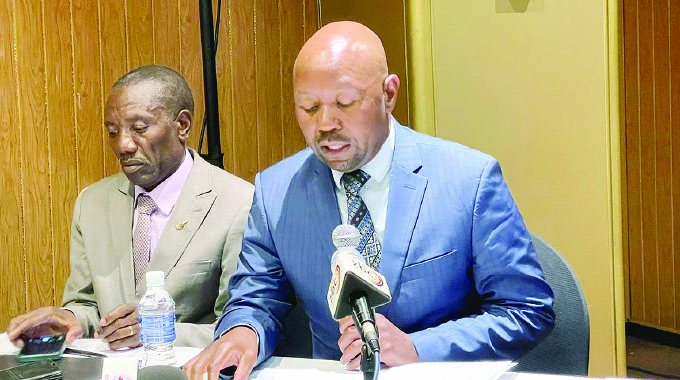
Health, as the Ministry of Health and Child Care permanent secretary, Dr Aspect Maunganidze, aptly stated, “is not an expense; it is an investment.”
This shift in language is significant. For decades, healthcare has been viewed as a fiscal burden rather than a foundation of national productivity.
Yet the evidence is clear: a healthy population is more productive, innovative and resilient.
Every dollar invested in healthcare not only saves lives but also reduces future economic costs linked to disease, absenteeism and premature death.
The NHI has been on Zimbabwe’s policy agenda for over twenty years, often discussed but never realised.
That it has now reached the stage of a refined Bill awaiting parliamentary approval is a testament to political will and strategic focus.
The Minister of Health and Child Care, Dr Douglas Mombeshora, has outlined a clear roadmap.

Cabinet has already endorsed the guiding principles, the second draft of the Bill is complete, and revenue streams have been identified in consultation with the Ministry of Finance, Economic Development and Investment Promotion.
This progress signals that the Government has moved beyond rhetoric.
Taxes such as the sugar levy and airtime tax, once seen as narrow revenue streams, are now being ring-fenced to fund health provision.
This is a progressive move, ensuring that these funds are not absorbed into the general fiscus but are dedicated to their intended purpose.
The existing Aids Levy has already demonstrated the effectiveness of targeted contributions, sustaining critical programmes even during periods of donor withdrawal.
Expanding this model to a broader national insurance fund is both logical and necessary.
Zimbabwe’s health sector has long been vulnerable to fluctuations in international donor support.
While development partners remain vital, over-reliance on them leaves the nation exposed to sudden funding gaps.
The withdrawal of United States Government support from key programmes has created painful voids in the fight against HIV, tuberculosis and malaria.
This reality underscores the urgency of developing sustainable, home-grown financing mechanisms.
The Abuja Declaration of 2001, which calls on African states to allocate at least 15 percent of their national budgets to health, has often been cited but rarely implemented with consistency.
Zimbabwe now has a chance to align itself with this continental aspiration.
By establishing a predictable and ring-fenced funding mechanism through the NHI, the Government is signalling a decisive shift towards self-reliance in healthcare financing.
One of the greatest injustices in the current system is that illness often drives households into poverty.
Consultation fees, diagnostic tests, surgical procedures and medication costs remain unaffordable for many.
The proposed NHI benefit package, which will cover consultations, tests, treatment and even surgical interventions without upfront payment, promises to transform the patient experience.
This development cannot be overstated.
For a small-scale farmer in Gokwe, a market vendor in Mbare, or a retired pensioner in Bulawayo, the assurance that healthcare will no longer require selling a goat, borrowing money, or forgoing treatment is a dignifying promise.
This policy is not only a health reform — it is a measure of social justice that restores equity and fairness to the system.
Despite economic challenges, Zimbabwe has made notable progress in public health.
The 2023/24 Zimbabwe Demographic and Health Survey reported a sharp decline in maternal mortality, from 651 deaths per 100 000 live births in 2015 to 212 in 2024.
Life expectancy has risen from 61 to over 64 years, with women averaging 68 years.
These gains demonstrate that well-designed and implemented policies can yield tangible results.
However, the rise in neonatal mortality, now at 37 deaths per 1 000 live births, is a sobering reminder of the system’s fragility.
A well-structured NHI system will strengthen neonatal and perinatal care, ensuring mothers and newborns receive comprehensive and continuous support.
In this way, the scheme becomes not only a funding mechanism but also a vehicle for improving health outcomes across generations.
The Government has also prioritised the rehabilitation of hospitals, the re-equipping of central facilities and the modernisation of infrastructure.
Coupled with the NHI, these efforts point to a health sector being deliberately re-engineered to meet contemporary challenges.
Infrastructure, equipment and funding must progress together; one without the others leaves gaps that weaken the system.
The NHI arrives at a strategic moment, complementing existing investments and ensuring they are not underutilised due to financial barriers.
Beyond health outcomes, the economic benefits of universal health coverage are substantial. Workers who know that illness will not deplete their savings are more secure and productive.
Families freed from catastrophic healthcare costs can redirect resources towards education, nutrition and enterprise.
The multiplier effect on the economy is undeniable. Moreover, health security fosters social cohesion. When every citizen, regardless of income, can access the same quality of care, the divide between rich and poor narrows.
This strengthens national unity and trust in institutions — an intangible yet vital ingredient in nation-building.
Of course, the success of the NHI will depend on careful design, transparent management and effective governance.
Revenue collection must be efficient, corruption must be decisively tackled and funds must be disbursed promptly to facilities.
Citizens must also be educated about the scheme to encourage ownership and compliance. Yet these challenges are not insurmountable.
With political commitment, stakeholder engagement, and rigorous monitoring, Zimbabwe can build a model that is both sustainable and responsive.
Other African nations, such as Ghana with its National Health Insurance Scheme, offer valuable lessons that Zimbabwe can adapt to its own context.
The planned launch of the National Health Insurance scheme is a bold, historic and commendable step towards universal healthcare coverage.
It reflects a Government increasingly attuned to the realities of its citizens and determined to address them with practical solutions.
Zimbabwe has long been praised for the resilience of its people.
Now, that resilience is being matched by a healthcare financing model designed to protect those very people from financial ruin in the face of illness.
In applauding this initiative, one must also call for its swift and transparent implementation.
Once in place, the NHI will stand alongside land reform and education expansion as one of the defining policies of post-independence Zimbabwe — a policy that secures not just the health of individuals, but the health of the nation itself.