malvernmugadzikwa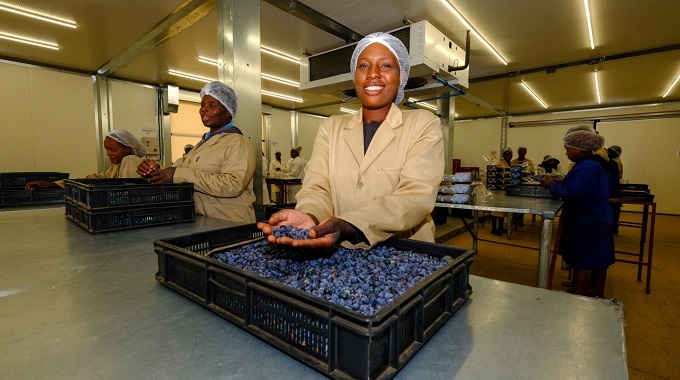
Business Writer
Nhimbe Fresh Produce is set to commission its distribution hub in United Arab Emirates (UAE) soon as the company targets to boost exports to the region and the European Union.
“We are almost done (with the construction of the warehouses) and also prepared to push more volumes to those markets,” chief executive Dr Dr Edwin Moyo said in an interview.
The distribution hub would provide easy market access to the Middle East and Europe.
Nhimbe has a green label from the European Union, which allows it to export its blueberries and other high-value products into Europe duty-free.
All standard care products will be exported into the UAE while high-value products will go into more demanding markets like Europe and the UK.
Standard crops include butternut, potatoes, onions, garlic, ginger, sweet potatoes, watermelons, ground nuts, macadamia nuts, avocados, lemons and oranges.
Last year, the Government unveiled US$30 million revolving facility to support the sector from a portion of the International Monetary Fund’s US$970 million SDRs.
Lands, Agriculture, Fisheries, Water and Rural Development Ministry said there had been significant improvements in production of several horticultural crops.
For instance, the blueberry production rose 34 percent to 4 700 tonnes in 2022 while output is expected to reach 6 500 tonnes in this year’s planned land area of 470 hectares.
Cash crops being produced for the export market include temperate fruits (oranges, apples, pears, peaches, and nectarines), tropical fruits and vegetables (baby corn, butternut, citrus, chili, gem squash, kiwi, lychee, mango, passion fruit, and pineapples), baby carrots, fine beans, cherry tomatoes, mange tout peas, melon, strawberries and sweet corn, as well as flowers.
Other major markets for Zimbabwe’s horticultural exports are the Netherlands, the United, Kingdom, South Africa, Germany, Hong Kong, Portugal, France, China, Norway, Poland and Spain, according to Zimtrade, the country’s export promotion body.
The UK is the second-largest importer of Zimbabwean horticultural products and with the coming of the UK- Eastern and Southern Africa Economic Partnership Agreement, Britain has signaled its intention to strengthen bilateral trade relations.
With the Horticulture Recovery and Growth Plan under implementation to stimulate export growth, indications are that local farmers will boost production, making it easy to meet the requirements of buyers and growing demand.



 Online Reporter