malvernmugadzikwa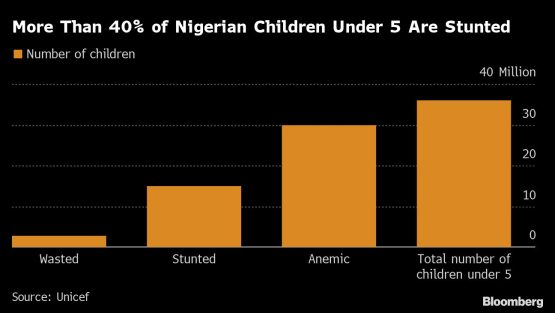
Nigeria faces the risk of a generation of stunted adults as climate change and conflict have resulted in the country having the second-largest number of malnourished children globally after India.
Of the 36 million Nigerians under five years of age, 15 million are stunted, 2.8 million are severely wasted and 30 million are anemic, according to figures provided by the United Nations Children’s Fund, or Unicef. Saving these children would cost about $120 each, mostly in the form of therapeutic food, according to the agency.
“The numbers are frightening,” said Nemat Hajeebhoy, head of nutrition for Unicef in Nigeria. “Essentially after the age of five or so, it’s irreversible.” Without intervention “a child who is stunted will be a stunted adult,” she said.
Much of Nigeria, which has a population of more than 200 million, was hit last year by devastating floods, which damaged crops at a time when the country was still recovering from the Covid-19 pandemic. At the same time, the northern half of the country is wracked by violence from both jihadist groups and bandits. The insecurity and natural disasters hamper organizations such as Unicef from dispensing aid, cripple food production and interrupt immunization campaigns.
“When you look at the impacts of conflict on the population, it’s going to affect all forms of malnutrition,” Hajeebhoy said. “It compromises a child’s long-term growth and development” and more immediately, hungry children can be hit by wasting, she said.
By the end of December, 17 million people were without adequate food and that number is expected to rise to 25.3 million between June and August, the so-called lean season, according to Unicef. That compares with just over 4 million in December 2019.
The most difficult states to access because of violence are Borno and Yobe in the northeast and Zamfara in the northwest. But stunting, wasting and inadequate nutrition are problems across the country, including in the commercial capital, Lagos.
Wasted children, characterised by thin limbs and bloated bellies, are in danger of dying. Stunting can also affect cognitive development.
The warning about the expected increase in numbers of hungry people “has come early enough for us to act,” Hajeebhoy said. “There’s food assistance, there’s cash assistance, there’s also preparedness for ensuring that if the numbers increase, we have the best capacity to treat mothers and children from a nutrition lens with lifesaving nutrition services.”
That, of course, costs money.
There are “two big things,” she said. “It’s the planning and ensuring the resources, financial and human, are available to respond.” — Bloomberg



 Online Reporter