admin
admin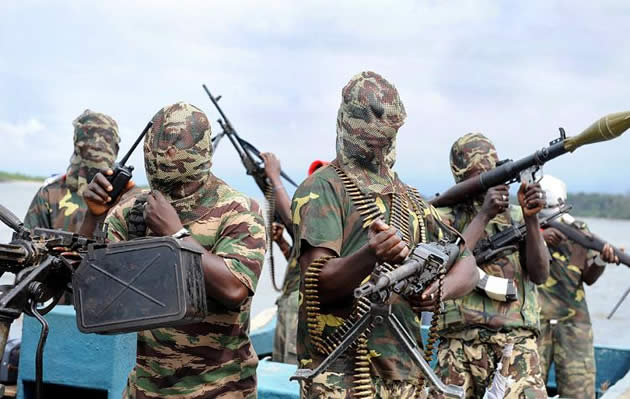
 RABAT — Boko Haram, the Nigerian group recently labelled by the US as a terrorist organisation trained with al-Qaeda’s North African branch in northern Mali, France’s foreign minister said yesterday. Citing documents recovered in the remote Ifoghas mountains in northern Mali following the French intervention earlier this year, Laurent Fabius said Boko Haram’s presence there demonstrated the interconnection of jihadi groups in Africa.
“This is a source of concern for all of us,” he said at the opening of a conference in Morocco on regional responses to security challenges. Formed in 2009, Boko Haram seeks to impose Islamic law in northern Nigeria and is blamed for thousands of deaths, including the bombing of the UN building in the capital in 2011.
A French priest was kidnapped yesterday in Cameroon, near the border with Nigeria in an area where Boko Haram is known to operate, the French Foreign Ministry said.
While Boko Haram was believed to have links with al-Qaeda affiliated groups in the deserts to the north, the actual training of the group in northern Mali was not widely known.
Al-Qaeda’s North Africa branch teamed up with extremists from the desert-dwelling Tuaregs to take over northern Mali, until they were driven out by a French-backed African force early this year. There are longstanding concerns that extremist groups throughout the poorly controlled desert regions were co-ordinating their activities.
Yesterday’s conference, which included foreign ministers from France and a number of African countries, is seeking to improve regional security co-operation and address porous borders, especially in Libya.
Since the overthrow of Muammar Gaddafi in 2011, security has broken down in Libya and weapons and drug smugglers cross the borders in the south with impunity.
Following the French intervention in Mali, it is widely believed that elements of al-Qaeda took refuge in southern Libya, working with smuggling networks.
“The fact remains that as organised crime transcends international borders there is no doubt in my mind that this type of networking exists with elements of al-Qaeda,” Libyan Foreign Minister Mohammed Ahmed Abdelaziz told The Associated Press on the margins of the conference.
“This type of networking has serious implications on the security of the borders.” — AP.


 Online Reporter