Online Reporter
Walter Nyamukondiwa in Ningxia, China
SENATE president and Zanu PF Women’s League Secretary Cde Mabel Chinomona says Zimbabwe can draw valuable lessons from China’s poverty alleviation model as the country accelerates efforts to attain Vision 2030 through inclusive rural development.
Speaking at an international seminar organised by the Communist Party of China’s (CPC) International Department in the Ningxia Hui Autonomous Region, Cde Chinomona said the transformation of Ningxia from one of China’s poorest regions into a vibrant industrial and agricultural economy demonstrated that poverty could be defeated through targeted, people-centred policies anchored on local economic strengths.
She said China’s East-West Paired Assistance Strategy, introduced by President Xi Jinping during his tenure in Fujian Province in the mid-1990s, had become one of the country’s most effective poverty reduction programmes by pairing wealthier provinces with less-developed regions through financial support, technology transfer and skills development.
Complementing the programme was China’s Targeted Poverty Alleviation Policy, under which every household was assessed to determine the most appropriate pathway out of poverty.
The interventions, implemented through the CPC leadership structures, Government departments, State-owned enterprises and the private sector, have helped lift about 800 million people and more than 128 000 villages out of poverty.
Private companies and State enterprises also played a significant role, with 10 000 enterprises supporting 10 000 villages through investments worth more than seven billion yuan (about US$1 billion).
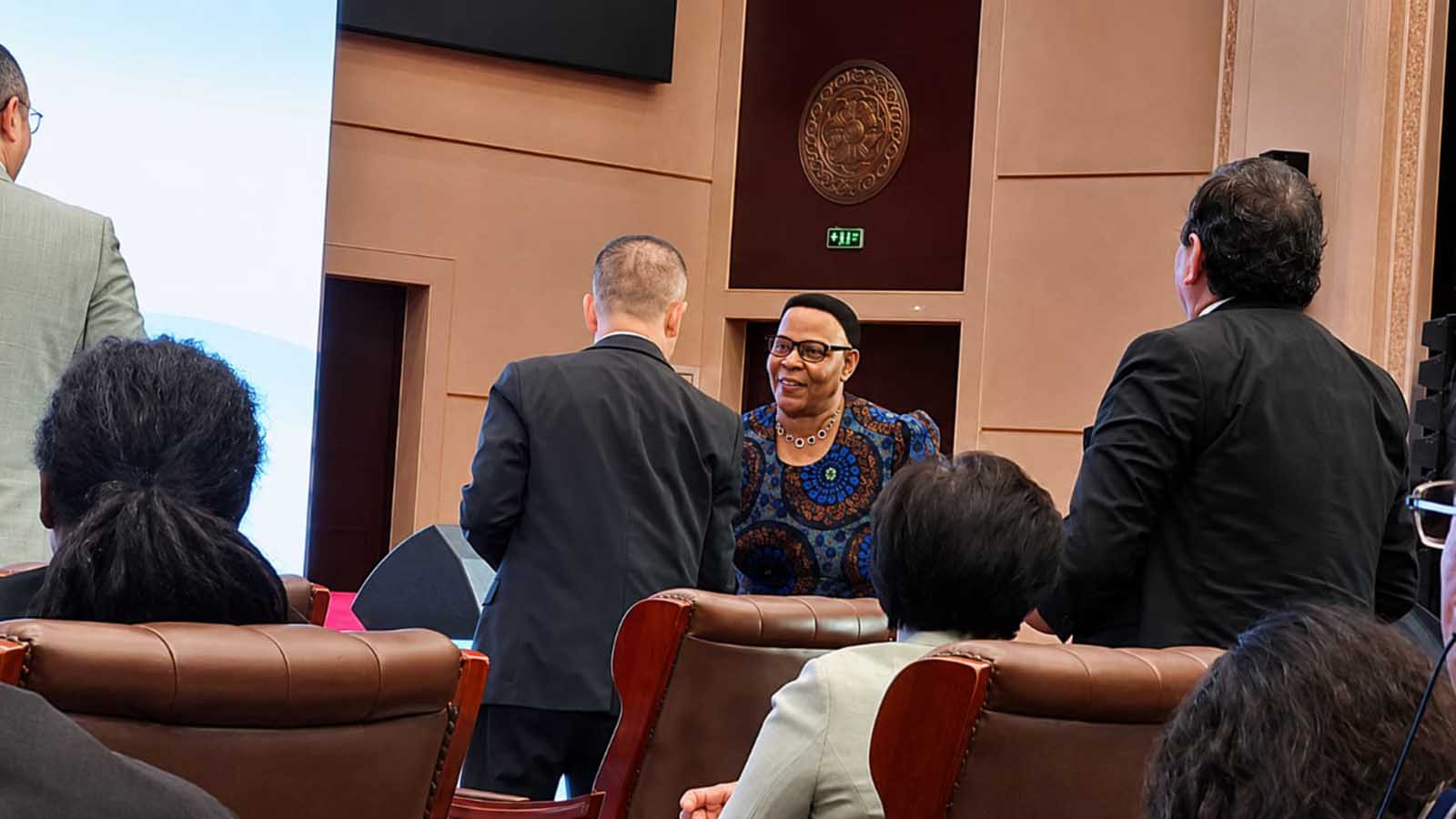
Cde Chinomona said the results were evident in Ningxia, whose Gross Domestic Product grew from about 24,2 billion yuan in 1999 to nearly 570 billion yuan in 2025, while per capita GDP rose from 3 926 yuan in 1996 to almost 78 000 yuan last year.
The Zimbabwean delegation toured several flagship projects, including the Paddy-Fish Space Eco Park, the Minning Pavilion for East-West Paired Assistance, the Erke sportswear factory, a green energy supply station, the Ningdong Sci-Tech Innovation Pavilion and coal and new materials industries.
Speaking in her capacity as ZANU PF Women’s League Secretary, Cde Chinomona commended the deliberate inclusion of women in Ningxia’s economic transformation.
She noted that about 95 percent of employees at the Erke sportswear factory are local women, many of whom continue to earn dividends from their land shares while holding formal employment, creating multiple sources of income for their families.
She also highlighted the Minning model, where annual disposable income in an area once characterised by barren land and widespread poverty had increased from about 500 yuan in 1997 to more than 16 000 yuan through grape production, mushroom farming, cattle rearing, renewable energy projects and tourism.
Cde Chinomona said the model resonated with President Mnangagwa’s development philosophy of leaving no one and no place behind, adding that Zimbabwe could adapt China’s experience to suit local conditions.
“Zimbabwe believes that China’s greatest lesson is that poverty is not defeated by short-term assistance alone, but by empowering people to participate productively in the economy through skills, technology, industrialisation and market access,” she said.
She called for deeper cooperation between ZANU PF and the CPC in areas such as rural development, agricultural modernisation, renewable energy, industrialisation and community empowerment.
Addressing the seminar, CPC International Department Minister Mr Liu Haixing said Xi Jinping Thought had provided the ideological foundation for China’s poverty eradication programme, enabling the country to eliminate extreme poverty a decade ahead of the United Nations 2030 target.
He said developing countries could draw useful lessons from China’s experience while adapting the model to their own national circumstances.
Mr Liu said President Xi personally visited villages more than 50 times during the implementation of the poverty alleviation programme, demonstrating the leadership’s commitment to improving people’s livelihoods.
Today, areas of Ningxia once characterised by sandy, barren land have been transformed into productive agricultural zones producing wine grapes, watermelons and goji berries, while more than 20 wineries employ about 10 000 people, illustrating the long-term benefits of industry-led rural development.