Online Reporter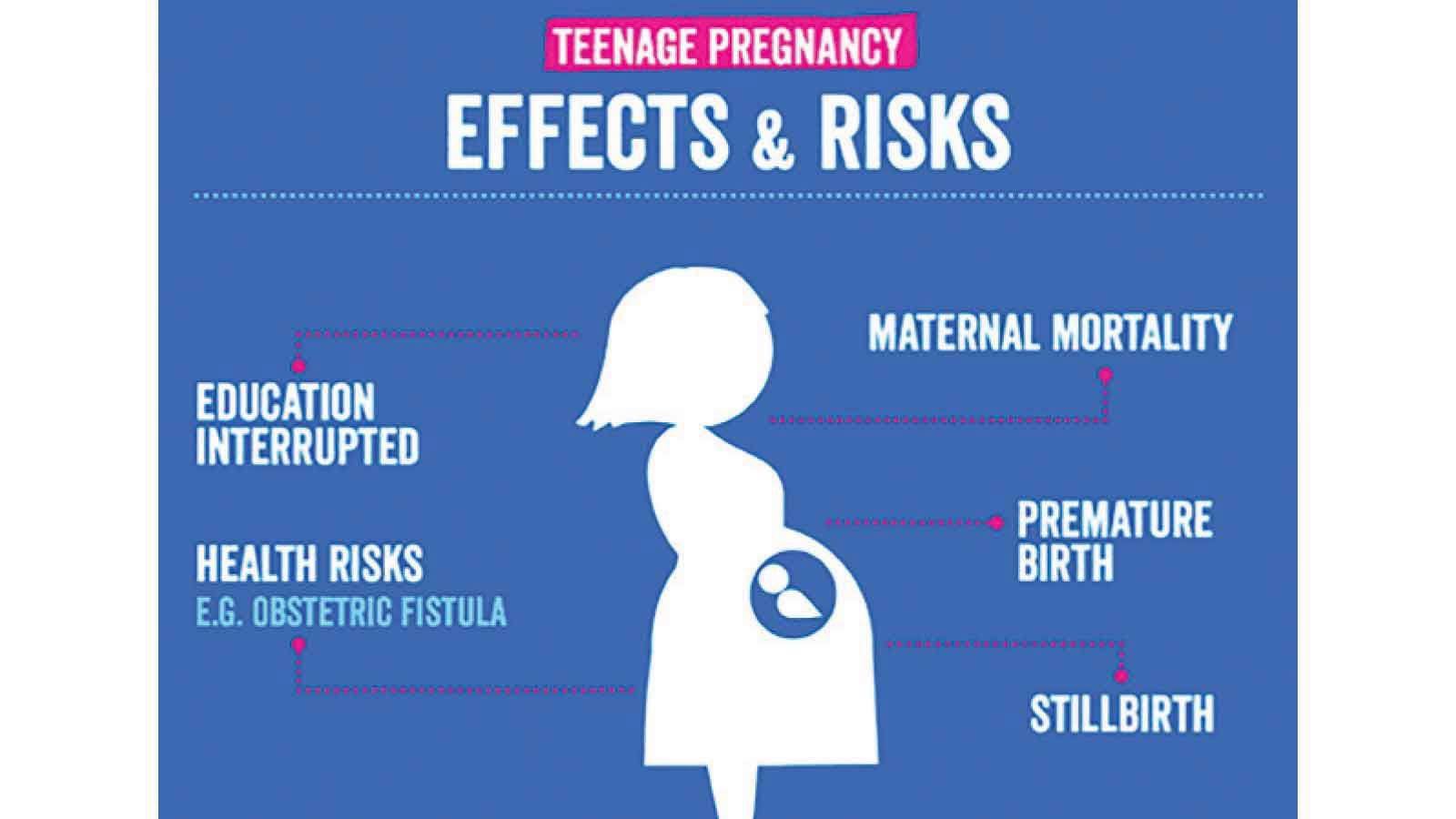
Muchaneta Chimuka
Herald Reporter
AT just 13 years old, Shamiso (not her real name) is already facing the harsh realities of motherhood after being abandoned by the 18-year-old man who allegedly impregnated her.
Instead of attending school and enjoying her childhood, Shamiso is responsible for caring for her infant daughter, cleaning the house, washing dishes and performing other household chores while living with her elderly grandmother, who struggles to provide for the family because of her age.
Her situation worsened after she was rushed to hospital when her caesarean section wound reportedly ruptured while she was carrying out household chores at home.
The alleged father of the child, Munyaradzi (not his real name), is said to have deserted Shamiso after learning that she was pregnant, leaving the teenage mother to fend for herself.
When this reporter visited her in hospital, Shamiso recounted the challenges she has endured since becoming pregnant, describing a life marked by hardship, abandonment and uncertainty.
“I used to stay with my parents in Harare, but they chased me away after realising that I was pregnant. I came to Chitungwiza to stay with my grandmother, who accepted me,” she said.
“I was not raped; I consented to have sex with my 18-year-old, but he dumped me after I fell pregnant. My parents once sued him, but he was later released. I do not know what happened to the matter since I was hospitalised thereafter.”
Theresa gave birth to a bouncing baby girl at Chitungwiza Central Hospital through caesarean section after the doctors recognised that she was young and unfit to deliver normally.
“After delivering, I stayed in hospital for four days and was discharged. I went home, and my grandmother was assisting me in nursing the child, but I had complications and had to go back to the hospital. I have spent two weeks in hospital and am not sure when I will be discharged.”
The minor had a torrid time breastfeeding the child and, at the same time, nursing the C–section wound.
She is now appealing for financial assistance from well-wishers.
“I do not have sanitary ware, baby clothes, food, and most of the medications that doctors prescribed for me. I do not have any means to look after myself and the child,” she said.
Theresa has hopes of going back to school, but she said chances were slim since her family was poor.
She said most of her family members had deserted her for rushing to have a baby, and chances are high that history might repeat itself; considering her vulnerability, she might end up having more unwanted children during her teenage years.
The teenager is now a laughing stock of society at a time when she needs the utmost support.
“My peers laugh at me. I blame myself for this, and if I had a way, I would have changed the situation,” she said.
“All I need is support so that I can look after my baby — I love her. My baby is innocent, and I am the one to blame.”
Shamiso is not alone in this dilemma; teen pregnancy has been high in Africa and globally, resulting in high school dropouts, illegal abortions, suicide cases, and maternal mortality.
On Shamiso’s hospital bedside is another girl aged 12 from the apostolic sect, clad in her white garments, waiting to deliver her baby — it is a sorry state.
The girl was moaning in pain and was heard uttering all sorts of prayers to the Almighty to save her from the cramping pain.
Chitungwiza Central Hospital spokesperson Mrs Audrey Tasaranarwo said teen pregnancies are rife and they had witnessed many cases at the institution.
“We are receiving many cases of teen pregnancies. Some experience difficulties in delivering babies as their bodies are not yet mature,” she said.
“Most of them deliver through caesarean section, like the 13-year-old girl that we are talking about. She did not have a birth certificate because her parents had separated way back, and the doctors had to do tooth counting to establish her age.
“She was admitted here after her operation ruptured. She is very young and cannot take care of herself and the baby; hence, our hospital staff has to take turns assisting her to feed, bathe, and dress the child.
“At times she leaves the hospital to play with other children of her age at the hospital playground, and we have to remind her that she is now a mother, hence, she should focus on taking care of her child.”
Memory (16) of Gokwe Nembudziya said she started having sex with her boyfriend last year and he only heard from her peers about safe sex, but she was shy to purchase condoms, which offer double protection.
“I started having sex with my boyfriend when I was 15 years old. I learnt about safe sex fro other girls and the use of both female and male condoms, contraceptives to ensure that I protected myself from sexually transmitted infections, HIV, and unwanted pregnancy,” she said.
“I even knew about the emergency contraceptives and PrEP, but I chose to ignore the information – a huge mistake which resulted in me having an unplanned pregnancy.”
She tried to abort with the assistance of a local traditional healer, but failed when she bled profusely after taking the concoction and had to be admitted to a local hospital, where she received emergency care.
“I gave birth to a child with cerebral palsy, and doctors noted that the baby suffered brain injuries due to the inducement,” she said.
“Life is really hard for me because I’m very young and I’m now facing the burden of taking care of a child with disabilities.
“I no longer have social time, and I cannot go back to school despite the re-entry programme in schools supported by the Government because none would take care of my child.”
She said that after giving birth, doctors introduced her to a long-acting contraceptive, the Intrauterine Contraceptive Device (IUCD), with the approval of her parents.
Teenage pregnancies have been cited as a major contributor to maternal and child mortality, and remain at 22 percent in the country, with the unavailability of family planning information and services for young people being the stumbling block.
Zimbabwe has a growing population of teen mothers, especially in Mbire, Mashonaland Central, according to the United Nations Population Fund (UNFPA )’s latest statistics.
Most children in Mbire are dropping out of school before completing their primary education to get married, robbing their future.
The rapists run away from parental responsibilities and to evade arrest, knowing that it is a crime to marry underage girls.
Poverty, unemployment, lack of parental guidance, xenophobic attacks, internal and external displacement, and lack of educational support have been attributed to the increase in teen pregnancies, especially in remote areas.
Due to a lack of accessible contraceptives during Covid-19, about 5 000 girls were reported to have fallen pregnant in January 2021 alone, and sadly, the abandonment of unwanted babies is one of the outcomes.
Child protection advocate, human rights defender, and social justice advocate Chinga Govhati said many girls end up having unsafe abortions to avoid stigma and shame, and they need the utmost support.
“The cases are the tip of the iceberg of what is happening to women and girls as a result of their inability to access contraceptives,” she said.
“We are pushing the government to legalise abortion in Zimbabwe because research has shown that maternal mortality is very low in countries where abortion is legalised and done under the care of experienced medical practitioners.”
She said comprehensive sexuality education is essential to building the self-efficacy of young people to act on sexual reproductive health rights information that they receive.
Notable countries where abortion is legal on request or without restriction as to reason include: South Africa, Mozambique, North America, Europe, Canada, the United States, Vietnam, Singapore, and South Korea; Oceania: Australia and New Zealand; Latin America: Argentina, Colombia, Cuba, Uruguay, and Benin allow abortion broadly within the first 12 weeks of pregnancy.
According to a study by the Guttmacher Institute, 40 percent of pregnancies in Zimbabwe were unintended, and one-quarter of all unintended pregnancies ended in abortion. The study highlights that nearly all these abortions were performed in an unsafe manner.
Hon. Daniel Maloleke, member of Parliament for Hwange Central, who chairs the parliamentary portfolio committee on health and national development, said Government should consider the economic implications of unsafe abortions on the country’s economy.
“Almost every day, a child is picked from the bin or a bush or at the gates of some orphanage,” he said.
“So what can we do to save the children and to fix the problem once and for all. The Government should review the restrictive law on abortion, facilitate access to safe abortion care for everyone who needs it, and make contraception more accessible so that unwanted pregnancies can be prevented in the first place.”
He said it’s high time the whole of society, which encompasses religious and traditional leaders, join hands and fight for the same cause – against child marriages, illegal abortions, poor health-seeking behaviours, among other social ills.
The United Nations Population Fund (UNFPA) 2012 report says at least 31 percent of girls are married before the age of 18 years in Zimbabwe, with 15 percent of them getting married by the age of 15.
The issue of teen marriages is not confined to Zimbabwe, but is widespread across the globe.
A report by the World Bank reveals that early marriage is closely linked to poverty and girls’ educational opportunities. Across 18 of the 20 countries with the highest prevalence of child marriage, girls with no education are up to six times more likely to marry than girls with a secondary education.
Girls living in poorer households are almost twice as likely to marry before the age of 18, compared with girls in higher-income households
Hundreds of survivors of sexual abuse are less likely to report for fear of being let down by the judicial system, and half the people who have sex with underage girls by consent are often given community service sentences.
The Government is making strides to make sure that every child goes to school, and it has introduced an educational policy that ensures that all learners who dropped out of school due to pregnancy continue with their education without discrimination (Section 75 of the Education Amendment Act of 2019).
Organisations such as Tag A Life International (TALI), Campaign for Female Education (CAMFED), Farm Education Community Trust (FACET), Education Coalition of Zimbabwe, and Patsime Edutainment are complementing government efforts by ensuring that girls receive their education.
More than 10 000 teenage girls dropped out of school across Zimbabwe between 2023 and 2025 due to pregnancy and early marriage, according to official data from the Primary and Secondary Education Ministry.
These statistics present a worrying picture of the challenges facing girls within the education system, showing that despite legal frameworks designed to keep pregnant learners in school, thousands continue to have their education cut short.
The figures highlight a persistent national challenge in which teenage pregnancy and child marriage drive high dropout rates, particularly in rural areas.
In 2023 alone, more than 4 500 girls dropped out due to pregnancy, with 3 942 of the cases recorded in rural schools, highlighting a stark urban-rural disparity.
In 2024, the ministry recorded 3 433 school dropouts linked to early marriage and adolescent pregnancy.
Secondary school learners accounted for the majority of these cases, with 3 324 pupils leaving school to become teenage mothers or wives.
By 2025, 102 girls had dropped out of primary school due to pregnancy, indicating that learners as young as 12 or 13 are falling pregnant while in primary school.
At the secondary level, 2 433 girls dropped out for the same reason. Primary and Secondary Education Ministry spokesperson Taungana Ndoro reveals that teenage pregnancy remains a major challenge, and they are engaging traditional leaders to ensure that teen mothers return to school.
“The ministry has been implementing targeted programmes to address this, including Circular 18, which allows pregnant learners and young mothers to continue or resume their education without discrimination. Measures are being implemented to reduce stigma and support reintegration. ,” he said.
In 2016, an estimated 65 300 induced abortions occurred in Zimbabwe. This translates to a rate of 17 abortions for every 1,000 women aged 15–49.
Zimbabwe has the highest abortion rate in the Sub-Saharan region at 34 per 1,000 women aged 15–44.
Abortion rates in Zimbabwe vary greatly across the country. The highest rates are in the Mashonaland provinces and Harare (21 per 1,000 women aged 15–49), and the lowest in the Manicaland and Masvingo provinces (12 per 1,000 women).
In Zimbabwe, it’s a criminal offence to have sex with a minor even if she consented to it, and if a pregnancy occurs, it can be terminated by law. However, some young mothers might not be well-versed in the provisions of the Termination of Pregnancy Act.
The Termination of Pregnancy Act governs Zimbabwe’s abortion laws [Chapter 15:10], which permit abortion in only three specific circumstances: risk to the mother’s life/health, severe foetal abnormalities, or pregnancy from rape/incest. Unlawful termination carries strict penalties.
The legal framework is undergoing significant changes. The High Court and Parliament have advanced rulings and legislative reforms to expand legal access, particularly regarding mental health and rights for minors and survivors of marital rape.