

 Online Reporter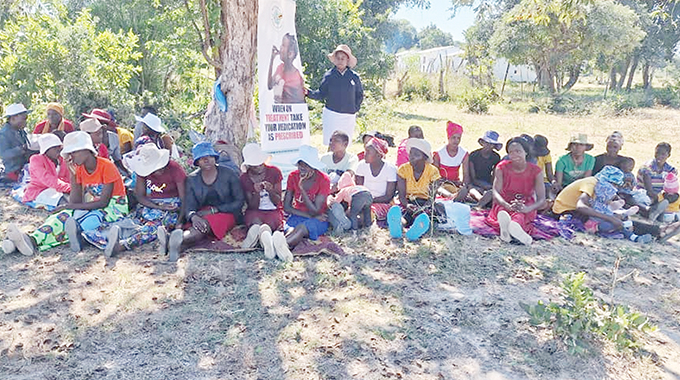
Mkhululi Ncube, [email protected]
THE Government and its partners are making significant strides in women’s empowerment, by supporting young women and girls in Nkayi District — reshaping their futures and steering them away from risky behaviours that increase their vulnerability to HIV and Aids.
One such initiative is the Shining Sisters group from Ntshololozane Village. These young women were empowered through a poultry project supported by Pangea Zimbabwe in collaboration with the Government. Today, they are running their own businesses and generating income.
The National Aids Council (NAC) recently conducted a media tour, giving journalists first-hand insight into the girls’ progress and the impact of the project.
NAC Matabeleland North Provincial Manager, Mr Dingaan Ncube, said the Adolescent Girls and Young Women (AGYW) project is helping participants become self-reliant.
“This economic independence reduces their reliance on transactional relationships, thereby decreasing their vulnerability to HIV. Additionally, the AGYW are consistently taking Pre-exposure Prophylaxis (PrEP), further enhancing their protection against HIV acquisition,” he said.
The Shining Sisters are now living their dream. They sell eggs within the community and at local shopping centres, using the proceeds to purchase goats and household items.
Their mentor, Ms Lubelihle Mkandla, said the project has empowered the girls to become independent — an essential step in helping them avoid risky behaviours.
“The group comprises 10 young women, some of whom are mothers, while others are adolescent girls. We’ve provided them with training to manage their poultry. They’ve since bought goats, household utensils, and those with children are now able to provide for their needs. Economic empowerment is crucial for girls and young women in rural areas, where poverty can drive them into risky situations that increase their exposure to HIV and Aids,” she said.
Ms Mkandla said the young women have fully embraced the project. While some did not progress far in formal education, they are now developing valuable business skills through their enterprise. One of the adolescent girls, Nobuhle Msimanga, said they meet every Wednesday to review and plan their business activities.
“We received training from various Government ministries, including the Veterinary Department, Women Affairs and Agritex. The community has supported us by buying our products, which has enabled us to purchase goats, blankets and other essentials. Our mentor also provides vital education on behaviour, helping us make informed choices about HIV,” she said.
Another member, Sithembinkosi Sibanda, said they view the goats as a store of value that will bring long-term returns.
“This project is beneficial because it keeps us occupied and away from behaviours that could put us at risk. We’re grateful for the support from the community, Government and local shops that buy from us. Government departments and ministries are always available to assist us,” she said.
In Mbazhe Village, a similar programme is empowering young girls with knowledge about HIV, helping them make wise decisions.
Ms Nomalanga Ndlovu said they have a Safe Space where girls are mentored to become business-minded and develop income-generating projects. One of the girls was trained in leather cutting and design and returned to the village to help the group start producing leather belts.
“We formed a club and pooled our resources to buy materials. We’ve learnt various self-help projects, and for now, we’re focused on leather belt production. We share the proceeds from sales. This keeps us productive and reduces our dependence on men for support,” she said.
Ms Andile Zikhali, the facilitator in Ward 5, said in addition to empowerment projects, they educate adolescent girls to reduce their exposure to HIV.
Sisasenkosi Mavule said they have learnt about PrEP and other prevention methods to protect themselves from HIV.
“I’ve learnt that PrEP is taken by someone who is HIV-negative, but you must first know your status.
“Through the education we’ve received, we’ve undergone HIV testing, as a nurse visits our Safe Space to provide services,” she said.
Nkayi District is one of the hardest-hit areas by HIV in Zimbabwe, with 10 723 people living with the virus. However, progress is being made in treatment, with an impressive 97 percent antiretroviral therapy (ART) coverage, among people aged 15 and above living with HIV.


 Bongani Ndlovu