Online Reporter
Raymond Jaravaza, [email protected]
THE Bulawayo City Council says it will not decommission any of its six supply dams — Inyankuni, Umzingwane, Lower Ncema, Mtshabezi, Upper Ncema and Insiza Mayfair — this year but will continue with the revised 72-hour water-shedding programme to preserve raw water for the next 12 months.
Bulawayo residents have endured 120-hour water-shedding regimes, especially in the dry seasons when some dams are decommissioned due to low water levels.
In previous years when the country experienced recurring droughts, the City of Bulawayo decommissioned major supply reservoirs such as Upper Ncema and Umzingwane due to critically low water levels caused by poor seasonal inflows.
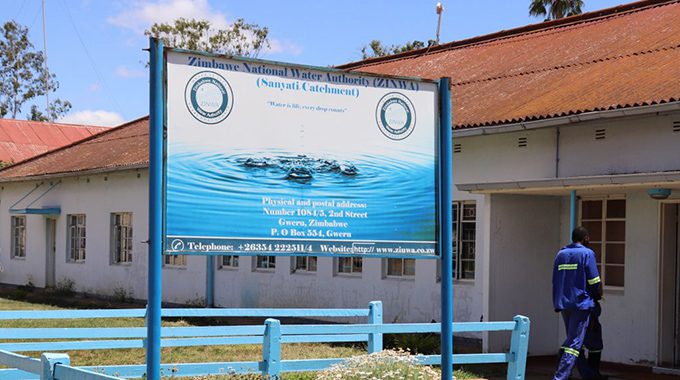
When water levels are critically low in the city’s supply dams, council resorts to introducing a 120-hour water rationing programme to replenish reservoirs and reserve water during the dry months before the rainy season.
As of 27 July 2026, the national dam average water levels stood at 89.3 percent, according to statistics from the Zimbabwe National Water Authority (Zinwa).
Only 16 dams were flagged to be at critical levels of less than 50 percent while 44 water reservoirs stood at 99.9 percent capacity.
Responding to queries from councillors during a Bulawayo City Council media briefing, acting Director of Water and Sanitation Services, Engineer Sikhumbuzo Ncube, said given the current water levels in the city supply dams, BCC might only consider decommissioning any of the dams after 12 months.
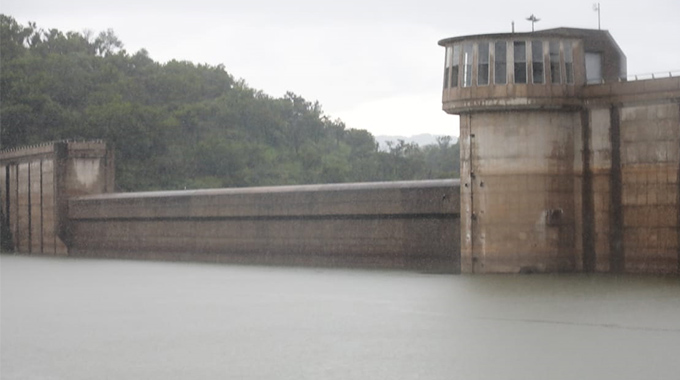
“If we make sure that we keep our house in order in terms of our pumping capabilities and work around the 72-hour to 96-hour water shedding programme into the next rainy season, then the water in the dams will see us through to next year.
“The one thing that works to our advantage as council is that the culture of saving water is now ingrained in us as Bulawayo residents to conserve water. We’ve had incidents of residents phoning and complaining that council has made available water beyond the usual water shedding dates that they are used to, something that shows us that residents are aware and very sensitive to the water situation that the city is experiencing,” said Eng Ncube.
“The only dam that might be decommissioned next year is Umzingwane compared to last year when we were forced to decommission two dams, so we are confident that no dam will be decommissioned this year,” he said.
Council has turned to the construction of the Bopoma Glassblock Dam, in Matabeleland South, as a short- to medium-term solution to ease the city’s water challenges.

The US$98 million Bopoma Glassblock Dam to be built in the Upper Umzingwane Catchment Area, Insiza, Matabeleland South Province, is touted as a medium-term solution to Bulawayo’s water challenges.
Strategically located at the confluence of Gwanda, Umzingwane and Filabusi districts, the dam will be built by JR Goddard Contracting Pvt (Ltd) and is expected to be completed in three years.
When full, the dam will hold 129 million cubic metres and council can pump up to 68 megalitres a day.
The dam will be Bulawayo’s second-largest supply dam after Insiza Dam, which has a capacity of 173 million cubic metres.
In May, a high-level African Development Bank (AfDB) delegation visited the site of the proposed dam, marking a positive development in the drafting of a take-off water purchase agreement between BCC and the funders of the project.
Government awarded the tender to JR Goddard Contracting in 2019, under the Build, Operate and Transfer (BOT) arrangement.
Under the agreement, the city will pay 90 cents for a cubic metre of raw water during the first 10 years of the repayment period. The cost will drop to 70 cents for the next 15 years.
In comparison, BCC pays 29 cents for a cubic metre of raw water from Mtshabezi Dam and 51 cents for water from Nyamandlovu Aquifer. The cost of treated water for residents could rise by 16 cents per kilolitre (1000 litres), increasing the tariff from US$1,22 to US$1,38 per kilolitre.