Online Reporter
Nqobile Bhebhe, Zimpapers Senior Writer
ZIMBABWE has entered the third and decisive stage of its de-dollarisation roadmap, which is focused on entrenching currency stability and building strong fundamentals for a domestic mono-currency by 2030.
Briefing journalists on the sidelines of the just-ended Zimbabwe Economic Development Conference (Zedcon) in Bulawayo last week on Friday, Finance, Economic Development and Investment Promotion Minister, Professor Mthuli Ncube, said the country has made significant strides since the launch of the roadmap nearly four years ago, culminating in the introduction of Zimbabwe Gold (ZiG), which has now anchored stability for the past year. “You cannot de-dollarise if you do not have a domestic currency,” said Prof Ncube.
“So the first step in our de-dollarisation roadmap, which started literally three years ago, if not four years ago, was to introduce a domestic currency, the Zimbabwe dollar, as you know, and then we struggled to stabilise it because certain fundamentals were not in place.”
The minister explained that the authorities swiftly moved to tackle the key drivers of instability at the time, which included quasi-fiscal activities at the Reserve Bank of Zimbabwe (RBZ) and excessive liquidity growth.
“We, at that stage, decided to say, look, let’s remove the sources of instability. So we had the Treasury absorb some of the foreign loans that were sitting at the central bank, which were causing certain macroeconomic stresses. These are so-called quasi-fiscal activities.
“We also, as a fiscus, literally closed any borrowings from the Reserve Bank window, overdraft window, to make sure there is no excess growth in liquidity.
So that was the first. The second step was introducing a domestic currency, and then removing the quasi-fiscal activities.”
Despite these measures, stabilisation of the Zimbabwe dollar remained elusive, leading to the introduction of Zimbabwe Gold (ZiG) last year.
“We carried on, and then we still could not stabilise the Zimbabwe dollar. We ended up replacing it with the ZiG, as you know. And by the time we introduced the ZiG, everything was in place. We had fiscal discipline, we had monetary discipline.
“The sources of vulnerability and instability and excess liquidity had also been contained. I would like to say right now, we are really on phase three. Phase three being, how do you engender stability further because we have been stable now for a year.”
Zimbabwe is presently operating under a multicurrency regime dominated by the US dollar and ZiG, legally provisioned to run until 2030.

By then, the authorities expect strong economic fundamentals to support the re-introduction of a sustainable mono-currency system.
The country officially adopted a US dollar-dominated system in 2009 after hyperinflation wiped out the value of the local currency.
While the US dollar has provided stability and low inflation, it has also created competitiveness challenges for local producers and constrained policy flexibility.
Authorities, led by the RBZ, are confident that the de-dollarisation roadmap set to be crystallised under the National Development Strategy 2 (NDS2) will deliver a resilient local currency anchored on productive sectors, low inflation and fiscal prudence.
“Zimbabwe needs a domestic mono-currency, like the ZiG, to regain control over its monetary policy, manage inflation and foster long-term economic planning,” Prof Ncube said.
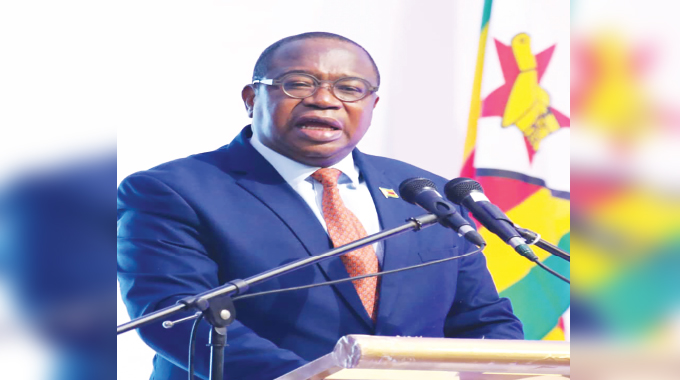
Permanent Secretary Mr George Guvamatanga said the de-dollarization road map was crafted and finalised in 2019.
“We do have a very comprehensive de-dollarisation roadmap.
As we speak the ZiG which we are currently using was created as part of that road map. So already we are in the de-dollarisation process and from the Government perspective we are already implementing it. We are on course towards achieving de-dollarisation.”
He noted that sentiments raised by delegates were captured and would be looked into and incorporated in the roadmap.
The roadmap is a key pillar in the drive towards Vision 2030, which aims to transform Zimbabwe into an upper-middle-income economy.