

 daniel chigunwe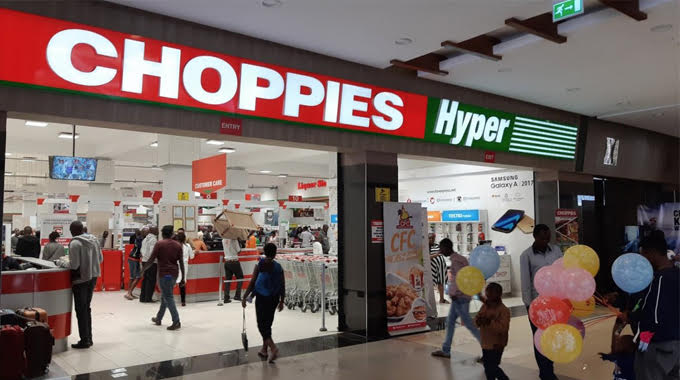
Nelson Gahadza
The recent exit of Choppies, which has started negotiations to sell its business in Zimbabwe, shows the underlying macroeconomic challenges the formal retail sector is facing without reprieve.
Facing the adverse effects of informal traders, the sector is operating in a turbulent economic environment, marked by volatile currency rates and weak consumer disposable incomes.
Choppies, which has been in the market for 11 years, in a recent statement, said it was departing Zimbabwe due to unfavourable conditions that disproportionately benefit informal traders, despite the significant contributions of formal retailers to the national revenue.
The company noted that it has invested heavily in Zimbabwe to support local livelihoods but now needs to reallocate resources to more conducive environments.
Formal market retailers are mandated by some regulations to sell their products in both local and foreign currencies, adhering to the official market rates set by the government.
However, these formal rates are perceived as overvalued, as they do not account for actual market forces of supply and demand.
“Consequently, products sold in the formal market become more expensive compared to those available in the informal sector.
“At present, there exists a 60 percent premium between the formal market rate and the parallel market rate, meaning that prices based on the formal market rate are approximately 60 percent higher than those charged by informal traders,” equities research firm, Equity Exis said.
The firm added that this discrepancy is particularly pronounced in US dollar pricing, where a significant variance exists between formal and parallel market rates.
“The informal sector enjoys a competitive edge by evading tax obligations and importing products from neighbouring countries, where these items are cheaper, albeit of lower quality,” Equity Axis said.
The Government in the 2025 National Budget, proposed a slew of tax reforms aimed at bringing the informal sector into the formal economy. SMEs in high-transaction sectors such as retail, hardware, and hospitality must adopt point-of-sale (POS) systems and maintain proper financial records.
Malone Gwadu, a financial analyst, told Business Weekly that anti-smuggling exercises where failure to produce tax receipts on goods being sold by the informal market is assumed smuggled will reduce undercutting by the informal market. “Protecting the formal market that is tax compliant will gradually align prices whilst doing away with price mismatches with the informal market, as they will probably be cornered to comply,” he said.
Food World Supermarket has permanently closed some of its branches in Harare, while early in the year clothing retailer, Truworths Limited, closed six shops due to underperformance as a result of the operating environment.
South African retail giant, Pick n Pay Group Limited (Pick n Pay), wrote down its investment in TM Supermarkets (Pvt) Limited (TM) to zero, citing ongoing losses.
Pick n Pay, which owns a 49 percent stake in TM through a partnership with Zimbabwean conglomerate, Meikles Limited, attributes the decision to Zimbabwe’s turbulent economic environment, marked by hyperinflation, volatile currency rates and growing economic instability.
However, investment analyst, Enock Rukarwa, said as the operating environment remains challenging for most sectors, the most optimal strategy in the short to medium term is to balance revenue maximisation and capital preservation.
“Key in such obtaining circumstances is to control operational expenditure and focus on high-margin product lines,” he said.
Market watchers believe the relationship between the retailers and the supply chain is at an all-time low, with retailers stuck with their ZiG while suppliers and manufacturers are insisting on US dollars, as a result disrupting the supply value chain.
According to FBC Securities, policy refinements by authorities aimed at improving the competitiveness of formal retailers, especially in pricing, are strongly encouraged, considering how vital these businesses are to tax contributions and employment creation.
Kuda Mundowozi, a business analyst, said measures aimed at bringing informal businesses into the formal economy are projected to generate an additional US$200 million annually.
However, he said implementing this reform will require careful consideration of the capacity of SMEs to meet these new compliance standards.
He said small businesses often operate on tight margins and may lack the financial and human resources needed to maintain detailed records or adopt POS systems.
“The risk of non-compliance is significant, particularly if enforcement is perceived as punitive rather than supportive.
“To address these challenges, the government has highlighted the need for taxpayer education programs and simplified registration processes. By fostering a collaborative approach, Zimbabwe can enhance compliance rates while reducing resistance among SMEs,” he said.


 Online Reporter