Online Reporter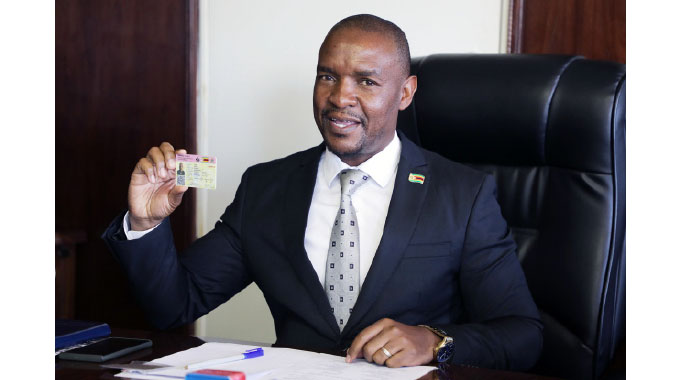
Freeman Razemba-Senior Reporter
All drivers are no longer required to undergo mandatory retesting following a Government decision to scrap the requirement with immediate effect as part of a wider deregulation of the transport sector aimed at cutting red tape, lowering operating costs and improving the ease of doing business.
Authorities have also significantly reduced licences, permits and regulatory fees across the transport sector, in a sweeping deregulation exercise set to lower operating costs for players in the sector.
The reforms are intended to eliminate excessive administrative costs and streamline the regulatory environment in order to enhance Zimbabwe’s economic competitiveness.
Law enforcement agencies have since been advised that retesting of drivers is no longer a legal requirement and is therefore no longer enforceable.
In a statement yesterday, Transport and Infrastructural Development Minister Felix Mhona said the removal of driver retesting was one of several key outcomes of the regulatory review.
“As part of the foregoing reviews, Government has completely removed the requirement for retesting of drivers,” said Minister Mhona.
“In that vein, the ministry advises law enforcement agencies that retesting of drivers is no longer a requirement, thus compliance with regards to the same is no longer enforceable at law.”
He said the reforms demonstrate Government’s commitment to building a modern, efficient and business-friendly transport system.
“Indeed, Government remains committed to creating a modern, efficient and business-friendly transport regulatory framework. I therefore urge all drivers, vehicle owners and transport operators to comply fully with road transport regulations and to take advantage of the revised, streamlined fee structure,” Minister Mhona said.
Previously, public service vehicle and truck drivers were required to undergo periodic retesting by the Vehicle Inspectorate Department (VID) in addition to holding a valid driver’s licence. The retests involved practical driving assessments meant to confirm continued competence, particularly for drivers transporting passengers.
In practice, the retesting system attracted widespread complaints from operators and drivers, who argued that it duplicated the original licencing process, increased costs and caused delays, especially when VID centres were congested.
Drivers were required to pay a retesting fee of about US$30 and often lost productive time while waiting for appointments.
The removal of the retesting requirement means PSV drivers will now rely on the standard driver’s licence regime and existing enforcement mechanisms.
Broader fee reforms
Government has also reviewed and reduced fees charged by the Central Vehicle Registry (CVR), Road Motor Transportation (RMT) and the Vehicle Inspectorate Department (VID), covering services such as vehicle registration, change of ownership, operator’s licences, route permits and cross-border permits.
Minister Mhona said the reforms stem from a directive issued by President Mnangagwa during the first Cabinet meeting of 2025, which ordered a comprehensive downward review of taxes, licences, permits and user fees charged by ministries, departments and agencies.
“During the first Cabinet meeting of 2025, His Excellency the President of the Republic of Zimbabwe, Cde Dr ED Mnangagwa, directed a comprehensive downwards review of taxes, licences, permits, regulatory and user fees and charges,” he said.
“This directive sought to eliminate excessive administrative costs and streamline the regulatory environment in order to enhance the ease of doing business and strengthen Zimbabwe’s economic competitiveness.”
Cabinet subsequently approved the review of fees charged by CVR, RMT and VID on September 9, 2025, with a focus on reducing or eliminating unjustifiable and overlapping charges.
The review targeted licencing fees across passenger and freight transport, permit charges that duplicated functions across agencies, monitoring and compliance levies deemed punitive, and transactional fees that undermined operational efficiency.
Minister Mhona said Statutory Instruments 6 of 2026 and 10 of 2026, gazetted on January 9 and 12 respectively, gives legal effect to the new fee structure.
Under the revised framework:
First-time motor vehicle registration now costs US$50, down from US$500
First-time motorcycle registration is US$50, down from US$70
Trailer registration has been reduced to US$50 from US$70
Change of ownership, including new number plates, now costs US$95, down from US$515
Operator’s licence fees have been standardised at US$125 for all vehicles owned and operated, replacing the previous US$50 application fee plus US$75 per vehicle
Route permits now cost US$20, down from US$75
Cross-border permits have been reduced to US$20 from US$150
COMESA Carrier’s Licence now costs US$50, down from US$150
In addition, the requirements for a Garage Inspection Report and PSV driver retesting — previously costing US$25 and US$30 respectively — have been completely removed.
Government says the reforms are expected to lower transport costs, improve compliance and create a more predictable and investor-friendly operating environment for the transport industry.