Langalakhe Mabena, [email protected]
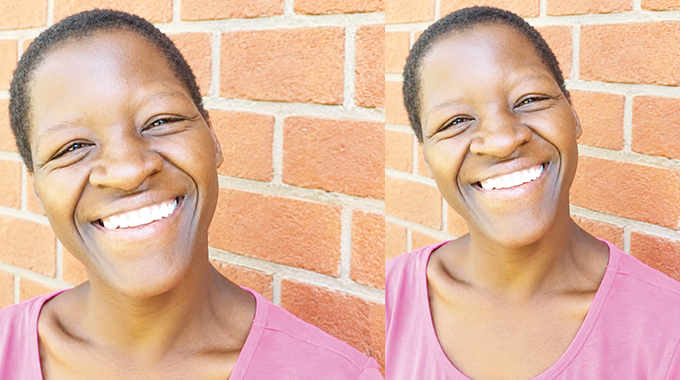
THE late visual artist Nompilo Nkomo has been remembered as a determined and vibrant creative whose work challenged perceptions of disability and championed the artistic potential of people living with disabilities.
Centre for Contemporary Arts Bulawayo director Clifford Zulu described Nkomo as a radiant artist whose life and work touched the hearts and minds of those who encountered her.
Nkomo, who was born on 25 December 1980, died on 19 October 2026 and was buried at Luveve Cemetery on Wednesday, 22 October.
Zulu, a former assistant curator at the National Gallery of Zimbabwe, said Nkomo’s artistic practice demonstrated that physical limitations need not stand in the way of creativity and achievement.
“Despite limited strength in her hands and waist, she used her feet to paint and create her work. Her remarkable ability demonstrated that physical limitations need not restrict creativity, imagination or artistic achievement.
“Through her discipline, courage and commitment, she challenged society to reconsider what it means to be able and to recognise the creative potential that exists in every individual,” said Zulu.
Nkomo spent her early childhood in rural Esigodini. She lost her mother at a young age and was raised by her grandmother. In June 2005, she also lost her father.
The National Council of Disabled Persons of Zimbabwe (NCDPZ) played a significant role in supporting her education and artistic development, paying her school fees from Form One to Form
Four at Danhiko School in Harare.
Between 2003 and 2006, she studied at Mzilikazi Art and Craft Centre in Bulawayo, where she honed her artistic skills.
Upon completing her studies in 2006, Nkomo received a grant from Mrs Lillian Fonds, following a recommendation by NCDPZ, to pursue a visual arts programme. The organisation also provided
her with her first studio space along the old Victoria Falls Road.
That support enabled her to develop her practice, with painting and textiles becoming central to her artistic expression.
In October 2006, the National Gallery of Zimbabwe in Bulawayo further supported Nkomo through its Outreach Programme, providing art materials and opportunities to exhibit her work at the gallery.
The programme also helped market her creations through the Sabona sales shop and other local outlets, expanding her exposure and creating opportunities for wider recognition.
Nkomo’s paintings and textiles explored different facets of Zimbabwean life, reflecting the country’s changing social and cultural landscape. Her work engaged with themes including religion, politics, the economy, food, love, gender, land, the natural environment, community, life and death.
Through these subjects, she offered personal and socially conscious interpretations of the world around her, using art to tell stories and interrogate prevailing attitudes.
Her work also served as a statement of resilience, dignity and possibility, challenging restrictive assumptions about disability and affirming the right of people living with disabilities to participate fully in the arts.
Throughout her career, Nkomo participated in several exhibitions and cultural events, including the One Billion Rising for Justice event in Harare in February 2013 and the Special Schools Festival in Harare in June of the same year.
She also exhibited at the National Gallery of Zimbabwe’s Resident Artists Exhibition in Bulawayo in August 2013, the United Nations World Tourism Organisation (UNWTO) exhibition in Victoria
Falls later that month, and the Intwasa Visual Arts Exhibition at the National Gallery of Zimbabwe in Bulawayo in September 2013, among other platforms.
Zulu said Nkomo’s life and artistic journey should serve as a lasting reminder that creativity transcends physical limitations.
“Her courage and determination inspired those around her, while her advocacy helped draw attention to the talents, rights and aspirations of people living with disabilities.
“Her passing marks the loss of a remarkable artist and advocate. Yet her legacy lives on through the artworks she created, the lives she touched and the barriers she challenged,” said Zulu.