dyton mupawaenda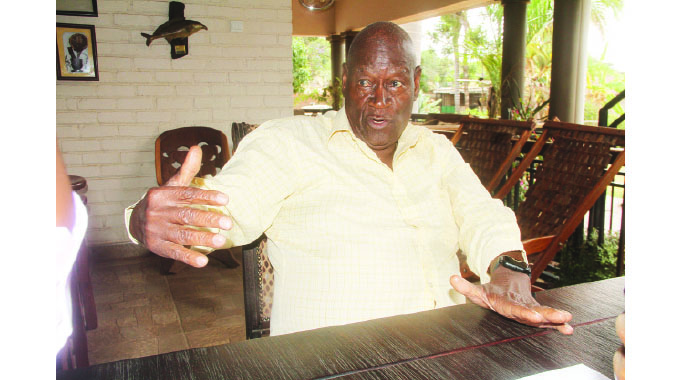
Mukudzei Chingwere-Herald Reporter
“The Honourable Vice President is a very humble and hardworking man whose love for his country and the ordinary folk is beyond comprehension,” quips Mr Maximilian Musavaya with concurrence from his wife, Mrs Hildegard Musavaya, both former school teachers at Mt St Mary’s School in Hwedza where Vice President Dr Constantino Chiwenga was a learner as the two sat down for an exclusive interview with The Herald.
“No Sir,” this reporter interjects, “I think we know him too well to trouble you, tell us about a teenage Constantino Dominic Guvheya Nyikadzino Chiwenga you knew back in the day.”
“Oh, you want to be taken 50 years down memory lane,” says Mrs Musavaya with a smile while settling for a more comfortable spot in her seat, “In that case let’s start by correcting the name. We never called him that back then. We knew him as Costa, a shortcut of his first name.”
“Costa was not the type of pupil who will seek the limelight, he was calm and unassuming. He was close friends with Bigboy (The late national hero Air-Chief Marshal Perrance Shiri) and Richard (Brigadier General Rtd Richard Huchu) and the fourth one whose name I can’t remember (Ernest Mandizvidza).”
Mr and Mrs Musavaya said that the recruitment policy of the school was through an entrance test which drew candidates from all over the country and one would need to score very high grades to make it through.
The mere fact that he went on to enrol meant that young Constantino and his colleagues were A students and missionary schools were the foster ground for learners who would later scale the academic and social ladder.
“Our curriculum back in the day was not like what you have now, for us it was largely a three-pronged approach or more of everything if I may say. We would teach the academics, just as you are doing these days, and also add the social and religious aspects,” Mr Musavaya.
“Our learners were expected to be the best of societal role models and be grounded in the ways of the Lord. Costa was an epitome of that. Fine, you said I must confine myself to the yesteryear teenage boy, but if you look at him today you understand why he is still as devoted a Christian as we trained them.
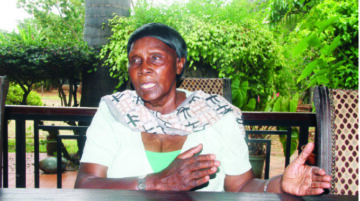
Hildegard Musavaya
“Even as they went to the war, we were confident that if they win as we wished, the country will be in safe hands with such morally upright and God-fearing leaders.
“I constantly refer to the war of liberation because it became a huge part of our life in the early seventies, the time we had Costa and his colleagues at the school. He was there at a time when the revolutionary spirit was sweeping across the province and the country.
People were tired of the colonial way of life and a stand was being taken to say this can’t continue. At one time we had a case where two pupils from our school, Elias Chadoka and a Chitiyo were arrested and hanged at Chikurubi for merely holding a particular political view.”
Mr Musavaya told of an encounter where a Roman Catholic Nun bought beer which she intended to deliver to freedom fighters, but unfortunately she was intercepted by Smith’s soldiers. She however, insisted that the beer was hers only to be then forced to drink it in public to prove it was hers.
A Catholic nun, said Mr Musavaya, is a person of loft moral standing to the extent that asking her to down alcoholic beverages in public was the ultimate humiliation. The Nun who was forced to drink beer in public was actually a sister to eminent nationalist and national hero – Dr Simon Mazorodze.
He also told of a male teacher, Martin Mungate, who was intercepted and hanged while on his way to Mozambique to join the war of liberation. “So, the schooling environment was always sombre because of these colonial injustices,” Mrs Musavaya notes.
“Costa, as was the case with most of his colleagues, was a learner you could see would have a bright future. In his case, it was more pronounced because of his calm and calculative character, but our worry was whether this potential would be fulfilled in such an unjust society.
“But thanks to the political consciousness that the learners and even everyone of us were getting from the school principal, Father Slevin Paschal, it dawned on us that the only way out was independence which unfortunately could only be delivered through a punishing war of liberation.
“While we appreciated the need to partake in the liberation war, the question was always on who would take the initiative to join. Who, amongst all who appreciated the need, would take the leap? Knowing Costa’s selflessness, I was not surprised when joined the war.
“In fact, when Costa and three of his colleagues went to war, it was after my brother – Joseph Chidhakwa, whose chimurenga name was Everdetermined Dhliwayo had already joined the war. I was thus under no illusion as to the kind of sacrifice they were making,” she said.
Father Paschal went on to be posthumously awarded the Royal Order of Munhumutapa for his contribution to Zimbabwe’s liberation.
During break time, a 30 minutes’ breather meant to give pupils some recess in between tutorials, Costa and his three colleagues left their seating areas as they had always done. The difference this time was that they were not coming back after the 30 minutes had lapsed.
They wouldn’t even come back after lunch nor the following day or week. Instead, the quartet had chosen to forgo their education – a passport to a better life and rewarding career.
The school authorities knew immediately that the boys had taken the liberation route for they were not the first, in what was becoming a pattern.
At law and as a result of the growing number of school children skipping school to join the liberation struggle, school authorities were required to immediately report “missing students” to the police.
Early reporting was meant to help track them down before they could skip the country for military training. But because of his support for the liberation war effort, Father Pascal clandestinely circumvented the system and made such reports two weeks later so as to give them ample time to cross into safety.
This rule probably gave Costa and his three colleagues enough time to cross into Botswana, all the way from Hwedza, in a tortuous journey that took the teenage quartet days and would see them at times tracking on foot.
Behind him, Costa left his school trunk and a few belongings. The school trunk was a symbol of a life well on track to colonially acceptable stardom. It was the mark of a learner enrolled at a missionary school and these were known for moulding the best native human resources.
Just the mere fact of owning that school trunk, was a mark of a life on its way to the top. Costa had one such trunk. Instead of carrying it, somewhat with honour up the social ladder, Costa chose to fight for the dignity of his people. He chose the collective over self.
“For me the most painful yet fulfilling part was when Costa’s sister – I think she is late now – Margaret Machekabuwe came to collect his school trunk and belongings,” “Costa’s promising educational sojourn had come to an end. All that potential now at the mercy of Ian Smith’s blood sniffing aircraft and armoured personnel carriers. That quiet little boy, grounded in the ways of the Lord, had given up his education for an audacious attempt for independence.
“But it was also fulfilling in that ours was a system in which no black man could thrive to their full potential. I thought to myself, maybe, just maybe they will make it and bring us independence,” said Mr Musavaya.
Several decades after their meeting at Mt St Mary’s School, the Musavayas are now church mates in Borrowdale. They now meet at church almost every Sunday without exception despite Costa now no longer the little teenage boy who skipped school for the war.
He has gone on to hold various high-ranking positions in the country but has managed to remain the calm, humble and unassuming youngman that the Musavayas have always known.
“Last week my family invited him to our belated birthdays, that is mine and Mrs Musavaya’s,” said Mr Musavaya, “It was just a fixture fulfilling invite, they never thought he was coming. But knowing him the way I have always done, he came and spent time with us,” said Mr Musavaya.
“When you are around him, he is easy going and converses like any ordinary person would do. You pleasantly strike those that don’t know him with his easy ways.
“As teachers, we are proud not only for what Costa has turned out to be in terms of national assignments and roles but also of the man he is. He is a perfect example,” he said.


 Online Reporter