admin
admin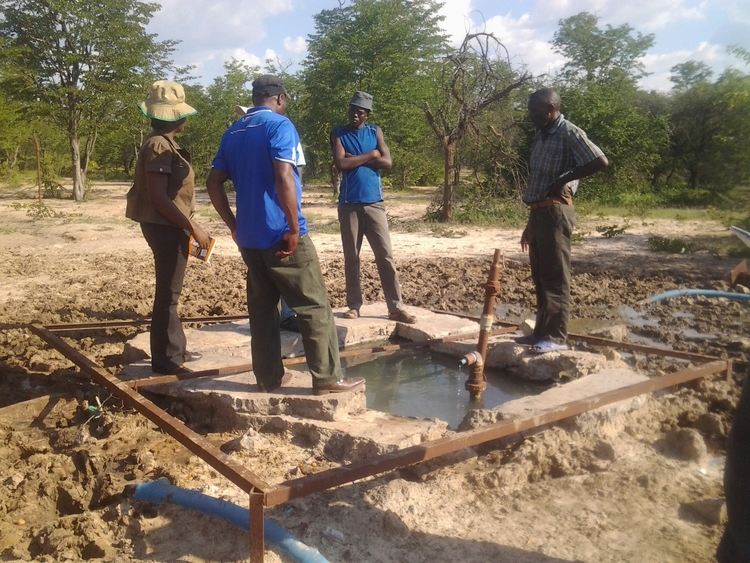
Edwin Mwase and Harmony Agere
The provision of energy in the country remains inadequate despite the fact that it is a major enabler to the general vibrancy of the economy.
Turn-of-the-century discoveries of vast coal-bed methane gas (CBM) deposits in Matabeleland North raised the nation’s hopes and many assumed that the discoveries would go a long way in rectifying the country’s growing energy deficit.
According to explorations undertaken by the Industrial Development Corporation (IDC), extensive deposits of CBM in the Hwange-Lupane basin are estimated to be over 23 billion cubic feet per square mile.
However, the extraction of this CBM might never see the light of the day if a recent tour of the methane gas rich area is anything to go by.
Whilst all major concessions involving the coal bed methane gas projects seem to be lucrative and beneficial to the nation on paper, implementation seem to be the major Achilles’ heel.
In the Ngondo-Mancanganga area of Ward Jotsholo under Chief Mabikwa, the CBM discoveries were made decades ago by the Shangani Resources company, yet extraction of the product is yet to commence.
Only two abandoned protruding pipes from the ground promises some intention to tap the electricity-substituting gas. One emits underground water while the other is supposed to be emitting the methane gas.
The Jotsholo community has bemoaned delays in the implementation of a proper and nationally accountable method of extraction, adding that something tangible must be done to exploit the gas which is in abundance for the benefit of the community and the nation at large.
Methane gas is mostly used in power generation and fertiliser production.
The Jotsholo community also alleges looting of the methane bed gas resource by several unscrupulous people with some purporting to work for the Government.
“They are taking turns to engage in massive looting of the gas, often giving assurances that proper structures will be erected on the deposits, so that the community starts benefiting,” alleges Sihlangu Ncube (57) a villager who stays in the Ngondo area.
“A Mr Paul, who is white, occasionally comes here to collect the gas from the gas boreholes,” he said.
The Member of Parliament for Lupane East, Honourable Martin Khumalo, under whose jurisdiction most of the methane gas rich areas fall buttressed that currently there was no production taking place.
He said many companies that were given gas extraction concessions were taking too long to put up comprehensive extraction frameworks.
“There is no production taking place as yet in various places where investors have been given concessions, except in the places where Discovery Pvt Limited has been given concessions,” he said.
“As for the ones in the Ngondo area, no investors have been forthcoming, in spite of the fact that the discoveries were made many years ago.”
Hon Khumalo urged Government to look for sincere partners who would collaborate its efforts in exploiting the mineral for the benefit of the communities and the nation at large.
China-Africa Sunlight Energy is one of the companies that was given gas extraction concessions in the Gwayi area but, as part of its options, it is still considering partnering Sable Chemicals for it to start exploring for the resource in the area.
However, nothing tangible is taking place outside the mega deals and partnerships rhetoric.
As part of the China-Africa Sunlight Energy mega plans in the Hwange-Lupane basin, there is also the proposed $1,3 billion, 600-megawatt (MW) thermal power station and coal mine.
However, the mega projects are currently ‘technically’ stalled, save for the project financing deals which are said to have been clinched with the Chinese Exim Bank. The only notable “development” to this day is the cleared ground for the thermal plant, proposed office and housing structures.
The ground breaking ceremony for the projects was done way back in 2012, and civil construction works on the coal thermal station was supposed to start in June last year and last for a period of 24 to 30 months. 0The two projects were supposed to be the first phase of the $2,1 billion project which would eventually include a 2 200-megawatt thermal power station, a gas extraction plant and a coal brick factory, among other major investments.
Contacted for comment, a Colonel Mugari of China Africa Sunlight Energy said he needed more time to look at the issues raised.
Surprisingly, this is despite Mines and Mining Development Minister Walter Chidakwa announcing that Government, in collaboration with the Chinese, had started extracting gas in the Hwange-Lupane basin, when he officially opened Mine Entra in Bulawayo mid last year.
“We have started pumping coal bed methane gas out of Lupane,” he was quoted then as having said.
“This is a historic moment for us. The project has been spoken about yet we now see the gas coming out and villagers are wandering what is happening in their area. The quality of the gas is good,” he said then.
However, when contacted for comment last week regarding the lack of progress at the Hwange-Lupane basin methane bed gas concessions, Minister Chidhakwa said some of the investors who were awarded mining concessions in the area were still setting up shop so that they can kick-start the extraction operations.
“The Government’s policy is to extract all minerals. What I understand (about CBM investors in Lupane) is that they are still putting in place measures to start the extraction process,” he said.
The Mines Minister also said there was not much the Government could do to expedite the operations in Lupane except to encourage investors to up their game or risk their concessions licences being revoked.
“When we give them (the investors) the licences to operate, we can only encourage them to speed up their game,” he said.
“We do not get involved in the day-to-day operations of an investor, however, if they fail to act within a stipulated period that satisfies us, then we can revoke the concession.”
Discovery Investments is reported to have obtained an exploration Environmental Impact Assessment (EIA) certificate from the Environmental Management Agency and had its mining prospectus approved by the Ministry of Mines and Mining Development.
However, it is said to be awaiting clearance from EMA to start the extraction process after having finished exploration of the resource and setting up a state-of-the-art extraction plant.
“I would not know if the EIA certification is the problem.
“Yes, they have to be cleared with EMA but it will be speculative for me to comment on that as yet,” Minister Chidhakwa said.
At the Discovery Investments-operated concession situated in the Mzola communal lands in Jotsholo, where a gas extraction plant has been put up, no operations are taking place, except for what the company officials at the site called experimental pumps to ascertain if the gas fumes were “enterprising”.
Investigations by The Sunday Mail Extra revealed that the company is at loggerheads with EMA on the disposable mechanism of the underground water, which is pumped together with the gas and is said to be salty. The company wants to dispose the water into local water bodies but the EMA is adamant to have the pumped water tested and certified if it is fit for consumption by animals and aqua life before it is discharged into water bodies.
Sources say this is delaying the issuance of the EIA certificate for the company to kick-start its operations.
Discovery Investments (Pvt) Ltd executive chairman, Mr Lloyd Hove, decried the snail pace EMA was taking to issue them with an EIA certificate, so that they can set in motion their operations.
“We are still waiting for the license and we have advised our agencies who deal directly with EMA to speed up their efforts,’ he said.
Mr Hove said they finished setting up the extraction plant around mid-year last year.
“Our agencies are still handling the issues with EMA and we are ready to start operating as soon as we are granted the certificate”.
He denied that the manner in which the pumped underground water is to be disposed was causing the delay in the issuance of the EIA certificate.
Environmental Management Agency spokesperson, Mr Steady Kangata, said the environmental impact assessment process has to be done right from exploration. However, he said the conditions for exploration and actual extraction differ.
“What they were doing in Lupane is that they were drilling small holes so those have less impact but when they want to go large scale then we have to look at it.
“Unfortunately I do not have details on Discovery Investments and China Africa Sunlight so I have to double check and come back to you,” he said.
However, no further information had been provided by the time of going to print. Contacted for comment, one of the investors in the concessions in the Gwayi area, Liberation Mining’s Mr Rainor Robinson said: ‘We have not done any gas exploration and, therefore, do not have any data with regards to the issue of the operationalisation of the gas reserves in the area as yet,” he said.
Several analysts have argued that the revival of the industries in Bulawayo, long regarded as the industrial hub of the country and the country at large, is hinged on the availability of energy.


 Online Reporter