Sikhumbuzo Moyo, Senior Reporter
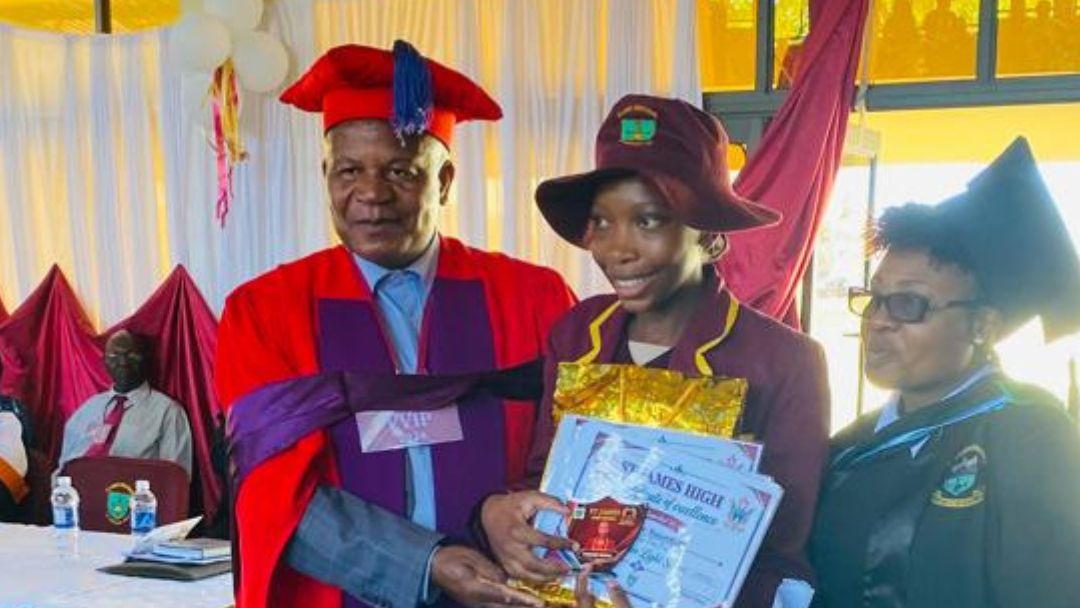
ST James High School in Nyamandlovu is basking in the glory of an improved Ordinary Level pass rate to 97.8 percent up from 95 percent, while maintaining strong Advanced Level and technical and vocational examination results.
The school’s headmistress, Ms Siminyeni Bafana, said this during the school’s speech and prize-giving day yesterday, where the school celebrated learners’ achievements in academics, sports, cultural activities and innovation.
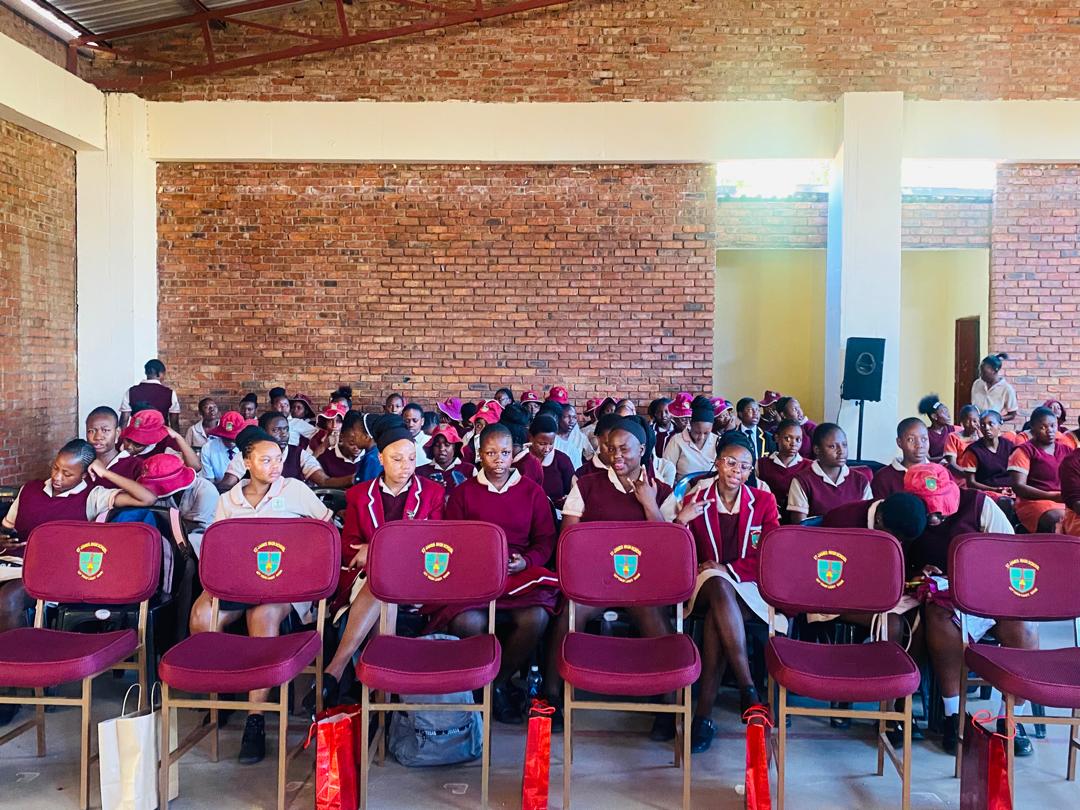
She said the school’s A-Level pass rate has always been between 95 and 100 percent, with the institution recording a 100 percent pass rate last year.
“Our examination results speak very well about the school as our O level graph has been pointing upwards for some time. As it is we are at 97.8 percent from 95 percent the other year. In A level we have always been between 95 percent and 100 percent with 100 percent last year,” she said.
Ms Bafana said the school was also recording encouraging results in its technical and vocational subjects examined through the Higher Education Examinations Council (HEXCO), with all five learning areas offered achieving a 100 percent pass rate, and most learners obtaining distinctions.
“We have a very wide curriculum with 17 academic and nine technical and vocational subjects examined through Zimsec and Hexco, giving our learners a wide selection base for their careers,” she said.
Ms Bafana said the technical and vocational subjects were helping the school implement the Education 5.0 philosophy by equipping learners with practical, technical, innovative and entrepreneurial skills.
She said learners enrolled in HEXCO programmes graduated with job-related qualifications, adding that the school was offering National Foundation Certificate (NFC) courses and looking forward to its first examinations at that level.

Beyond academics, Ms Bafana said St James High School is making strides in sport and cultural activities, with cricket, darts, basketball, swimming, volleyball and drama reaching national competitions this year.
“Seven girls were selected for national teams, comprising five in cricket, one in volleyball and one in basketball. The school’s spelling bee team also qualified for regional competitions held in South Africa, where one of its learners finished seventh in the top ten,” said Ms Bafana.
She said the school’s robotics team won the award for the best girls’ team at national competitions, receiving US$250.
Ms Bafana said her school is also pursuing income-generating projects to support its operations and promote practical learning, revealing that its agriculture department runs poultry and piggery projects, with eggs and broiler chickens supplying the school dining hall and surplus produce sold to the community. The piggery provides pork for the school’s weekly meal.
The Textiles, Clothing and Design Department produces bedspreads for learners, some are sold to parents, while the Science Department manufactures dishwashing liquid for school use, with some products now ready for sale to parents.
The Art Department also prints designs on T-shirts, cups and plates.
Ms Bafana said the school’s garden was nearing the stage where it would supply produce to the kitchen, further reducing food costs.
Renowned academic Professor Sifiso Mpofu who graced the prize giving ceremony said it is important to note that there has been an improvement in the pass rate at the school paying tribute to the teachers, learners and the parents for all the positives that have been recorded.
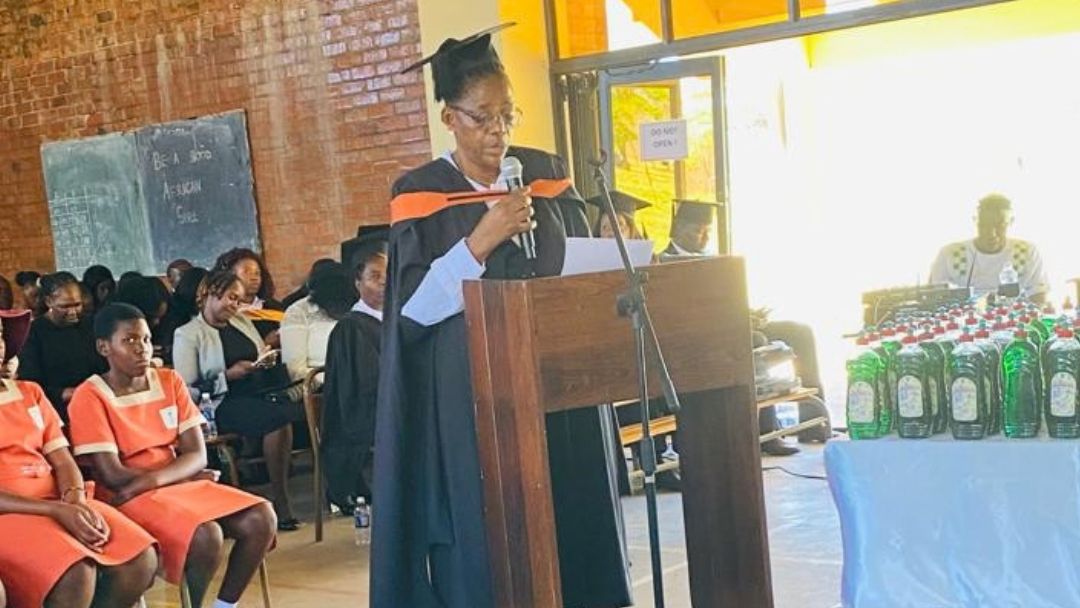
He encouraged the schools to move beyond traditional teaching methods and embrace innovation and entrepreneurship to equip learners with practical skills to solve real-world problems and create employment.
Prof Mpofu said the rapid advancement of technology, particularly artificial intelligence (AI), had made innovation and entrepreneurship essential in modern education.
He said schools should adopt learning models that promote creativity, practical problem-solving and the development of business ideas rather than concentrating solely on preparing learners to pass examinations.
“Speech and prize-giving days in schools are more than a celebration of exceptional examination results. They are a celebration of dreams that have come true, teachers who refused to give up on their learners, parents who sacrifice a lot behind the scenes, and learners who chose discipline over distraction, perseverance over excuses and excellence over mediocrity,” said Prof Mpofu.
Prof Mpofu said traditional education models needed to be complemented by innovative approaches that encouraged experiential learning, creativity and practical application of knowledge.
He challenged education officers, administrators and teachers to abandon an overreliance on conventional teaching methods and embrace approaches that prepared learners for the demands of the modern world.
“Our present-day philosophy of education must be modelled around innovation and entrepreneurship if our education is to produce relevant and competent scientists, academics, innovators, business-minded people and nation builders,” he said.
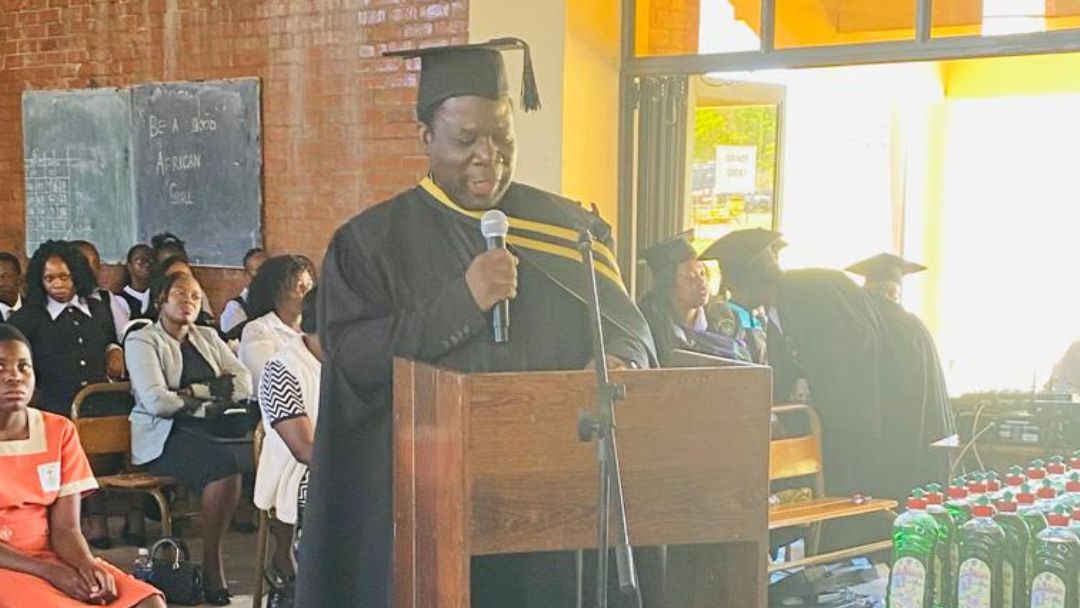
Prof Mpofu said the goal of education should not be limited to preparing learners for employment but should also equip them to establish businesses, create value and generate opportunities for themselves and others.
He commended St James High School for offering innovative subjects that expose learners to practical skills in areas such as programming, engineering, information and communication technology, agriculture, garment production, science and design.
He said project-based learning could help learners develop business ideas and practical solutions to challenges affecting their communities.
He also called for greater integration of digital tools into teaching and learning, saying technology should be used to enhance learning experiences and encourage an entrepreneurial mindset.
Prof Mpofu said schools should cultivate learning environments that promoted innovation among both teachers and learners, adding that institutional culture and leadership played an important role in nurturing creativity.