Chronicle Editor
Nqobile Bhebhe, [email protected]
RAILWAY and road networks play crucial roles in transporting goods over long distances and with a projected rise in transportation demand in Sadc and the entire continent, substantial investments are essential to enhance and extend these networks to cater to increasing needs.
Within the framework of the African Continental Free Trade Area (AfCFTA), railway transportation has the potential to play a crucial role in fostering economic growth and enhancing regional integration.
As the AfCFTA gradually removes tariffs and tackles non-tariff barriers, it will provide African businesses a prime opportunity to boost intra-African trade.
These trade changes will inevitably signal and require a surge in demand for the logistics and transportation needed to physically transport all the components/inputs along the supply chain to the manufacturers of finished goods and the products distributed from there to the retailers, buyers, or traders to the end users.
Enhancing and expanding Africa’s railway capacity and network is crucial for facilitating trade and maximising the success of the AfCFTA.
Trade experts say rail transportation offers inherent advantages over other modes for lengthy inland freight journeys and public transit for a variety of reasons, including efficiency, affordability, safety, air quality, environmental concerns, reduced congestion and potential capacity. It is also vital for linking landlocked nations to seaports.
A reliable transportation system will boost Africa’s competitiveness, lower transport and logistics expenses, enhance market access, facilitate integration into regional and global value chains and spur economic growth and progress.
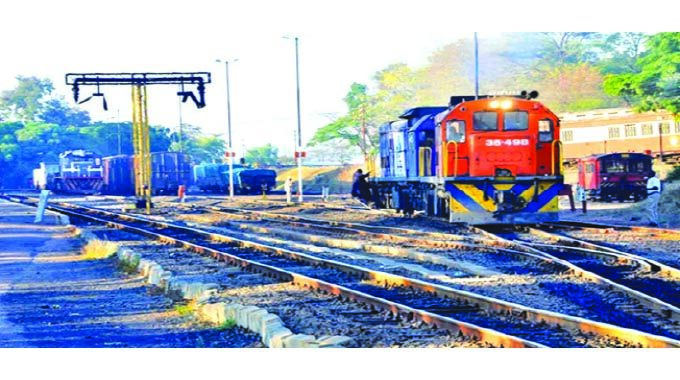
By allocating resources to enhance and expand railway networks, African countries can enhance their logistical infrastructure, decrease transportation expenses and stimulate the movement of goods across borders.
This, in turn, will bolster trade partnerships, enabling African countries to leverage the AfCFTA for heightened intra-African trade and this underscores the importance of co-operation between Sadc and pertinent financial institutions.
Consequently, products become more accessible and competitive in the market and it is in this context that the National Railways of Zimbabwe (NRZ) is looking to capitalise on business opportunities stemming from the AfCFTA.
The railway system cuts across Central-Southern Africa and is the region’s prime mover of import and export and transit traffic.
Goods destined for countries north of the Zambezi have to pass through the NRZ system as do strategic exports from Zambia and the Democratic Republic of Congo (DRC) such as copper.
Because of Zimbabwe’s geographical location, the NRZ becomes a key economic enabler with an impact not only in Zimbabwe but the entire Sadc region.
NRZ’s Public Relations and Stakeholder Manager, Mr Andrew Kunambura told Business Chronicle that they are collaborating with regional rail entities to transport mining and agricultural components, among other products.
“Our central location is highly strategic as we also handle transit goods to and from our neighbouring countries. For example, we transport fuel, gas and salt to Botswana in conjunction with Botswana Railways and we also carry their export coal under our thorough working agreement,” Mr Kunambura explained.
“We are also partnering with Zambia Railways to export coal from the Hwange fields to the DRC and with CFM for most products destined for the Beira and Maputo ports.
“As a bulk transporter, our primary role is to move the raw materials required by manufacturers; for instance, we are currently transporting a large volume of clinker used in cement production. We also move coal and agricultural inputs. In addition to that, we transport finished products destined for export, thereby helping earn foreign currency for the country. Examples include ferrochrome, granite, lithium and other exports.”
Mr Kunambura noted that the mining sector has a lot of activities and generates big business. “The mining sector easily stands out, especially those that produce bulk heavy minerals such as granite, chromites, lithium and coal. There is a lot of movement of these and also great potential for further improvements.”
The AfCFTA, with Zimbabwe as a signatory, became operational on 1 January, 2021, signifying significant progress towards continental economic integration.
The AfCFTA aims to remove tariffs on 90 percent of goods exchanged among member states within a decade, fostering trade and investment throughout the continent. The NRZ, acting as a major transporter, plays a vital part in enabling trade and investment.
Regional trade expert, Mrs Gertrude Nyandeni-Phiri said investing in rail trade transport infrastructure is financially advantageous.
She noted that rail transport is generally more economical for long-haul and bulk cargo compared to road transport.
Therefore, rail systems’ economies of scale facilitate the efficient transit of large volumes of goods, thereby reducing the transport cost per unit.
She highlighted that the establishment of a continent-wide trade bloc is a bold yet beneficial move that could greatly reduce poverty and promote industrialisation in Africa.
“The development of an extensive African rail network is the most significant opportunity for this,” said Mrs Nyandeni-Phiri.
“A dependable rail network would enable the effective transportation of goods, business people and tourists throughout the continent, thus improving Africa’s global connectivity, particularly for landlocked countries.
“Critical economic growth can be spurred by investments in rail infrastructure and the National Railways of Zimbabwe (NRZ) stands to gain considerably from increased capital investment in the recapitalisation process.”
Mrs Nyandeni-Phiri also observed that with Africa’s regular exports of meat, flowers and vegetables to Asia and Europe, there is a pressing need to invest in refrigerated rail freight operations.
“However, one crucial aspect that underpins successful cold chain trade is efficient logistics. Without a well-functioning logistics framework, businesses face significant hurdles in transporting goods and conducting trade effectively. This is where NRZ steps in and there are huge opportunities,” she said.
“Enhancing rail and road infrastructure, along with the establishment of new warehouses, will significantly aid the transporters of perishable goods.
“The affordability of rail freight operations is likely to shift the focus to sustainable multi-modal transportation. Creating new trade routes will raise the demand for warehouse operators and freight forwarders specialising in project cargo and cold chain logistics, which will, in turn, increase export volumes and create a more competitive market.”
Mrs Nyandeni-Phiri added that such growth would promote economic expansion, streamline sales processes and lead to faster, more cost-effective shipping, thereby improving the linkage between domestic and international seaports.
Lack of investment, mainly in freight wagons and the rail system, has negatively impacted NRZ over the past two decades, reducing its cargo-carrying capacity from an average of 18 million tonnes per annum in peak years in the late 1990s.
NRZ is targeting to move 2,7 million tonnes of freight this year to ensure the entity optimally plays its role as a key economic enabler, up 17 percent compared to last year.
The parastatal has been knocking on the doors of many potential investors in recent years, pitching various investment projects in an attempt to modernise its service and operations.
Among the projects earmarked for investment are provision of passenger coaches and freight wagons and upgrading and expansion of the rail system itself. Mr Kunambura said the parastatal is addressing the operational challenges.
“The barriers include our capacity constraints, in terms of traction and rolling stock and our aging infrastructure, which needs upgrading.
“We are addressing rolling stock shortages through the open access initiative in which we are bringing private capacity to enable us to uplift as much business as possible,” he said.
Therefore, efficient trade corridors are vital for driving economic growth and industrialisation in southern Africa and beyond.



 Online Reporter