

 dyton mupawaenda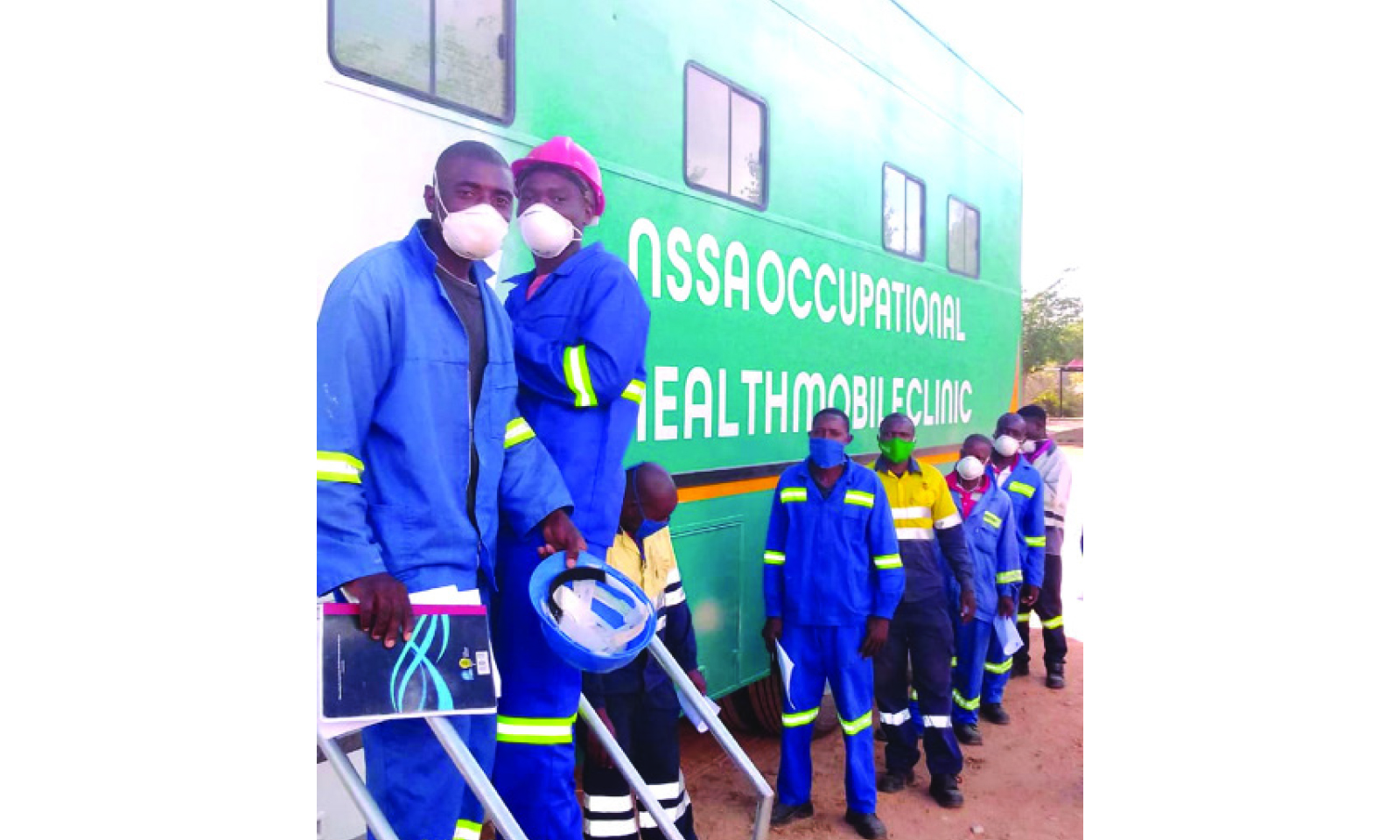
Dr Shava-NSSA Acting General Manager
AS Zimbabwe prepares to mark 45 years of independence on Friday 18 April 2025, we are invited to look not only at the path we have travelled, but at the institutions that have quietly helped shape our nation’s journey since 1980. That historic day, when the Zimbabwean flag was raised and the Union Jack lowered for the final time, marked the end of colonial rule and the beginning of a long and complex project: nation-building.
Among the many institutions born in that post-independence era is the National Social Security Authority (NSSA), an organisation tasked with delivering social security in a country emerging from decades of dispossession and inequality.
For one to appreciate the significance of NSSA and the role it plays in independent Zimbabwe, it is important to understand and appreciate what motivated its creation in 1989 through the NSSA Act (Chapter 17: 04).
The Authority runs two schemes, The Accident Prevention and Workers Compensation Scheme (APWCS, S.I. 68 of 1990), which was transferred from Government to NSSA in 1990 and the Pension and Other Benefits Scheme (POBS, S.I, 393 of 1993), which was launched in 1994.
Prior to the enactment of the Act, social security was the preserve of the white community, with most black employees, particularly those in lesser paying jobs, left to wallow in poverty upon retirement. This was compounded by the fact that not only did they not have any form of social security cover, but they also did not have employer-assisted occupational pension schemes.
NSSA was, therefore, created to cover this yawning gap from both a moral and security point of view. In crafting the legislation, Government was mindful of the need to strike a healthy balance between a mandatory contributory social security scheme and a vibrant private/public sector occupational pension industry. As a result, the NSSA scheme was subjected to conservative restrictions in terms of contribution rates and insurable earning ceilings. The idea was that upon retirement, one would enjoy benefits from their occupational pension, complemented by a social security benefit from NSSA.
The above narration sets the right context for any discussion regarding NSSA benefits.
Pension and Other Benefits Scheme
In recent discourse, NSSA through the POBS has often been accused of paying low pensions. However, a closer look at the data and context reveals a narrative that is far more nuanced — and in many ways, remarkably positive. NSSA was never designed to replace occupational or private pension schemes, rather, it was established as a social safety net, a foundational layer of protection for workers who, in old age, invalidity, or upon the death of a breadwinner, would otherwise be left without recourse. It is not and was never meant to be the sole pension. Its role is to complement — not compete with — occupational pension schemes.
The NSSA savings matrix takes the shape of a pyramid. It stands as the second, which means very basic, layer of savings after government grants that are non-contributory. Above social security are occupational pensions, followed by personal savings and ultimately personal investments. For one to enjoy a seamless transition from employment to retirement, they are encouraged to also invest in personal savings and other investment schemes. The gist of the matter is that social security and occupational pensions were not designed to replace one’s employment income, hence the other forms of savings.
Even within its limited mandate, NSSA consistently outperforms most occupational pension schemes in Zimbabwe and stands above many of its regional counterparts across Africa. This is particularly notable given that Zimbabwe operates under one of the lowest contribution rates in the region — just 9 percent, equally shared between employers and employees. Aside from Burundi, which has a 6 percent rate, Zimbabwe’s contribution rate is one of the lowest and is subject to an insurable earnings ceiling. Yet, despite these constraints, NSSA manages to pay out more generous benefits than several neighbouring countries where contributions are not only higher but also based on gross salaries.
In Zimbabwe, contributions are calculated on basic salary and capped at a ceiling of US$700, while in other countries deductions are made from gross salaries, often without any ceiling. NSSA also has the lowest minimum retirement pension contribution threshold pegged at 120 months, compared to 15 years for the rest of the region.
Accident Prevention and Workers Compensation Scheme
An important NSSA role that is often overlooked is the occupational safety and health regulation role in the country. The APWCS scheme enhances workplace safety through training, monitoring and enforcement, and offers financial support for employees in the event of work-related injuries, accidents or diseases.
Some of the popular educational initiatives by NSSA include the Safety and Health at Work Conference, the Engineers Workshop, the Occupational Safety and Health and Environmental Management Course and the Basic Occupational Safety and Health Course.
The APWCS covers all employees in formal employment, regardless of age, except government employees and domestic workers. However, the Occupational Safety and Health legislation is currently being reviewed to broaden its scope. This will enable NSSA to function more effectively by having oversight over areas that are currently excluded in the current arrangement.
The APWCS offers the following benefits: worker pension/lumpsum; medical benefit; widow/widower benefits; children/dependants’ allowance; funeral grant.
Additionally, NSSA runs an internationally acclaimed rehabilitation institute, the Workers Compensation Rehabilitation Centre (WCRC) in Bulawayo, next to Mpilo hospital in Bulawayo. This facility caters for the rehabilitation of grossly injured workers who are covered by NSSA. It also accommodates private patients at very affordable rates.
After the rehabilitation process, workers who are unable to return to gainful employment due to the severity of their injuries benefit from customised housing under the Project Dzimba/Izindlu. To date, over 100 homes have been delivered to APWCS pensioners living with 70 percent or more disability. These pensioners are also provided with an assistant who is trained and paid by NSSA.
Investments
NSSA follows a partially funded Pay-As-You-Go model, in which the contributions of today’s workers are used to support today’s pensioners, while surplus funds are invested to secure tomorrow’s obligations.
It is in these investments that NSSA’s real strength — and vision — can be appreciated. The Authority currently owns a diversified portfolio of 111 properties across the country. These include shopping malls in Chipinge, Pomona, and Gwanda, as well as land banks and health facilities like Citimed in Chitungwiza and the revitalised Ekusileni Hospital in Bulawayo. Through its stake in Dubury Investments, NSSA is also part-owner of Joina City, one of Harare’s most iconic commercial centres.
NSSA’s influence on the national economy is even broader. NSSA’s investments account for over 10 percent of the Zimbabwe Stock Exchange’s total market capitalisation, and it maintains an active presence on the Victoria Falls Exchange and in offshore markets. These are not passive holdings—they are strategic positions designed to safeguard pensioners’ funds while driving national development.
Yet NSSA’s impact is not only measured in percentages or portfolios. In the energy sector, NSSA is a key partner in the 25MW Centragrid Solar Park in Nyabira, which is hooked to the national grid, powering homes and businesses with clean, renewable energy.
NSSA is also actively supporting local enterprise and the informal sector. In Chitungwiza, the upcoming Makoni Shopping Mall will provide decent workspace for small to medium enterprises. In Mutare, the NSSA is collaborating with the city to develop a green market hub in Sakubva, creating an enabling environment for micro-industrial businesses.
Through its wholly owned banking subsidiary, the National Building Society (NBS), NSSA is contributing to alleviating the national housing deficit through the delivery of various housing projects.
Since 2017 the Authority has contributed the following in Harare: 600 houses in Dzivarasekwa, 120 cluster housing units in Tynwald, 753 residential stands, 90 low density stands, and 64 flats in Glaudina, all located within Harare. In Bulawayo, NSSA through NBS has completed the development of 236 houses with 2 000 more expected to be completed soon in Rangemore, and 136 stands have already been completed in Plumtree.
Additional housing projects are currently in the pipeline, including the development of 616 residential stands in Runyararo, Masvingo, and various initiatives in Newmara, Mutare, just to mention a few.
Informal economy
Recognising the size and importance of Zimbabwe’s informal economy, NSSA is working with the International Labour Organisation and other development partners to create a tailored social security scheme that brings dignity and protection to those who have long been left out of formal systems.
Under guidance from the Ministry of Public Service, Labour and Social Welfare, NSSA has taken a proactive approach to address challenges faced by workers in the informal economy who are not covered by its current schemes. Towards this, NSSA in collaboration with ZimStat recently conducted a needs assessment survey, which was designed to gather the needs, perceptions and barriers to social security coverage among informal economy workers.
Data from the survey will be used to inform the new scheme’s design and construct before launching a pilot phase. All this is done in the spirit of leaving no one and no place behind as the country moves towards the attainment of Vision 2030.
More than statutory benefits
As the Second Republic continues to chart a new course under His Excellency President Dr. ED Mnangagwa, NSSA has aligned itself with national priorities outlined in the National Development Strategy 1. NSSA is not just an agency concerned with pensions; it is a strategic actor in Zimbabwe’s development matrix, making meaningful investments in people, infrastructure, and sustainability. NSSA is not just a social security administrator but has a broader vision — one in which social security is intertwined with economic empowerment and national progress.
NSSA is an organisation that is evolving with the times, adapting to a new economic landscape while staying true to its mandate.
On this Independence Day, as we honour the men and women who fought for the right to self-determination, we must also recognise the institutions that continue to secure that freedom by building structures of resilience and inclusion.
As we commemorate 45 years of independence, let us realise that Zimbabwe’s social security story is not just about monthly pay-outs — it is about potential, about progress, and about the enduring belief that we can and must take care of our own. NSSA is part of that belief, standing not just as a guardian of pensions, but as a custodian of hope and national vision.
Dr Charles Shava is the Acting General Manager of the National Social Security. He holds degrees in Medicine and Surgery. He also holds a Master of Science Degree in Occupational Safety and Health from Middlesex University London and a Postgraduate Diploma in Occupational Hygiene from University of Manchester.


 Online Reporter