

 admin
admin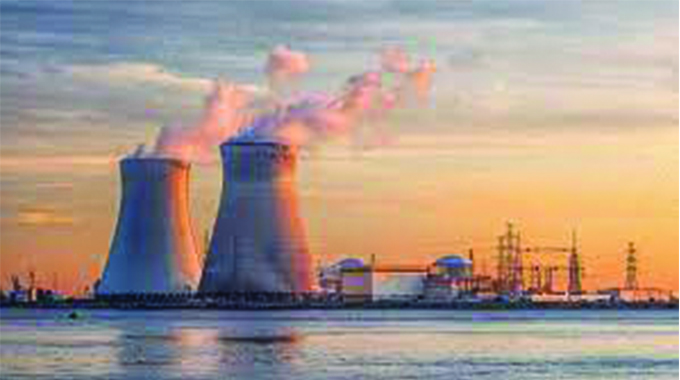
UNLIKE in the past, a number of African countries are getting interested in nuclear energy and other nuclear-based technologies. The adoption of peaceful, safe and secure nuclear applications is becoming a prominent issue on the agenda of Zimbabwe and most other African countries. In this report, Sifelani Tsiko (ST), Agric, Environment and Innovation Editor speaks to Dr Anna Mary Nyakabau (AMN) on nuclear technologies and how the country can make important considerations for it in the agriculture sector.
ST: Recently, the Research Council of Zimbabwe (RCZ) and the Radiation Protection Authority of Zimbabwe (RPAZ) signed a memorandum of understanding (MoU). What is the major aim of this MoU?
AMN: The purpose of this MOU is to build a framework to collaborate and co-ordinate research related to the safe use of radiation in the country. The objective is to promote such research and to improve the regulatory infrastructure using evidence-based research findings in enhancing the protection of people and the environment.
RPAZ seeks to generate interest from academia and researchers in order to come up with research questions that will lead to a better understanding of radiation protection. RCZ was seen as a key stakeholder in achieving this objective.
ST: What are the main areas that the RCZ and RPAZ are going to collaborate on?
AMN: The parties have a common interest in promoting research in radiation use and protection, enhancing regulatory decision-making, as well as in raising awareness of the safe and secure application of radiation technologies in Zimbabwe for socioeconomic development.
Such areas include the protection of patients exposed to radiation during medical procedures, protection of radiation workers, limiting public exposure to radiation, and limiting environmental contamination from ionising radiation.
ST: How much have you set aside for the implementation of collaborative research on nuclear science and technologies?
AMN: RPAZ, like most progressive organisations, recognises the need to invest financial and other resources in research and development. As such, annual budgets will allocate funds for research and development based on the available resources and identified needs.
In addition, RPAZ will provide technical support for researchers, using existing laboratory capacity and linkages with regional and international partners.
ST: The RPAZ has been in existence for some time now. What are some of the major achievements of the agency in brief?
AMN: The authority has established a strong national, legal and regulatory infrastructure for radiation safety. Any nuclear-based technology can be used safely with strong regulatory oversight by the authority.
The mandate of the authority is to protect people and the environment from the harmful effects of radiation. Since its inception, the country has not recorded any major radiological incidents owing to a functional legal framework and the implementation of international safety standards and best practices.
The authority is at an advanced stage of construction and operationalisation of a national Disused Radioactive Sources Management Facility for the safe and secure storage of unused sources of ionising radiation.
The authority also has an active programme of monitoring naturally occurring radiation.
ST: What are some of the gaps that you think the RPAZ should work on to raise the profile of the peaceful use of nuclear science and technologies?
AMN: The current Radiation Protection Act is under review to address gaps and expand the mandate. Proposals in the Radiation Protection Bill will allow for improvement in the safety and security of radiation sources as well as satisfaction of requirements of other international conventions that the country is a signatory.
This includes extending protection to the use of non-ionising radiation technologies and providing a framework to protect workers and the public in telecommunications, and power generation and transmission industries where non-ionising radiation-producing technology is being applied.

ST: African countries have identified the peaceful use of nuclear science and technology as an important vehicle for driving development in the healthcare and agriculture sectors as well as the attainment of the continent’s Agenda 2063 and SDGs. Can you tell us in brief about some of the success stories on the continent?
AMN: A number of successes have been scored in Zimbabwe particularly related to enhancing food security from projects spearheaded by the ministry of agriculture: Zimbabwe has been able to produce several seed hybrids suited to local climatic conditions using radiation in mutation breeding.
There is a project to determine soil fertility to guide appropriate cropping. The Department of Veterinary Services has been able to establish a bull centre and development of the Theileriaparvparva vaccine and other tick-borne disease vaccines as well as apply sterile insect techniques in the eradication of tsetse flies.

Specifics on these can be obtained from the ministry. The University of Zimbabwe, EMA and Zinwa researchers are embarking on an exercise to characterise surface and groundwater interaction using isotope hydrology techniques.
Modest progress has been made in health with the establishment of radiotherapy facilities in the country although more still needs to be done to improve coverage and operational efficiency.
There has been a significant gain with the re-establishment of nuclear medicine services in Zimbabwe with the aid of development partners including the International Atomic Energy Agency. The African Union has established the African Commission on Nuclear Energy (Afcone) in line with the Pelandaba Treaty aimed at advancing the adoption of peaceful applications of nuclear energy technologies on the continent and this will be critical in attaining the aspirations of the continent’s Agenda 2063 and Sustainable Development Goals.
ST: What lessons can Zimbabwe draw from some of the success models in Africa in terms of the peaceful application of nuclear science and technology in different areas of life, including, but not limited to, food and agriculture, health, natural resource management, industry and energy?
AMN: The use of nuclear technology has steadily increased across the continent providing relevant cases for Zimbabwe to emulate.
This includes the establishment of irradiators for the sterilisation of food and medical sundries, and special machines for the production of radio-pharmaceuticals for the diagnosis and treatment of various disease conditions including cancer and coronary artery disease. A number of countries are at advanced stages of adding nuclear power to their energy mix as it is clean and sustainable energy and helps in climate change mitigation, owing to the emergence of small modular reactors.
ST: Safety of nuclear science and technologies still remains a key issue when harnessing these technologies. What is your comment on this? What is the RPAZ doing to promote safety issues?
AMN: A number of international conventions have been ratified to promote the safety and security of radiation sources and also to strengthen the emergency preparedness and response capabilities in order to respond to nuclear incidents/accidents.
Notable achievements have been made on core regulatory functions covering authorisation, inspection, enforcement, and establishment of the national inventory of sources. Zimbabwe has made commendable progress as attested to by the international peer review mission coordinated by the International Atomic Energy Agency (IAEA) in May 2022 whose findings have encouraged us to work even harder to ensure our regulatory infrastructure meets international safety standards. Such efforts are being devoted to prioritising and strengthening provisions for public and environmental protection, transport safety, education, training and waste management.
ST: Nuclear technology plays a significant role in the timely diagnosis and effective treatment of cancer, helping Zimbabwe to tackle the cancer burden. What message do you have on this, especially now during the cancer awareness month?
AMN: Cancer is a growing global health and development challenge, and careful management is required. This includes prevention, screening, early detection, diagnosis and treatment. As an authority our mandate is to create a safe environment for use of radiation materials and equipment that are used in diagnosis, screening and treatment as well as to ensure that any radiation source is used safely with no over-exposure to the public, workers, and patients. Such over-exposure to ionising radiation may potentially over time cause cancer among other possible harmful effects. Cancer patients have a much greater chance to survive the disease when they have access to affordable early cancer detection and treatment. There is hope for cancer patients if the disease is managed appropriately and timeously. Cancer is not a death sentence.
ST: Is there greater scope now for African countries to generate electricity from nuclear energy? What is happening now on the continent, in brief?
AMN: A number of African countries are considering nuclear energy as a clean and sustainable source of energy. The journey to embark on nuclear energy is long compared to other energy sources considering the preparations needed from human resource development, technology selection, construction, and commissioning, which all require sustainable funding. The process may take up to 10 to 15 years from conception to commissioning of the plant. In the short to medium term, we may be able to see countries such as Egypt, Morocco, Kenya, Nigeria, and Sudan joining South Africa in producing electricity from nuclear power.
ST: Looking ahead, how do you see nuclear science and technologies developing in Zimbabwe?
AMN: Nuclear technologies have basically become the way to go as you will find they have been incorporated into automation and many other industrial functions. As technology advances, a number of nuclear-based solutions are being developed and Zimbabwe should embrace and mainstream them.


 Blessing Chizhande
 Online Reporter