Sikhumbuzo Moyo [email protected]
THE National University of Science and Technology (NUST) and Netonline Media Limited are exploring the application of artificial intelligence in helping institutions integrate fragmented information systems, improve decision-making and coordinate responses through a platform known as Market Intelligence AI.
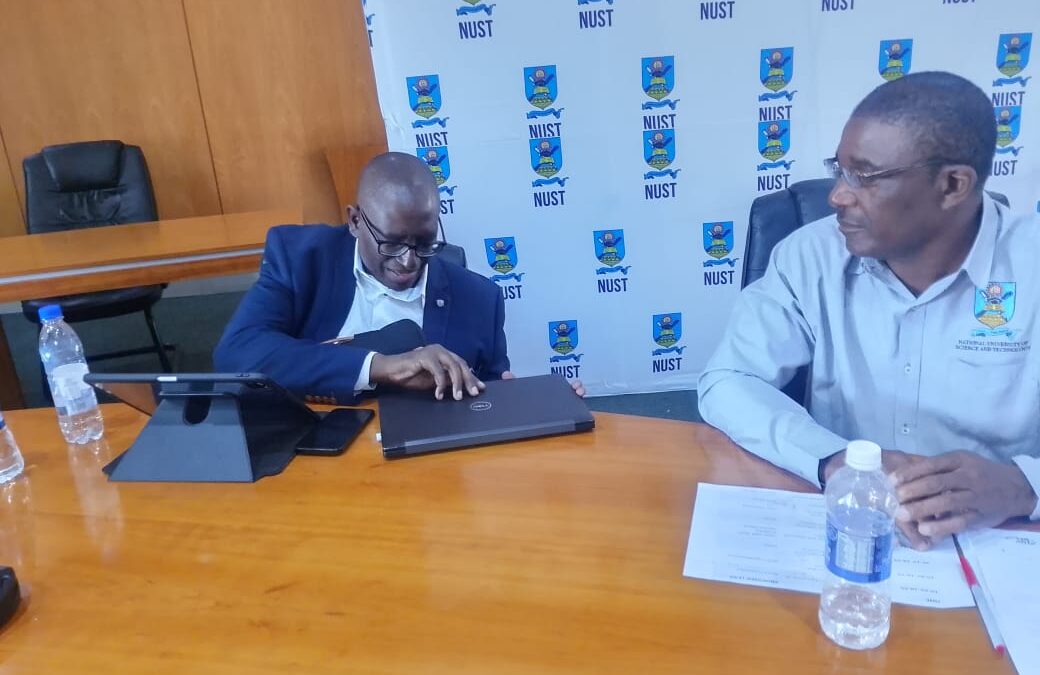
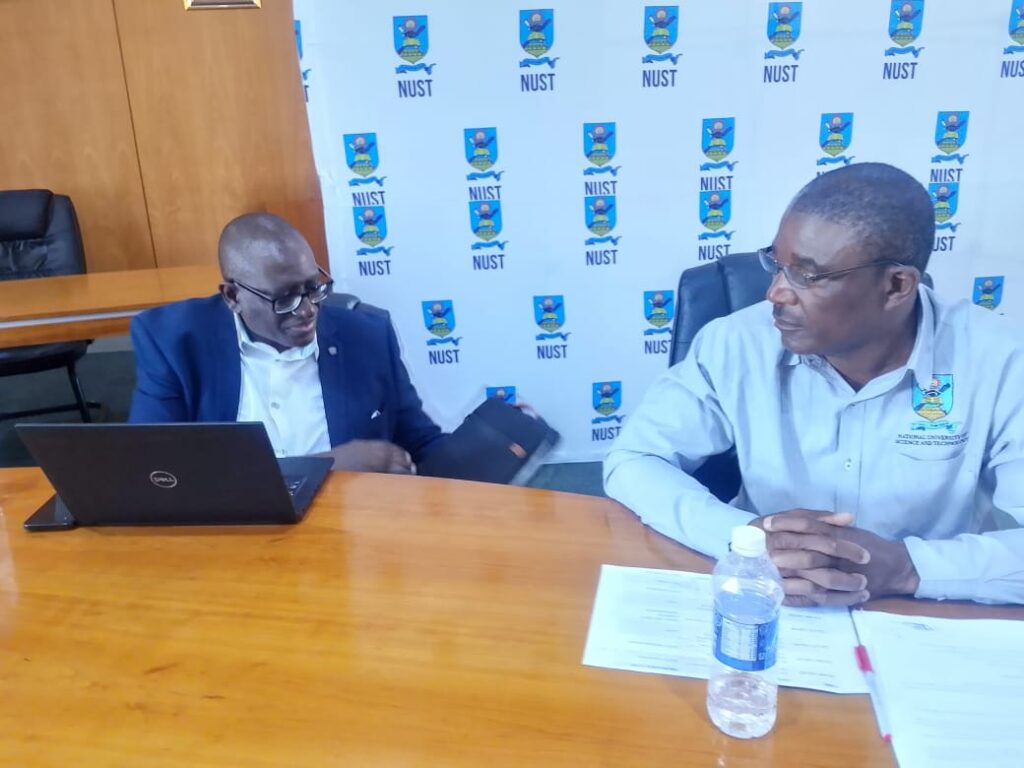
The system was presented by Netonline Media Limited founder and inventor of Market Intelligence AI, Mr Isaiah Bizabani, during a joint NUST-Netonline Media Limited press conference held at the university’s council chamber on Friday.
Mr Bizabani described Market Intelligence AI as sovereign, AI-native operational infrastructure designed to connect information from different institutional systems and provide analysis to support decision-making.
He said many governments, universities and businesses had invested in digital technology but continued to struggle with fragmented information, with departments often operating separate systems that made it difficult for decision-makers to obtain a consolidated picture of operations.
“One department holds financial information. Another holds service records. Another manages treatment correspondence. Each may have useful information, but the person responsible for making a decision must wade through several reports, reconcile different findings and establish which information is current,” he said.
Mr Bizabani said the problem was that important connections still depended on people manually bringing information together, potentially delaying decisions and responses.
He said Market Intelligence AI was designed to address this fragmentation by connecting authorised information, AI-assisted analysis and institutional workflows.
Within the system’s architecture, he identified Insight Navigator as the intelligence and decision-support layer, which helps authorised users examine patterns, identify issues requiring attention and assess available evidence.
“The system’s cognitive operating layer is intended to coordinate intelligence across connected information sources and workflows, while allowing institutions to retain control over their information. The use of the term “cognitive” refers o capabilities such as interpreting information, identifying patterns and assisting reasoning, rather than suggesting that the system is conscious or could replace human judgement,” said Mr Bizabani.
To illustrate its potential application, Mr Bizabani presented a hypothetical public health scenario involving suspected cholera cases reported in five towns.
Under the example, five suspected cases were recorded in Plumtree, three in Bulawayo, two in Gweru, four in Kwekwe and seven in Kadoma, bringing the hypothetical total to 21.
He stressed that the figures were illustrative and did not represent an actual cholera outbreak.
Mr Bizabani said an integrated system could help authorised health officials view reports on a shared map and timeline, identify duplicate records, distinguish suspected cases from confirmed cases and flag missing information.
It could also help officials compare reports with established local patterns and relevant water-service or laboratory information, where access was authorised.
“The technology would help identify relationships requiring further investigation, while making the supporting evidence and uncertainty behind alerts visible.
However, geographical patterns alone could not establish that an outbreak is spreading along a particular route, hence the need for professional investigation,” said Mr Bizabani.
Following the assessment of evidence, the wider operating framework could support approved responses by notifying relevant teams, assigning investigations, tracking results and monitoring the completion of tasks.
Mr Bizabani said the approach could also be applied to agricultural planning, water-service management and university administration.
In agriculture, the system could help bring crop information together with weather conditions and the availability of inputs, while water-service teams could use it to connect fault reports with maintenance records and available resources.
Universities could similarly use the approach to examine patterns across teaching, administration and institutional planning.
He said each application would require appropriate data connections, access permissions and evaluation to establish its effectiveness.
Mr Bizabani also highlighted data governance and institutional sovereignty, saying the approach did not require every institution to transfer its records into a single central database.
Instead, information could remain under the authority of the institution responsible for it, with controlled access and exchange where appropriate.
He said the model was intended to facilitate cooperation across departments, institutions and potentially countries while preserving necessary restrictions on information access.
The presentation outlined the proposed system’s approach to connecting information, analysis and coordinated action, although its effectiveness would need to be assessed through testing.