Raymond Jaravaza
THE National University of Science and Technology is breaking new medical ground through the establishment of a regional biobank that will collect, process, store and manage samples for research to support the development of new medicines and vaccines.
The groundbreaking medical facility will be known as the Nust Institute of Immunopharmacology and Biobanking, whose vision is to become a leading African centre of excellence in advancing Immunopharmacology, vaccine innovation and clinical research to combat infectious diseases.
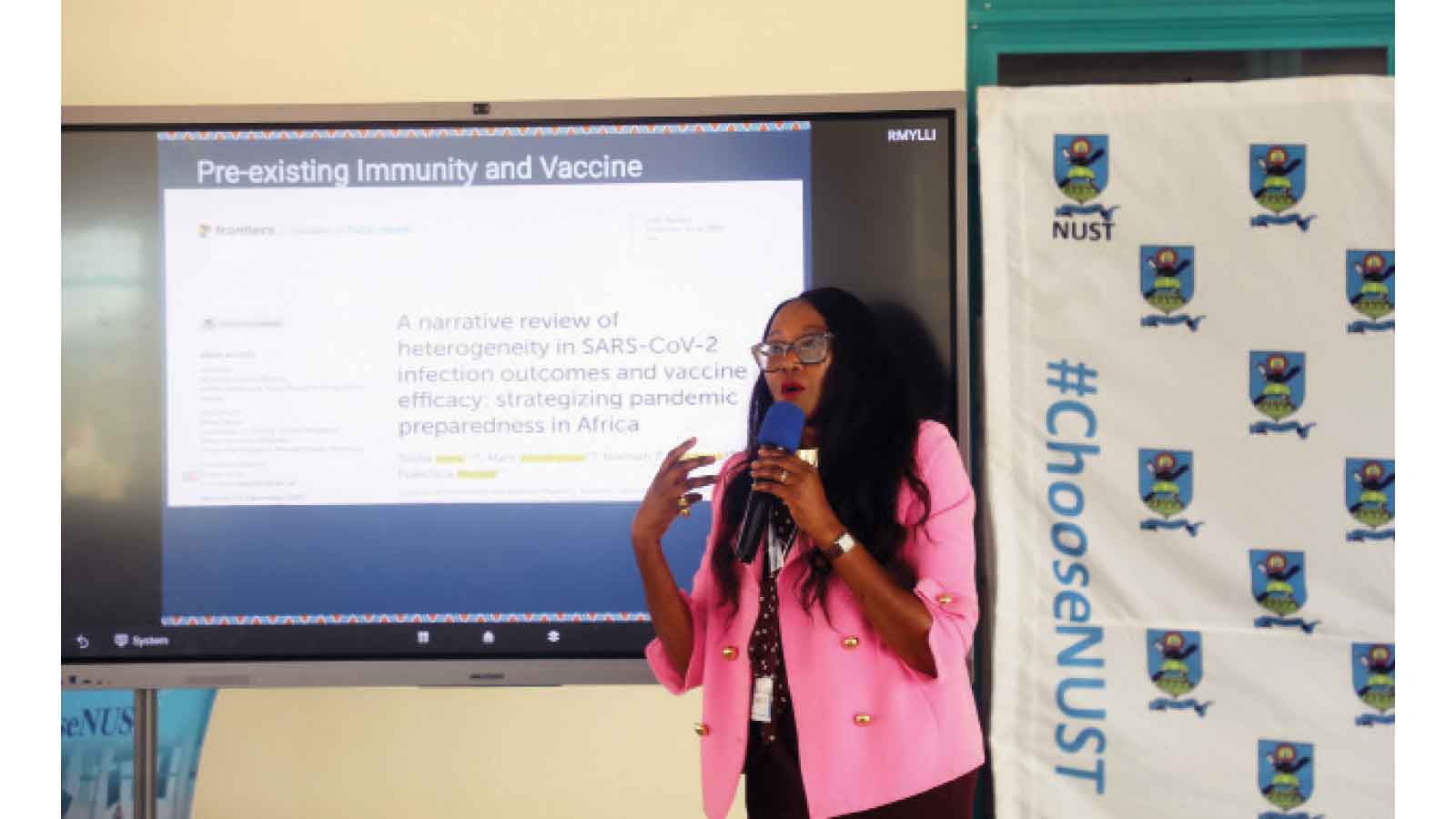
The institute was launched yesterday at the university’s Professor Phineas Mogorosi Makhurane Technovation Centre, where a leading figure in Global Health Infection and Immunity and co-director of the Global Health Academy at the University of Edinburgh in Scotland, Professor Francesca Mutapi, outlined its importance in addressing Africa’s challenges.
Prof Mutapi was joined by academics and researchers from Zimbabwe, Uganda and Scotland, as well as Nust medical students.
Speaking on the sidelines of the launch and a series of lectures by medical professionals, Prof Mutapi said the biobank and its related research would lead to cheaper drugs and vaccines for Zimbabwe.
“One of the most important advantages of a biobank is that it can be used to develop diagnostics, drugs and vaccines in-country. An example is our work on bilharzia, the number one disease that affects children in Africa after malaria, where TIBA (Tackling Infections to Benefit Africa) is working on developing a diagnostics that work for a specific country so that vaccines can be produced in that particular nation,” she said.
Prof Mutapi said producing medicines locally reduces the regulatory requirements associated with importing new drugs.
“When a particular drug is made in Zimbabwe for Zimbabweans we don’t have to test it over and over again to see if it will work for the local populations thereby shortening time spent on research and ultimately production.
“A drug might be good in the laboratory but turn out to be a bad product in the field, as seen by some interventions that are developed in Western countries, but fail to work in Africa.
“Those medicines are usually expensive as the process of producing and testing them costs a lot of money so pharmaceutical companies have to recoup the costs by making the drugs expensive,” she said.
Prof Mutapi added that local production significantly reduces costs for patients.