Online Reporter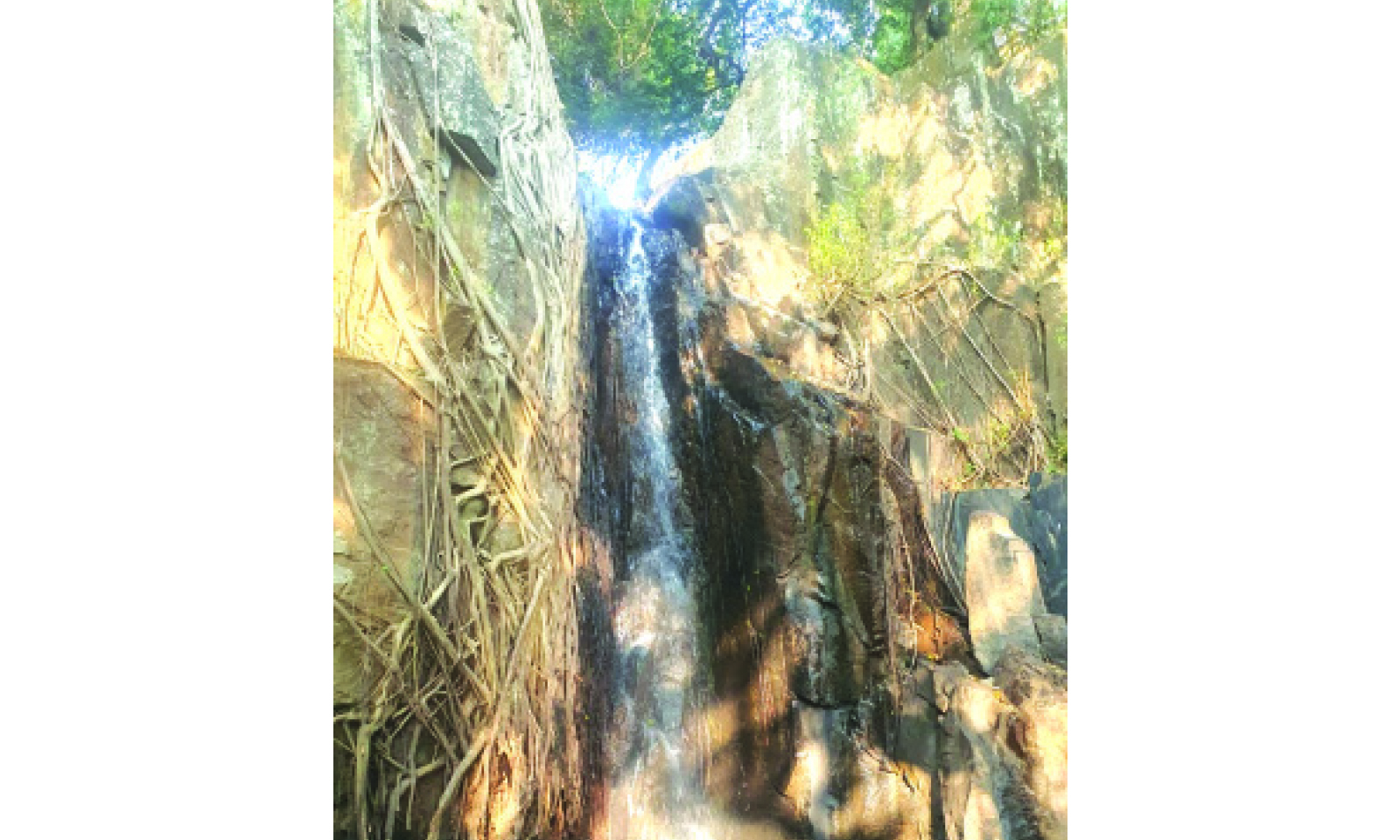
Ivan Zhakata
Features Correspondent
Nestled deep in the lush greenery of the Vumba mountains, just 25km East of Mutare, lies Nyachowe Falls, a hidden gem that has become both a natural sanctuary and a lifeline for the surrounding community of Chigodora Village under Chief Zimunya.
The cascading waters plunge with a steady roar, their mist rising into the air like an offering to the skies.
For the people who live in its shadow, the falls are more than just a scenic wonder; they are a place of history, spirituality and survival.
Unlike many tourist attractions that funnel proceeds into private hands, Nyachowe Falls is wholly community-owned.
Visitors who make the journey pay a modest US$2 entrance fee. Though it may seem like a small contribution, the impact is immense.
The money collected is used to help the underprivileged in Chigodora and to develop the site so that it can continue to sustain future generations.
For the villagers, every dollar that crosses the makeshift gate is not just income—it is hope.
It funds school fees for orphans, provides food for widows and pays for projects that keep traditions alive.
The ownership of the falls is itself a story of unity. For generations, Nyachowe was regarded as a sacred place, accessible mainly during rituals led by spiritual leaders.
After independence, the land surrounding the falls remained under communal tenure, and it was Chief Zimunya who spearheaded the idea that Nyachowe should not be exploited by outsiders.
He then made sure that it was protected and managed by the very people whose ancestors had worshipped there.
Community committees were later formed to oversee both the cultural and developmental aspects of the falls, ensuring that every household benefits.
This decision, rooted in tradition and forward-thinking leadership, has allowed the falls to remain a people’s treasure rather than a commercial enterprise.
Walking down the rugged footpath that leads to the waterfall, one is met with the thundering power of the falls colliding against rock.
The air is cooler, and the spray dampens the earth, feeding wild ferns that cling to the edges of the cliff. Just a few meters away stands a humble thatched culture hut, built not for display but for purpose.
Here, elders prepare sacred brew to appease the ancestors, a centuries-old tradition that ties the living to those who came before them.
The brew, often millet-based and carefully prepared in clay pots, is poured as an offering during ceremonies, asking the spirits for rain, protection, and prosperity.
For years, stories of the supernatural swirled around the falls, lending them both fear and reverence.
Local tour guide Mr Pedzisai Saungweme, who has taken it upon himself to share the site’s heritage with visitors, has often had to address these myths head-on.
“It carries deep history and spirituality,” he said, standing near the roaring water.
“For many years, people believed Nyachowe Falls was home to mermaid spirits. They said one person would mysteriously disappear every year.
“But those were just myths—today we know it as a safe and sacred place for everyone to enjoy.”
His words reflect a community that has learned to blend its spiritual past with a pragmatic present, choosing to honour beliefs while welcoming outsiders without fear.
Beyond its cultural significance, the falls have a very practical role in sustaining local livelihoods. Nyachowe is connected to the Mupudzi River and Dam, which provides water to over 50 households in Chigodora.
Families rely on this water for farming and domestic use, making it a vital resource in an area where rainfall can be unpredictable.
The cascading waters that attract tourists also irrigate fields of maize and vegetables, quench livestock and make survival in the rural village possible.
For villagers like Ms Sekai Mudzengerere, the benefits of having Nyachowe Falls within their community go far beyond what the eye can see.
“Before, we struggled to access resources as a village,” she said, recalling years when development seemed like a distant dream.
“But now, the falls help us send our children to school, buy food for the needy, and even maintain our traditions. It has become our pride.”
Ms Mudzengerere captured the essence of what Nyachowe has become: a shared inheritance that supports both stomachs and spirits.
The Falls have also begun to attract attention from beyond Zimbabwe’s borders.
In recent years, tourists from countries as far away as India and South Africa have travelled to the site, eager to witness its beauty and learn about the community that guards it.
For many, the allure lies not only in the Falls themselves but in the authenticity of the experience.
There are no concrete barriers or over-commercialised souvenir shops, only the unfiltered sound of rushing water, the aroma of traditional brew, and the warmth of a community eager to share its story.
“We are always excited when international visitors come here,” said villager Mr Tonderai Manyeruke, who helps maintain the grounds.
“They take photos, ask about our culture and even buy local crafts. It shows that our small community has something to offer the world.”
Indeed, Nyachowe Falls has become a quiet ambassador for Zimbabwean tourism, showcasing not just nature, but also resilience.
The US$2 fee that every visitor pays is symbolic—it demonstrates how small gestures can transform lives when pooled together.
The funds have already helped to clear pathways, repair community structures and provide basic amenities.
With more visitors, locals hope to improve access roads, expand picnic areas and promote cultural tourism through storytelling and traditional performances.
Yet, even as development looms, the community remains deeply protective of the site’s natural and cultural balance.
There is a determination to ensure that Nyachowe Falls does not lose its soul to the trappings of modern tourism.
For every dollar earned, there is an equal emphasis on preserving the ancestral practices that make the place unique.
The culture hut remains central to ceremonies, and elders are involved in key decisions about the site’s future.
This balance between progress and preservation is what sets Nyachowe apart from many other attractions.
Visitors who come to the falls often leave with more than just photographs. They carry stories of a community that turned its natural treasure into a shared lifeline, of myths that have given way to empowerment, and of a people who continue to honour their ancestors while opening their arms to the world.
The laughter of children playing by the riverbank, the rhythmic pounding of drums during ceremonies, and the ceaseless rush of the waterfall all combine to create a living tapestry of heritage and resilience.
For those who journey to Vumba, Nyachowe Falls is more than a destination. It is a lesson in how nature, culture and community can work hand in hand.
“Nyachowe Falls belongs to the people. It is our history, our present and our future,” Mr Saungweme said.