admin
admin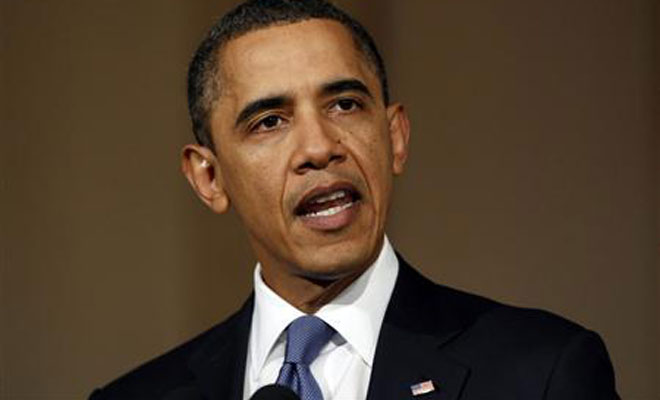
Washington, DC — US President Barack Obama faces a difficult challenge as he prepares to meet Israel Prime Minister Benjamin Netanyahu at the White House as a wave of violence sweeps Jerusalem and the occupied Palestinian territories.
Obama hosts an Israeli counterpart with whom he has a strained relationship and few practical points of leverage to address a situation that analysts and rights activists say may spin out of control.
“Unless we’ve a much more proactive engagement by the current administration we could see ourselves slipping quickly into a major conflagration between groups in Gaza and Israel again,” said Brian Katulis, a Middle East analyst for the Centre for American Progress, a policy think-tank in Washington closely aligned with the Democratic party.
Netanyahu and Obama meet today at the White House for the first time since the Israeli prime minister opened a bitter and partisan split with the US president over the Iran nuclear agreement. Ahead of the meeting, White House officials acknowledged Obama has concluded there is no realistic prospect for peace between Israelis and Palestinians.
Officially, this meeting is designed to strengthen the US-Israel strategic relationship with talks on US military support, implementation of the Iran deal, and the US’ diplomatic initiative in Syria.
But the situation in Israel and the Palestinian territories is increasingly untenable. The humanitarian crisis in Gaza has deepened since Israel’s 2014 bombing campaign. The new wave of violence that began in October with stabbings, shootings, car assaults and clashes between security forces, settlers and protesters has cost the lives of 77 Palestinians and nine Israelis with hundreds wounded.
Complicating Obama’s task, Netanyahu in March rejected the notion of a two-state solution to the Palestinian conflict, a statement that drew criticism in the US. Netanyahu tried to revise his position in interviews with American broadcasters but the damage was done. Netanyahu had said what many in Israel and the US long believed was his true position.
“He once again reaffirmed the two-state solution would not happen under his watch,” said Matt Duss, president of the Foundation for Middle East Peace, a US non-profit organisation that advocates an end to the occupation.
“More importantly the actions of his government — the building of settlements, the expulsion of Palestinians — shows their true intention, which is never to leave,” Duss said.
Obama called Netanyahu after his re-election in March and warned his abandonment of the two-state solution would force Washington to “reassess” its policies towards Israel, a hint the US may yield to international pressure at the UN to begin sanctioning Israel. Analysts doubt Obama would take such a step.
Meanwhile, aid groups are raising alarms about the situation in Gaza where 1.8 million people are grappling with the aftermath of the 2014 bombing campaign that killed more than 2,140 and destroyed thousands of civilian homes.
The Israeli government now is prohibiting import of cement, steel, and wood into Gaza, materials needed to build new houses and apartments for displaced Gaza Palestinians, according to Donna Baranski-Walker, executive director of the Rebuilding Alliance, a non-profit group that organised a US speaking tour for Israeli and Palestinian care providers in Gaza. “These things need to change if reconstruction is going to happen,” Baranski-Walker said. “Eighteen thousand homes were demolished and only the first 1,000 are under construction now, and that leaves a lot of people homeless. There is a humanitarian crisis in Gaza especially when we talk about the medical community, the health system,” Ran Goldstein, executive director of the Israeli group Physicians for Human Rights, said. “And since we don’t see any policy changes, we are afraid that another war is just a matter of time.”
Yasser Abu-Jamel, executive director of the Gaza Community Mental Health Programme, said an estimated 370,000 children in Gaza, many of them exposed to trauma in 2014, still are in need of social support.
Common manifestations of psychological stress among children in Gaza include bedwetting, night terrors, poor performance in school, and behavioural issues, he said.
“When we tell the children that Ramadan is coming, and it’s such a joy, they ask us strange questions that we don’t know how to reply. ‘Are we going to have one more war? Are they going to attack us again? Will we hear the loud bombardments?’” Abu-Jamel said. — Al Jazeera



 Online Reporter