Chronicle Editor
The nation is in mourning following the demise of former Minister of Information, Posts and Telecommunications, and ZANU PF National Consultative Assembly member, Cde Dr. Chenhamo Chakezha Chimutengwende, on January 16, 2025. He succumbed to a chronic kidney disease.
He was 80.
EARLY LIFE
Chimutengwende was born on 28 August 1943, in Chiweshe, Mazowe District, Mashonaland Central Province to John Nyangoni and Ronia Nyangoni (née Rusere). He was the third born in a family of eight children namely: Edward, Wellington, Sonia, Docus, Stella, George and Bright.
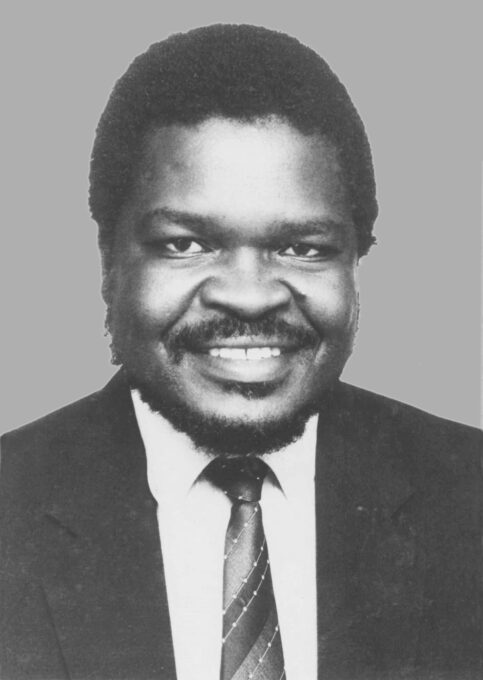
Young Chenhamo Chimutengwende
In 1949, young Chenhamo enrolled for primary education at Gweshe Primary School in Chiweshe, before proceeding to Highfield Secondary School in 1956.
PRE-INDEPENDENCE POLITICAL LIFE
Cde Chimutengwende began his political journey at the age of 14 in 1957 in Highfield, a suburb known for vibrant nationalist sentiments. In 1963, he was elected Secretary for Information and Publicity in the ZANU Youth League, reflecting his early commitment to the Liberation Movement.
In 1964, Cde Chimutengwende underwent ideological training with experts from the Chinese People’s Liberation Army in Ghana during Dr. Kwame Nkrumah’s administration. This was the period when most African countries had started to gain independence. The experience of living in an independent country emboldened him to fight for Zimbabwe’s independence. Upon completion of military training, he went to London, where he obtained advanced diplomas from Berkshire School of Journalism and Television.
Cde Chimutengwende’s career continued to flourish as he was appointed Executive Director of the Europe-Third World Research Centre in 1969, focusing on the economic and cultural relationships between Europe and the Third World. In 1970, he became the Director of the Kwame Nkrumah Institute of Writers and Journalists and joined the editorial board of Black Dwarf, which later became Red Mole, a Marxist publication in London. In 1972, Cde Chimutengwende launched The Liberation Struggle, a monthly newspaper dedicated to covering liberation movements across Africa, Asia, and Latin America, serving as its editor until 1974. He then pursued postgraduate studies at the University of Bradford, where he earned an M.A. in Peace Studies. His dissertation, South Africa: The Press and The Politics of Liberation, contributed significantly to academic discourse on media and politics. In 1976, he commenced a Phd Doctorate degree at the same university. His thesis was on Mass Media and the State in Socio-Economic Development Process.
In 1977, Dr. Chimutengwende was appointed a rapporteur for a working group on Black Civilisation and Mass Media at the FESTAC Colloquium, with his contributions documented in published proceedings. In 1979, he became a Senior Lecturer in Journalism and International Affairs and served as Deputy Director of the Journalism Programme at City University. During this time, he also worked as a UNESCO consultant on Mass Communications for several African countries. In late 1979, Dr. Chimutengwende led a delegation of anti-imperialist intellectuals to China, aimed at enhancing their understanding of Chinese socialism to better inform their public lectures on Chinese affairs internationally.
POST INDEPENDENCE POLITICAL LIFE
At Independence, Dr. Chimutengwende joined the University of Nairobi as a Senior Lecturer in the Journalism and Mass Communications Department, serving as the Head of the School
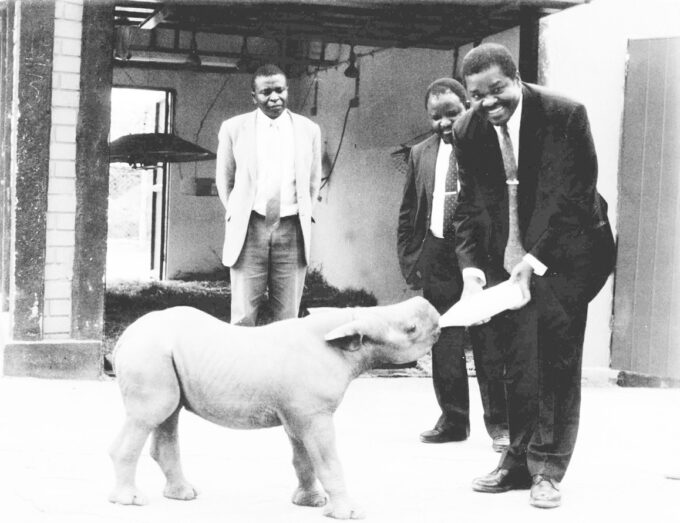
Dr. Chimutengwende, Environment Conservationist
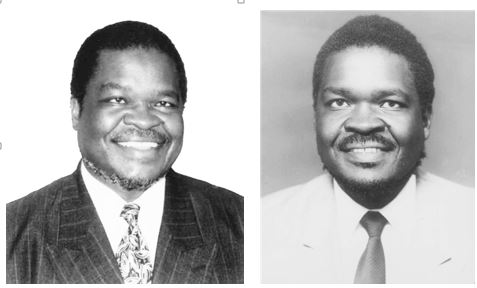
Dr. Chimutengwende, the legislator Dr. Chimutengwende, Pan-Africanist
of Journalism until 1982. Upon returning to Zimbabwe in 1982, he became a Senior Lecturer at the Zimbabwe Institute of Mass Communications (ZIMCO). The following year, he was appointed a member of the University of Zimbabwe Committee tasked with advising on the establishment of a Postgraduate Programme for Media Studies.
Between 1984 and 1985, he worked as a part-time lecturer for the Master of Arts Programme on “Social Development and Political Change” at the University of Zimbabwe. In 1985, Dr. Chimutengwende was elected ZANU PF Member of Parliament for Mazowe. He spearheaded significant developmental work in Mazowe, such as construction of schools and roads, notably the Glendale to Bare road. Dr. Chimutengwende was appointed Director Personnel and Public Relations at the Agricultural and Rural Development Authority (ARDA) until he transitioned to his parliamentary role.
In 1986, Dr. Chimutengwende was appointed ZANU PF Provincial Chairperson for Mashonaland Central, a position he held for 17 years.
In recognition of his contributions, Dr. Chimutengwende received the Order of Havana City medal from Cuba’s Council of State in 1995 while serving as Chairman of the ZimbabweCuba Friendship Association (ZICUFA). He was appointed Minister of Environment and Tourism from 1995 to 1997, during which time he also served as President of the United Nations Framework Convention on Climate Change.
From 1997 to 1999, Dr. Chimutengwende held the position of Minister of Information, Posts, and Telecommunications. During this period, he chaired the United Nations HighLevel Environmental Committee for Ministers and Senior Officials. In September 1999, Dr. Chimutengwende was elected Vice Chairman Regional African Satellite Communications Organisation (RASCOM) at a conference in Tunis involving African Ministers and Heads of Delegation.
Dr. Chimutengwende was a member of the Board of Directors for Worldtel Ltd from 2002 to 2008. He also served as Chairman of the Worldtel Assembly of Governors. He contributed to academic discourse as a Correspondent for Eastern and Southern Africa for the International Social Science Journal published by UNESCO.
In March 2007, he led a ZANU (PF) delegation to a seminar in Mexico City focusing on implementing socialist principles. In 2009, Dr. Chimutengwende founded and chaired the Afrika Global Network (AGN), registered as a Trust in Zimbabwe. He later became the Founding Chairman for the Zimbabwe Foundation for Sustainable Development (ZFSD). Dr. Chimutengwende authored a book on “World Capitalism, Global Revolutionary Ecosocialism and Revolutionary Pan-Afrikanism” under AGN’s auspices.
In 2013, Dr. Chimutengwende was elected Deputy President of the Senate and Senator for Mashonaland Central Province. His popularity made him one of the longest-serving legislators in the province with over 20 years in public service. Later that year, he became a Member of the Pan-African Parliament (PAP) representing Zimbabwe. He served as Chairman of the Zimbabwe-Cuba Parliamentary Forum (ZCPF) and the Zimbabwe Parliamentary Pan-Afrikanist Forum (ZPPF). In March 2017, Dr. Chimutengwende led a ZANU (PF) delegation to China to study its rapid industrialization and socio-economic development. Cde Dr. Chimutengwende’s extensive political career included serving as a Cabinet Minister in various capacities and being a Member of Parliament for 25 years.
HERO STATUS
Following the demise of Cde Dr. Chenhamo Chakezha
Chimutengwende, the Politburo led by His Excellency President E.D Mnangagwa unanimously accorded him National Hero status in recognition of his immense contribution to the liberation and development of post independent Zimbabwe.
Cde Dr. Chenhamo Chakezha Chimutengwende is survived by wife Edith Chimutengwende (née Matore), five children namely: Tawanda, Kahiya, Mandi, Seke and Vakai, and eight grandchildren.
Go well our Pan Africanist!
Lala Ngokuthula Qhawe Lethu!
Zororai Murugare Gamba Redu!
Researched and compiled by the
Ministry of Information, Publicity and Broadcasting Services
Munhumutapa Building
P.O. Box CY 1276, Harare
January 2025


 Online Reporter