Online Reporter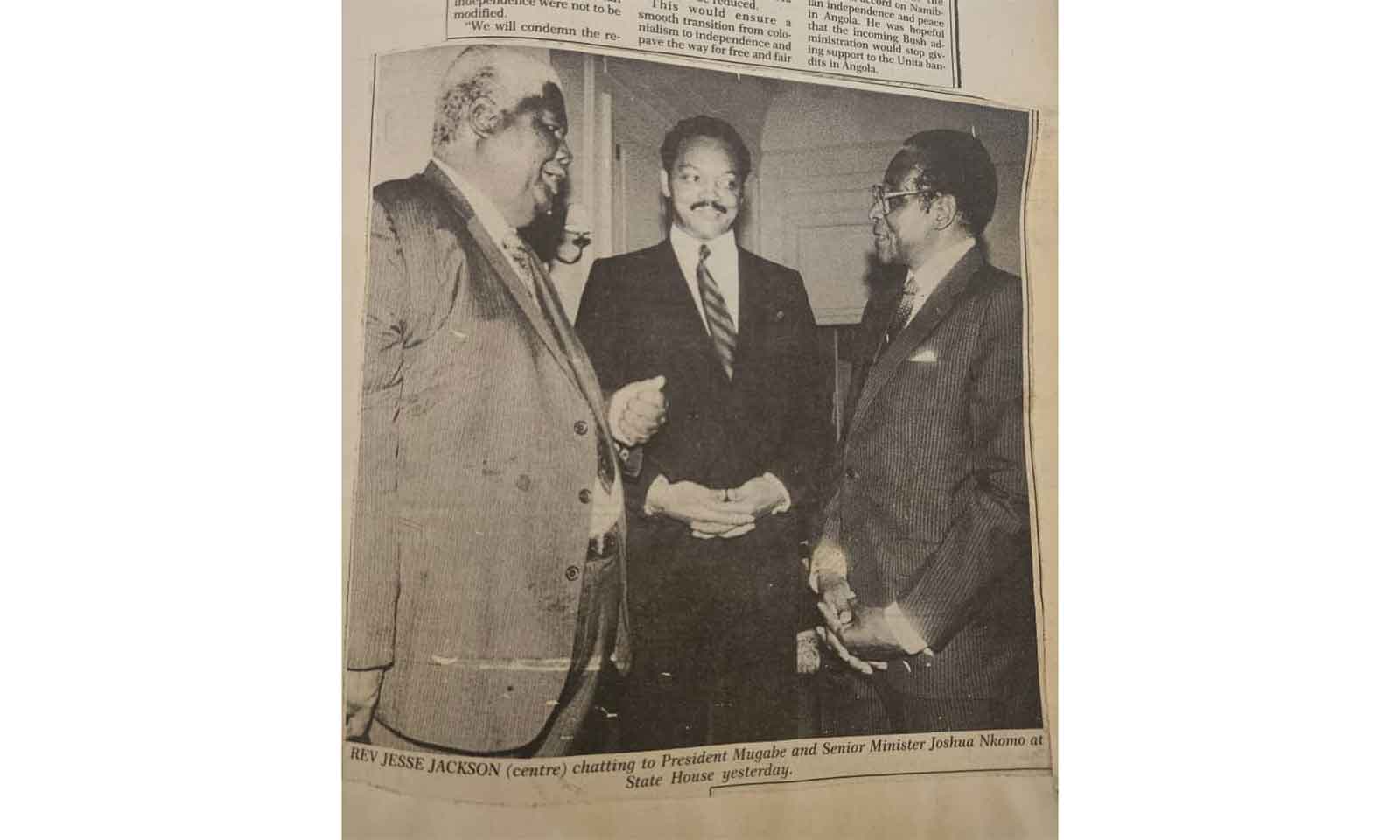
Sifelani Tsiko
Fact Check Editor
The death of one of the most prominent African American civil rights leaders on February 17 this year evoked memories of a protege of Martin Luther King and a man who was widely respected here in Africa for his role in the fight against apartheid in South Africa and speaking out for peace on the continent.
Jackson, who died at the age of 84, is a notable figure in anti-apartheid resistance and was well known for eliciting support among blacks and progressive whites for sanctions against South Africa’s racist regime.
The African American rights activists made several trips to South Africa and to other African nations, as a peace broker and a key figure at the centre of strengthening for collaboration between Africans at home and abroad.
This charismatic orator is best remembered for cradling dying Martin Luther in his arms at the height of the black civil rights movement which fought for the rights of blacks in the US – where blacks often suffered injustice, unemployment, poor access to health and education.
In early 1980s, he spearheaded an international campaign against South Africa’s policy of racial segregation.
“We must put South Africa in the middle of the foreign policy debate,” said Jackson in 1984, who won several standing ovations from crowds at various platforms across the world.
“We must use moral, economic and diplomatic leverage to end the system of apartheid.”
Jackson throughout his life, often called on the US states to upgrade ties with Africa.
“Africa has to be considered as important to the USA as much a part of US foreign policy, as the European nations, Israel, Japan, Canada, Russia and Latin American states,” he once remarked in 1984.
Echoes of his political legacy are dotted in Zimbabwe’s history.
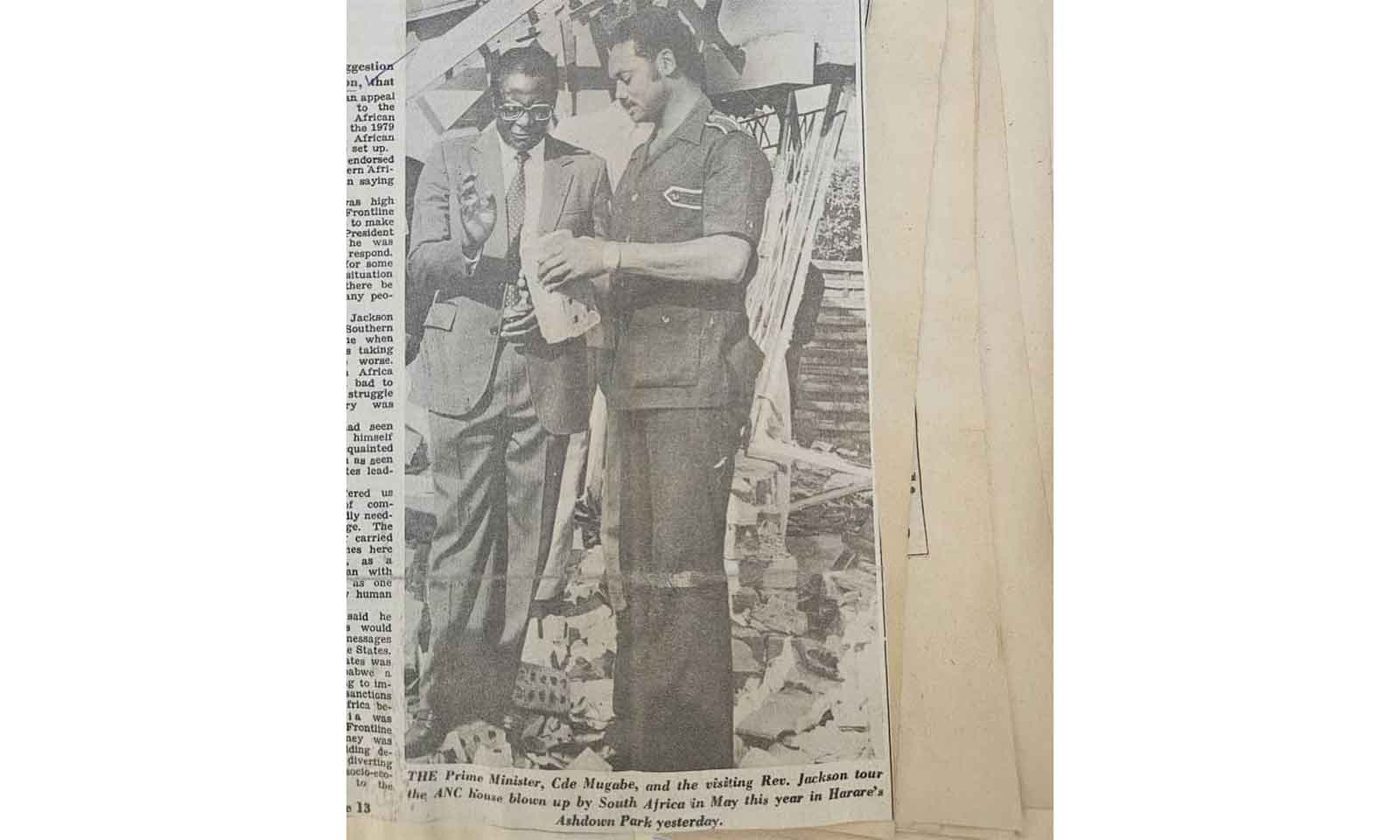
In 1986, he visited Zimbabwe as part of a tour of Frontline States to bolster relations and press for the end of apartheid in South Africa.
During his visit, he toured together with then Prime Minister Robert Mugabe, the ANC house blown up by South African apartheid agents in Ashdown Park in Harare.
“The visit offered us that channel of communication so badly needed at this stage. The message is being carried by one who comes here as an observer, as a friend, as a man with sympathies and as one who is moved by human rights,” Mugabe said about Jackson.
In 1989, civil rights leader Jackson visited the country again, in a drive to establish an African – American development programme to benefit both parties.
“There should be a summit meeting between the president and the Frontline heads of state so that he gets the sense of developments in Africa and the need for a commitment to SADCC,” he remarked.
In the late 80s, he was part of a group of prominent black leaders in the US who proposed that blacks there should now be called “African Americans.”
This, he once said, strengthened heritage which linked blacks to Africa, their origin.
“Just as we were called coloured, but were not that and then negro, but not that…to be called black is just as baseless,” Jackson said way back.
“To be called African Americans has cultural integrity. Just as you have Chinese Americans who have a sense of roots in China, or Europeans, every ethnic group in the country has a reference to some land base, some historical cultural base.”
He was a vocal figure in pushing for the importance of Africa to shore up ancestral links.
In 1997, Jackson and US secretary of transportation, Rodney Slater, led a delegation to Zimbabwe to the fourth African-African American Summit to promote closer cultural and economic ties between the US and sub-Saharan Africa.
During his visit he said Africans and African Americans should rebuild their long lost African bond.
“Africans in the diaspora and those within the continent should be seen as more than trade partners…their relationship must be rooted in much more than democratic values,” Jackson said.
“We do not want to be at the back of the trading bus. Slavery was trade and investment with no character nor dignity.”
In September 2011, President Mugabe met an American business delegation led by Jackson in New York to explore investment opportunities in health, construction, tourism and team.
At the time, he was keen to ensure the country’s coalition government worked well to promote stability in the country.
“It was a very good meeting. I am interested in trying to work on ways to have more reconciliation in Zimbabwe which will create more opportunities for economic investment and growth,” he said in an interview.
“There have been some problems and I hope that now that there is a coalition Government, the President and the Prime Minister can really work together. If the world sees them working together, it makes favourable conditions for investment and that’s how you grow.
“I look forward to being a factor in helping to bring them closer together (Mugabe and Morgan Tsvangirai) so that Zimbabwe’s interests and growth can take place. The good news is they have worked out a relationship.”
Jackson said if Zimbabweans worked together, prospects were bright for the lifting of sanctions against the country.
“Now is the time to engage and talk it out and not fight it out. I think there has been enough fighting and gamesmanship. If you engage you will find common ground,” he said in an interview in 2011.
“I am excited about the prospects. The more they work together, the more good things will come your way, and good things mean becoming investment -worthy and having investment attractiveness.”
In 2012, on another platform in the US, Jackson endorsed Zimbabwe’s land reform programme arguing strongly that it was impossible to fight poverty without addressing land ownership imbalances.
“You cannot fight poverty unless you address the issue of land, which is President Mugabe’s point. The Lancaster House Agreement should have been honoured,” the civil rights leader said.
Again in 2013, Jackson led a delegation to push for re-engagement efforts between the US and Zimbabwe.
“We want good relations, we want peace within the country and between countries, reconciliation, investment and growth – that’s what we want to happen and it can happen,” he said in an interview in Harare.
“We are not engaging in any of the local politics. It is your own democratic way. Ours is reconciliation, investment and growth then, we remove the barriers.”
The civil rights leader was vocal and determined to see sanctions on Zimbabwe lifted.
“Just as we worked hard to bring down barriers within our own country, most of those barriers are down. We worked hard in bringing down barriers in apartheid South Africa. Those barriers are down.
“We will work to bring barriers down on sanctions because it is the right thing to do and it is mutually beneficial. We are anxious for sanctions to end…We will not be satisfied until the barriers are removed between our two great nations,” he remarked in 20113 in Harare.
And recently, the EU announced that it will lift sanctions relating to travel bans and asset freezes while extending the existing arms embargo for another year until next February.
There is no doubt that he was one of the most influential African American political voices of his time who was committed to black civil rights and a progressive agenda to push for an end to apartheid South Africa, promote Palestinian rights and oppose war in Iraq and elsewhere across the world.
He left an indelible imprint on Zimbabwean politics with his impactful determination, vision, hope and aspiration for a better Zimbabwe with a thriving economy free from the debilitating sanctions and economic instability.
Despite failures which are often raised by his critics, Jackson deserves our praise for his role in anti-apartheid resistance, calls for an end to sanctions on Zimbabwe and for his progressive agenda calling for closer collaboration between Africans at home and abroad.