

 admin
admin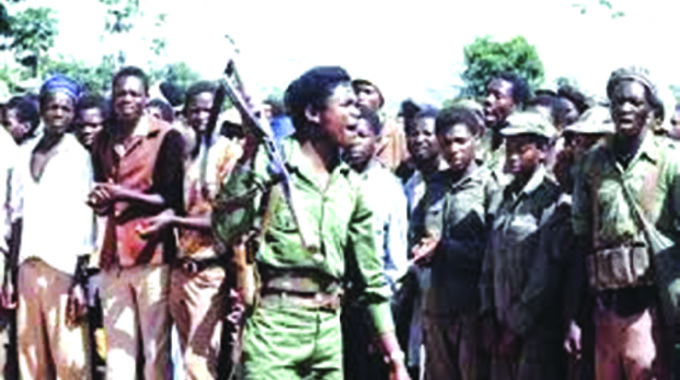
Isdore Guvamombe
Saturday Lounge Reflections
“The United States, typical of an outsider mourning more than the bereaved, latched on a bilateral dispute between Zimbabwe and its former colonial master Britain and is now leading in the conflict, where, if reason and common sense applied, the US should play a back seat role. But back in my village, common sense is no longer common.”
Moon after moon, the war had raged on in the proverbial land of milk, honey and dust or Guruve, then Sipolilo.
Sipolilo was a dangerous place to stay. It shared a huge border area with Mozambique from where the Zimbabwe National Liberation Army (Zanla), the military wing of Zanu PF operated.
It also shared a long border with Zambia from where Zimbabwe People’s Revolutionary Army (Zipra) operated.
The Rhodesian Front made frantic efforts to block the movement of weapons and freedom fighters from these two countries and deployed heavily, regular forces, air force and secretive Selous Scouts.
Sipolilo was a battle front of unimagined propensity.
Sipolilo was also a great farming area, where many white farmers enjoyed good harvests, year after year, and pinned their hopes of continued occupation of the farms on winning the war against the freedom fighters.
The Horse Shoe commercial farming area, aptly named after its shape as it is a vast swathe of land enveloped between the Mavhuradona Mountains to the east and north east and Dande River to the west and south west, was a land of milk, honey and dust for the white farming community.
They would not let it go and they did everything in their powers to fight the war against the liberation of the black majority.
The white farmers were not many, not even more than this villager’s hand and leg fingers and yet one village across the river housed tenfold household on arid land.
On many occasions the white farmers organised themselves into combat groups and raided villages across the Dande and Kadzi rivers, to flush out freedom fighters.
So, Sipolilo therefore, became a death trap.
The freedom fighters were strategically superior and jelled with the villagers to the point of not being noticed by the Rhodesians.
After sun set, night vigils were abound! They were the school for political ideology. There was education, singing and dancing. There was encouragement to fight. They were also information centres and food sources.
They were sources for pooling ideology and resources.
Here, both the masses and the freedom fighters shared information, gave each other hope. Here the errant ones were disciplined. And here the good one were praised.
New songs and slogans were released. The night was when they gathered using passwords.
Here the war found its firm footing. Happiness dawned on many taut village faces, whom the war had masked into apprehension. The night vigils kissed, oiled and soothed lips that once quivered nervously in silent supplication. Rhodesia was a felon affair for the blacks.
I vividly remembered one such night as young boy. All roads led to the centre where a huge old tree superintended over proceedings.
At the village centre people sang and danced to a cross-rhythm of a heartthrob of drums. Spirit medium possessed by a lineage of ancestors joined and danced to popular songs; “Nzira Dzemasoja” and “Mbuya Nehanda Kufa Vachitaura”.
Freedom fighters danced in rings with villagers, their guns slinging from their shoulders.
Karitundundu, the senior medium, now old and shrivelled sat authoritatively on a stool watching proceedings. Giving support and guidance. There he was, snuffing his nostrils, flanked by his lieutenants Dandajena and Gumboremvura.
Suddenly one possessed medium somersaulted and landed in front of drummers, sending the cross rhythm of drums into an abrupt end.
Shaking in every limb and singing in a shriek of a voice, the medium stood up, danced around waving his cow tail.
Then the voice changed in tempo, crescendo and intonation into guttural noises. Karitundundu raised his hand to signal cessation of proceedings.
A hush fell on the crowd, who stared in amazement. All children including this villager were chased away.
Everyone who had not gone past puberty was chased away. We were later told that he prophesied the date the war would end.
Today, 41 years after independence there is a group of Zimbabwe’s gallant sons and daughters, under the banner Broad Alliance Against Sanctions (BAAS), who are gathered in vigil for a noble cause.
For two years, they have maintained vigil outside the United States of America Embassy in Harare since March 29 2019, demanding the unconditional removal of sanctions.
The United States, typical of an outsider mourning more than the bereaved, latched 0n a bilateral dispute between Zimbabwe and its former colonial master Britain and is now leading in the conflict, where, if reason and common sense applied, the US should play a back seat role.
But back in my village, common sense is no longer common.
Again, back in my village, when an outsider mourns more than the bereaved, we call it crass.
We are all intelligent enough to know that little Zimbabwe is being punished for taking back its land from minority settlers, backed by Britain.
The hogwash about infringement of human rights, lack of good governance democracy and accountability, is a mere smokescreen behind which the US is hiding its hatred for the Zanu PF Government for dismantling a major component of white supremacy, the land tenure system.
BAAS members need our support. For two years they have laid vigil outside the US embassy, pitting tents and leaving their luxurious home to defend a genuine cause.
Come rain season, come winter and indeed come the dry season, these gallant sons and daughters have stayed put and unapologetic of their intentions.
Theirs is a vigil on a revolution to totally free Zimbabwe from the hegemony of USA and its allies.
Every day, as US Ambassador Brian Nichols passes-by and goes into his office, he might put up a brave face in brazen American arrogance but, in his mind, he is reminded of this fact that sanctions must go.
The vigil is important as a commitment to our struggle to remove the shackles of sanctions from our country. We must operate normally free of sanctions like other countries.
The US must know that those men and women have homes and families they have left behind to fight the cause.
Zimbabweans in their broad totality must support BAAS until the struggle is won.



 Online Reporter