admin
admin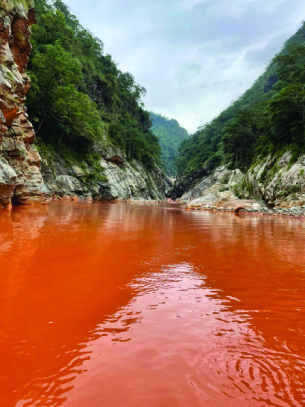
Ray Bande
Senior Reporter
CHIMANIMANI as a district is a biodiversity hotspot.
For the record, it comprises of 2 182 plant taxa and this is more than 30 percent of the estimated total plant diversity of the whole country.
The Chimanimani Mountain range alone is comprised of 977 taxa, with 74 endemics which is more than Nyanga with 21 endemics or the Nyika Plateau with 33 endemics.
Taxon, plural taxa, is any unit used in the science of biological classification, or taxonomy.
In fact, despite not boasting the fame of the Serengeti or Kruger National Park, Chimanimani, straddling the Mozambican and Zimbabwean border, is an area like no other.
Diverse landscapes and unique plant and animal species coexist together in this comparatively unheralded region of Southern Africa.
No wonder environment communication expert, Ms Sarah Pocock once wrote: “Botanists hail Chimanimani as a plant hotspot, with previous studies of highland flora revealing exceptionally high levels of endemism, but rather less is known of Chimanimani’s animal and lowland plant communities; a scientific knowledge gap existed that needed to be filled.”
All this beauty is under threat in these crazy times we live in.
It is crystal clear that such stats and data call for the undeniable need to preserve the flora and fauna of this God given gift to humanity.
However, the competing interests in preserving these finite resources of nature against the need to exploit for survival presence a riddle whose remedy lies in sober analysis of issues and objective input of ideas.
No doubt, balancing biodiversity conservation and community livelihoods is a major challenge for sustainable management of Protected Areas (PAs)and rivers in Chimanimani, just like other areas where artisanal mining has left a trail of destruction and untold environmental pollution.
Chimanimani Tourism Association (CTA) leader as well as environment preservation proponent, Ms Jane High said: “Preservation of biodiversity and rivers means preservation of life (including humans). Until we understand and accept this, poverty is inevitable. The more damage done to our trees and rivers, the greater will be our poverty especially in Chimanimani where slopes compound our troubles. Extreme weather events (droughts and floods) will hasten the process of destruction of livelihoods.
“First, we need to accept that trees and rivers are life. They are not there to be used up by humans. Once we accept this, only then can we come up with solutions to poverty.”
As a solution, Ms High proposed: “Government should be allocating licences in the tobacco growing areas, based solely on their use of brickettes (produced from pine/gum sawdust in Eastern Highlands). This gives value to the mountains of waste sawdust currently creating big fires and other issues in Chimanimani.
“Tobacco growers must be forced to use, either coal from Hwange or sustainably produced sawdust based brickettes from Eastern Highland as a way of livelihood creation in Eastern Highlands.”
It is known that Chimanimani has the highest concentration of biodiversity in the country, but the land is experiencing rapid changes that result in the loss of biodiversity.
Sadly, Chimanimani, as a region, is also characterised by deep, multifaceted poverty where people’s livelihoods highly depend on natural resources.
However, there is great concern on how to maintain biodiversity and support livelihoods concurrently.
Accelerated human population growth and intensive land-use transformations, artisanal mining, the expansion of intensive agricultural production and urbanisation of once remote communities, continue to occur around Chimanimani.
This has paved way for the emergence of a sorry sight of orange rivers in different part of Chimanimani District.
Water in the Haroni River, at the southern end of the mountains just before it joins the Rusitu River and goes into Mozambique, is now orange in colour.
It has been looking like this for many years now and it is not a secret that the chief cause of this trend is the artisanal gold mining activities in Tarka Forest, part of Allied Timbers property.
It is not the only one that has turned into that colour.
The Chisengu River runs orange, even visible on the Google earth picture as it joins the Haroni River in the south in the gorge.
The Haroni River starts above Tessa’s Pool and flows south parallel to the mountains and it joins the Bundi River from the Chimanimani mountains.
At that point, it is slightly polluted with a milky colour until it joins the Chisengu River where it is totally orange in colour.
Granted, we have some clean water flowing out of Chimanimani National Park into Mozambique which basically means not all streams in Chimanimani are orange in colour.
The point, however, is that if not nipped in the bud or at least controlled to minimal levels in a sustainable manner, the whole area will be left to deteriorate.
Chemicals that are used in the mining process also have an effect on the bio-diversity.
Globally, artisanal gold miners are the principal users of mercury (Hg), using and wasting nearly 1 000 tonnes of metallic Hg per year, which corresponds to 30 percent of all the Hg used annually by different industrial applications.
Among the anthropogenic activities, small-scale artisanal gold mining uses Hg has been identified as a source of Hg contamination, affecting the atmosphere, rivers, and people.
The health negative effects downstream are too many and scary to imagine.
It has been established that inorganic as is a potent human carcinogen for the bladder, lungs, and skin, with risks for the liver, kidneys and prostate.
According to WHO and IPCS document of 2001, its oral ingestion through water causes various diseases, such as peripheral vascular problems, hypertension, respiratory difficulties, neurological disorders, hepatic diseases, and diabetes mellitus.
The first effects of exposure to as by drinking contaminated water includes changes in pigmentation and hyperkeratosis which, according to reports, appear after five to 10 years of exposure and in last instance causes health effects.
It can cause death due to its capacity to coagulate proteins, form complexes with coenzymes, and inhibit production of adenosine triphosphate in essential metabolic processes.
Worth noting is the need to balance livelihoods and protection of the environment is, however, not peculiar to Chimanimani District.
Cursory internet search shows that artisanal and small-scale mining continues growing in many rural communities rich in mineral resources.
Recent estimations highlight this growth, thus 40,5 million people participated directly in 2017 up to 30 million in 2014, 13 million in 1999 and six million in 1993.
In Colombia alone, participation in the artisanal gold mining activity has 200 000 miners who produce officially 30 tonnes of gold.
It is considered that gold exploitation, according to recent estimations release up to 1 600 tonnes of elemental mercury per year onto the planet, inducing the alteration and affectation of ecosystemic services associated with the supply, principally of the hydric resource and changes in soil use, removing the edaphic horizons and depositing the rocky material from mine openings, residual sludge and sand from the operations are thrown directly into hydric sources.
Thus the need to strike balance between source of livelihoods and the glaring need to protect flora and fauna naturally becomes the focal point that begs for progressive ideas devoid of emotions and political persuasions.


 Online Reporter