Online Reporter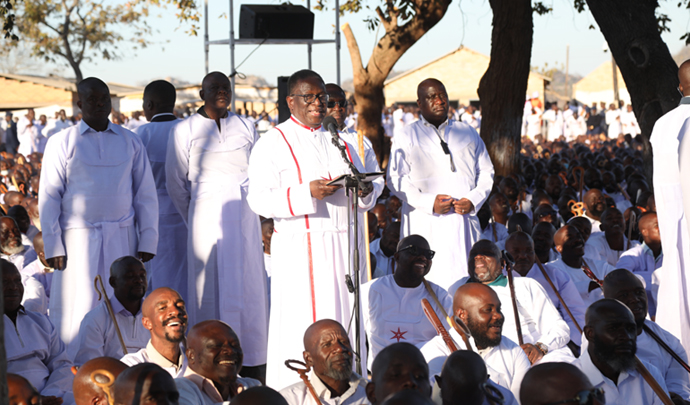
Samuel Kadungure
News Editor
MANICALAND’S economy has surged to an estimated US$3,2 billion, cementing the province’s position among Zimbabwe’s fastest-growing economic centres as major investments in agriculture, mining, energy, manufacturing and infrastructure drive industrial expansion under the National Development Strategy (NDS2) and Vision 2030.
Buoyed by a wave of new investments and large-scale development projects, the province is targeting economic growth of five percent this year, with authorities eyeing a long-term goal of expanding the provincial economy beyond the US$5 billion mark.
At the centre of the growth strategy is an ambitious drive towards value addition, beneficiation and agro-processing, backed by efforts to transform Mutare into a regional logistics and trade hub that leverages its strategic location along the Beira Corridor and proximity to Forbes Border Post.
The province’s impressive performance recently earned praise from President Mnangagwa, who commended Manicaland for rising to fifth place nationally in terms of Gross Domestic Product (GDP) contribution.
Addressing thousands of congregants during the 2026 Big Sabbath Service at the Johane Marange Apostolic Church’s Mafararikwa Shrine in Marange last Saturday, President Mnangagwa described the province as a model of development driven by alignment with national priorities.
“I commend Manicaland Province for the successes you are registering across all sectors. The province is now ranked number five in terms of its contribution to the overall national GDP,” said President Mnangagwa.
The President highlighted notable gains in agriculture, particularly wheat and dairy production, as well as growth in manufacturing and value-addition initiatives.
He challenged the province to consolidate its gains by embracing technology, expanding tourism and increasing high-value exports.
“Our nation is marching towards Vision 2030. I challenge the church to continue encouraging hard, honest work, productivity and production in all sectors as we develop our country,” he said.
President Mnangagwa also commended the Johane Marange Apostolic Church for its investments in education, skills development, entrepreneurship, sports and mining.
“The many empowerment projects undertaken by the church demonstrate its contribution to the growth of our economy. Well done,” he said.
Investment Momentum
According to the 2026 Biannual Investment List released by the Office of the Permanent Secretary for Manicaland Provincial Affairs and Devolution, the province attracted more than US$161 million in new investments during the first six months of the year.
Of this amount, US$59,17 million was recorded during the first quarter, while US$102,16 million was secured in the second quarter, reflecting growing investor confidence in the province.
Director for Economic Development in the Office of the Permanent Secretary for Manicaland Provincial Affairs and Devolution, Mr Munyaradzi Rubaya, said the investment inflows demonstrate the success of the Government policies and public-private partnerships in unlocking economic opportunities.
“The investment inflows we are witnessing in Manicaland are clear evidence that the province is open for business. Across agriculture, mining, energy, manufacturing and infrastructure, we are creating an enabling environment that allows investors to partner with Government in transforming livelihoods and creating employment opportunities,” said Mr Rubaya.
He noted that Manicaland’s GDP contribution currently stands at approximately US$3,2 billion, placing the province behind Harare, Bulawayo, Midlands and Mashonaland West.
Several high-value projects are spearheading the province’s economic transformation.
Among the major first-quarter investments were the US$25 million GMB Timber Mills AI-powered silos project in Headlands, the US$15 million Zimbabwe Ezekiel Guti University satellite campus in Chipinge, the US$5,6 million Dorowa Minerals mine revival project, and retail developments by Mega Family Choice and Quest Motors in Mutare.
The second quarter saw strong activity in energy, infrastructure and mining, including a US$32 million gold extraction and processing project in Mutasa, the US$15 million Mutare city renewal programme, the US$13 million Quest Motors expansion, and the US$10 million Redwing Mine revival project.
Other investments include irrigation development projects in Chipinge, Chimanimani and Buhera, the Mutema Irrigation Scheme revival, solar energy initiatives, youth empowerment programmes and new retail developments across the province.
Manicaland is increasingly positioning itself as a centre of value addition and manufacturing.
The province is benefiting from the establishment of a US$5 million pine resin plant, a US$2 million noodles manufacturing facility, a trailer assembly plant, a US$40 million pulp processing plant, a US$2,6 million water bottling facility, and an US$800 000 meat processing plant, among other projects.
Mr Rubaya said industrialisation remains central to the province’s development agenda.
“We are focusing on expanding industrial capacity through value addition and beneficiation. We are seeing major investments in manufacturing, agro-processing and mineral processing, which will create jobs, increase exports and strengthen economic resilience,” he said.
He also highlighted expansion plans by GreenFuel and Mega Market, alongside ongoing investments in roads, utilities and public infrastructure.
The Government is also investing heavily in transport and logistics infrastructure to unlock Manicaland’s strategic location as Zimbabwe’s gateway to the Indian Ocean.
Projects such as the Christmas Pass Bypass Road, modernisation of Forbes Border Post, and construction of the new Public Service Commission Dry Port are expected to significantly improve cargo handling and regional trade efficiency.
“The development of a dry port and the upgrading of key transport corridors will reduce congestion, lower logistics costs and improve the movement of goods between Zimbabwe and regional markets.
“These initiatives will strengthen the Beira Corridor and transform Mutare into a modern logistics hub capable of attracting additional investment and supporting regional trade,” said Mr Rubaya.
The province is also pursuing ambitious energy projects aimed at eliminating power shortages and supporting industrial growth.
Mr Rubaya revealed that South African-based Ilinge Energy Automation (Pvt) Ltd has pledged US$600 million towards the development of a 400-megawatt power plant on a 750-hectare site in Chimanimani.
In addition, VS Hydro has proposed mini-hydro power stations generating a combined 37 megawatts along the Gairezi, Nyangombe, Pungwe and Odzani rivers as well as Osborne Dam.
Currently, Manicaland generates approximately 46 megawatts from Independent Power Producers against an estimated daily demand of 120 megawatts.
Demand is projected to rise to about 200 megawatts over the next three years as mining, manufacturing, agriculture, tourism and residential development continue to expand.
If fully implemented, the planned 437-megawatt energy pipeline is expected to not only resolve the province’s power challenges but also position Manicaland as a net exporter of electricity.
Ends