Online Reporter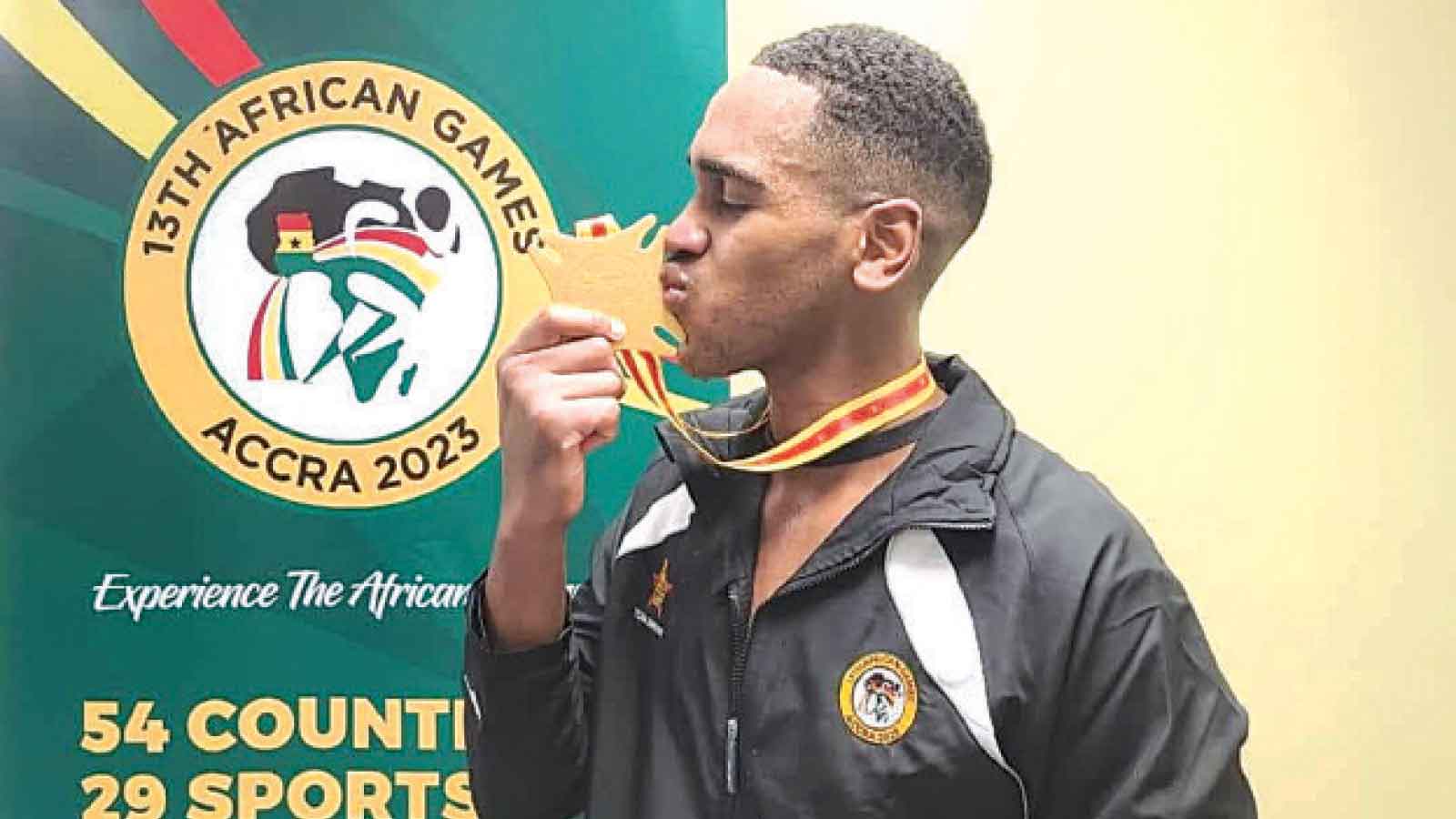
Tinashe Mukono-Zimpapers Sports Hub
AN Olympian at 23 should be chasing the next Games, but Denilson Cyprianos spends his afternoons on a pool deck in Bulawayo instead.
The young swimmers lining up before him are still learning how to hold their bodies straight in the water.
One boy struggles to keep his rhythm through a backstroke drill. Cyprianos steps forward, crouches beside the pool and demonstrates the movement with his hands, calm and patient, before sending the child back into the lane.
To the children, he is simply the coach guiding another training session.
Only a few fully grasp that the man offering those quiet corrections once raced at the Olympic Games.
Less than two years ago, Cyprianos was in Paris representing Zimbabwe in the 200 metre backstroke.
Today he is back at the Bulawayo Amateur Swimming Association pool where his journey began, helping youngsters find their rhythm in the same water that carried him to the biggest stage in sport.
For many who followed his rise, the return feels sudden. At 23, most swimmers are only beginning to approach their peak. Cyprianos appeared firmly on that path after years of steady progress through the international ranks. His career had already taken him from local pools in Bulawayo to university competition in the United States and onto the Olympic stage.
Yet the reality of elite sport in Zimbabwe eventually caught up with him.
“My whole career has been funded by my mother with minimal support,” Cyprianos says quietly. “It became difficult to continue competing at the highest level.”
The admission is a matter of fact, not bitterness.
Many athletes in Zimbabwe know the same struggle. Long before sponsorship arrives, families often carry the financial burden of training, travel and international competition.
For Cyprianos, the weight of that reality grew heavier as his career progressed.
“I do wish I could still swim,” he says. “But life has its own priorities. I also have to make a living.”
Swimming was never just a hobby in the Cyprianos household.
Denilson and his two brothers grew up around the BASA pool, introduced to the sport at an early age by their father.
Training sessions quickly became part of everyday life.
What began as routine soon revealed something special.
By his mid-teens, Cyprianos had already started rewriting national records.
At 16, he established himself as one of the country’s most promising swimmers, setting marks across several distances and drawing attention within Zimbabwe’s small but dedicated swimming community.
Recognition followed in 2019 when he was named runner-up for the Zimbabwe Junior Sportsperson of the Year after a string of dominant performances.
The next step in his career came two years later. In 2021, Cyprianos secured an athletic scholarship to South Dakota State University in the United States, a move that opened the door to one of the most competitive collegiate swimming environments in the world.
He adapted quickly to the higher level.
During one competition he won five events in a single meet, setting a team record that highlighted his rapid progress.
His performances later earned him an All-American honourable mention while he also helped establish new relay records for the university in the 400 metre and 800 metre events.
At the same time, he continued representing Zimbabwe internationally.
Cyprianos competed at the World Aquatics Championships and the African Swimming Championships before reaching one of the defining moments of his career in 2023 when he won gold at the African Games.
The result confirmed his place among the continent’s leading swimmers.
Soon after came the opportunity every athlete dreams of.
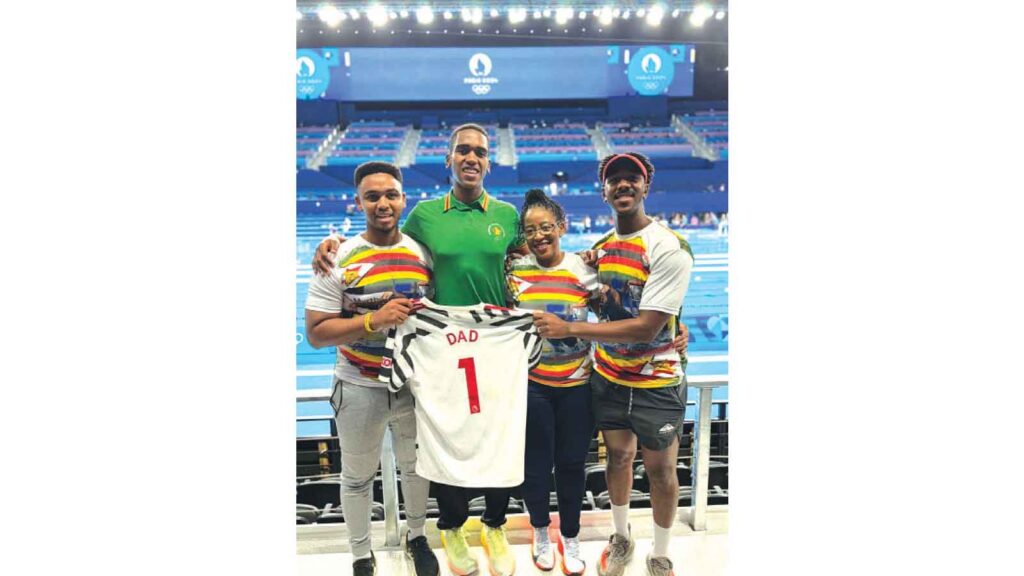
Denilson Cyprianos and his family during the 13th African Games in Accra, Ghana.
At the Olympic Games in Paris, he lined up in the 200 metre backstroke wearing Zimbabwe’s colours.
When he touched the wall, the clock read two minutes 1.91 seconds, a new national record.
He did not progress beyond the heats.
Still, his name was once again placed beside the Zimbabwe flag on the Olympic scoreboard.
For many athletes that moment becomes the beginning of another Olympic cycle.
Cyprianos admits he thought about what might come next.
“I would love to try for the 2028 Summer Olympics in Los Angeles,” he says.
“But my situation at the moment doesn’t allow it. It’s just a shift in priorities.”
His years in the US provided more than success in the pool. Cyprianos studied finance while on scholarship, building a foundation for life beyond competitive swimming.
These days he balances work with coaching sessions at BASA, returning regularly to the pool that first shaped his career.
Watching the young swimmers glide through their drills, he often sees echoes of his own childhood in their determination.
“I’ve experienced what it’s like to compete at the Olympics and come last in my heat,” he says with a small smile.
“Those performances are not prepared a week before the Games. They start when you’re a kid. That’s the message I want to spread.”
He believes Zimbabwe still has the ability to produce world-class swimmers if young athletes receive the right support early in their development.
“It would be amazing to see another swimmer reach the levels of Kirsty Coventry and even beyond,” he says.
“I’ve been a national record holder since I was 16. The next child who breaks those records should be supported so they can go even further.”
The afternoon session is winding down now.
The swimmers climb out of the water one by one, collecting towels and water bottles as their voices echo across the pool deck.
Cyprianos gathers them briefly before they leave, offering a few final reminders about technique and discipline.
Soon the deck grows quiet again.
He lingers beside the pool for a moment, watching the water settle.
It is the same place where his own journey began years ago, when he was just another young swimmer learning how to move through the lanes.
The Olympic lights may have faded for now, but here in this pool in Bulawayo, Cyprianos is still passing something forward.