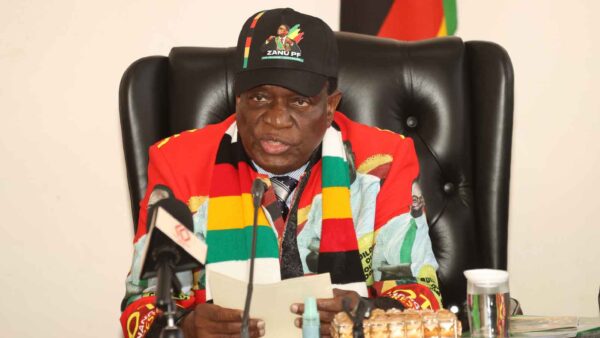
Ghanaian envoy Koma Steem Jehu-Appiah speaks to RT about his country’s enduring relations with Moscow and the sabotage of nationalist leaders
African nations are increasingly calling for a shift from a unipolar to a multipolar world order for greater autonomy in shaping their partnerships. This approach aligns with Russia’s own foreign policy position, providing a basis for expanding cooperation between Moscow and the continent.
Ghana, whose relationship with Russia dates back to the Soviet era, has experienced both growth and setbacks in its ties with Moscow. The 1966 coup in the country, allegedly orchestrated with US involvement, led to an abrupt termination of a nuclear project that had seen the Soviet Union helping Ghana establish Africa’s first atomic energy plant.
The US sought to depose Ghana’s first president, Kwame Nkrumah, due to his pro-Soviet policies and alleged anti-Western stance. This historic moment marked a turning point in Ghana-Russia relations, but the ties have since evolved into modern-day diplomatic and economic engagement.
The West African nation’s ambassador to Russia, His Excellency Dr. Koma Steem Jehu-Appiah, who presents himself as a product of long-standing Ghana-Russia ties, has been tasked with strengthening bilateral relations, in support of Ghana’s key initiatives, including the 24-Hour Economy ambition.
The envoy first arrived in Moscow as a medical student in 1980. After more than three decades, he returned to Russia, officially beginning his diplomatic tenure on January 15, 2026, when he presented his credentials to Russian President Vladimir Putin.
In this exclusive interview, Jehu-Appiah discusses the enduring Russia-Ghana friendship from its Soviet-era roots and the impact of US interference, Russia’s non-colonial image and Africa’s rising frontier of opportunity, non-aligned stance amid Western pressure, the sabotage of African leaders who sought control of their countries’ resources, and why Ghanaian students should seize the opportunity to study in Russia.
Q: Ghana and Russia share a long history of diplomatic ties. How would you characterize the current state of bilateral relations between the two countries?
Dr. Koma Steem Jehu-Appiah: Ghana’s relationship with Russia started during the Soviet Union era. Ghana had a strong relationship with the Soviet Union right from 1957 when we gained our independence. Our first president, Dr. Kwame Nkrumah, made a trip to the Soviet Union, came to Moscow, and met Leonid Brezhnev, the secretary-general of the Communist Party. They had a good rapprochement between the two of them.
They signed beneficial agreements between Ghana and the Soviet Union. The first atomic energy plant project in Africa was initiated in Ghana. That contract was first agreed upon in 1961, but officially signed in 1963, and construction of the plant began in Accra.
Unfortunately, Kwame Nkrumah was overthrown in 1966. Everything was abruptly stopped, and the equipment was removed from Ghana and sent to the US for study. Interestingly, after the coup, the CIA, which had orchestrated the coup, went to the Russian Embassy, ransacked it, and tried to find any evidence. They also ransacked the Chinese Embassy in Ghana to see if there was anything they could seize.
To cut a long story short, they took the equipment to the US for study. So, our relationship started very well. Similar to the Soviet Union, we had the Young Pioneers established in Ghana, and I was a member.
The Russian government at that time gave opportunities for Ghanaians to come and study here. We called them the “snowmen.” The snowmen came to study here right from the time of Kwame Nkrumah, and everything went well. Even after Kwame Nkrumah was overthrown, nothing was truncated. Our relationship continued to grow.
Q: Considering the shifting geopolitical landscape, are there any recent developments you consider especially significant in Ghana-Russia ties?
Dr. Koma Steem Jehu-Appiah: Unfortunately, for the last 10 years, until two years ago, the government in Ghana was not friendly to Russia, and so they made a lot of statements. For instance, our [former] president went to the US to talk about how Russians were supporting Burkina Faso, and that posed a challenge for Ghana. I think it was a very unfortunate statement.
But luckily for us, the current president, John Dramani Mahama, did part of his studies in Moscow, and he loves Russians. So the relationship has started to improve. The selling hand for me has been the fact that Russia, on its own, was able to invite Mahama, even when he was in opposition, and they supported him to launch his book, ‘My First Coup D’État’, translated into Russian. He came here [to Moscow] to launch it. So believe me, the relationship has been cordial.
I had an opportunity to meet President Vladimir Putin. And I told him that I want my president to visit this country on the 9th of May, that is Victory Day. For me, that would have sealed a good friendship between the two countries. But we are still working at it.
Q: Russia’s increased engagement in Africa has raised questions about its strategic goals. How does Ghana view Russia’s growing presence?
Dr. Koma Steem Jehu-Appiah: Do you know one thing about Russia that I like? They have never colonised any country. Russia did not colonise any country like other countries did. The geopolitics of the day meant some countries would not align with what the Soviet union believed in. But now it has grown warmer and warmer.
Since I’ve been here, from October last year, I’ve attended several programmes, and I realised that Russians have good intentions for Africa. And unfortunately, my country, Ghana, has not benefited much. But Russia has good relationships with Egypt, with Namibia, with South Africa. The BRICS, for instance. Some countries were voted to join BRICS. South Africa, Ethiopia, Egypt, they have joined. I was at a BRICS meeting in St. Petersburg last November, and I spoke at that programme.
So, for me, the relationship is building up, it’s warming up. With the multipolar world and Russians going through a lot of sanctions, I think they have turned their attention to Africa. Ghana will start to benefit.
We used to call Ghana the gateway to Africa. But I said we should change it. We should make Ghana the gateway and the destination. Yeah, because we cannot be a gateway where other countries will be the destination.
I’m here to live the dream of my president, John Mahama, who said Ghana is open for business. Before I came here, I organised a business forum for Ghanaian investors who want to travel to Russia. I invited the Russian ambassador in Ghana, Sergey Berdnikov, to listen to what Ghanaians think.
There are a lot of things that Russians can get from Ghana — culture, tourism, gold, cocoa products. I also spoke about organising an African tourist festival in Moscow so we can demonstrate what we have. Most Russians do not know what we have in Africa or what we have in Ghana. It [the engagement] should not be one direction. We should also have a situation where we can demonstrate what Ghana has for Russia.
Q: And how does Ghana view Russia’s role on the African continent and its influence within international organisations, like the UN?
Dr. Koma Steem Jehu-Appiah: I attended the last African Union meeting in Addis Ababa in 2016, which I believe was the final one that former Zimbabwean President Robert Mugabe attended. He made a passionate appeal to the UN, urging them to reconsider the composition of the organisation, particularly the Security Council, and to give Africa a stronger voice.
When the UN was initially formed, only four African countries were involved. Today, Africa has 54 countries, so why do we still lack representation on the Security Council?
It is crucial that we move from a unipolar world to a multipolar one, where all our voices can be heard. Russia has always supported us with goodwill.
Q: Several African countries have faced mounting pressure from Western countries to reassess their growing ties with Moscow amid the Ukraine conflict. Despite this, the majority of the continent’s leaders have remained resolute in their non-aligned position. How does Ghana navigate its diplomatic relationships with Russia while balancing its long-standing ties with Western governments?
Dr. Koma Steem Jehu-Appiah: We are a non-aligned country. The principle Ghana has maintained is to look forward, as Kwame Nkrumah said.
I lived through four presidents in the Soviet Union, right from Brezhnev to Gorbachev, and I knew what it stood for. I have read the history behind the relationship between Russia and Western Europe, NATO, and between Russia and Ukraine. It is a slippery area. Russia is on the side of peace, and I think that we will pray that a peaceful resolution will come to fruition.
So basically, Ghana’s relationship with any country is based on truth. Whichever partner wants to be peaceful, we want to go there. My president, Mahama, said we are resetting the economy. In resetting the economy, we need the whole world to join us. And Russia being Russia, and I know what it can do for other countries. I don’t want Ghana to be left out.
I would have thought that the whole of Africa should come together to fight one agenda. Africa has a huge population. We have all the mineral resources, human resources, and mineral resources. Africa is the world’s El Dorado, but it is not allowed to develop them.
Any leader who stood up to develop it, his life was truncated. I want to say, with Patrice Lumumba of the Democratic Republic of Congo, he was killed just because he wanted to nationalise their resources. Kwame Nkrumah’s role was truncated just because they thought it was too much for the West. Look at what is happening to Burkina Faso right now, to the young man, [its military leader Ibrahim] Traore. I’m happy he’s getting a lot of support from Russia.
So, for development, we know where we should go; we should turn towards that area where they give us support. — RT