Sifelani Tsiko-Fact Check Editor
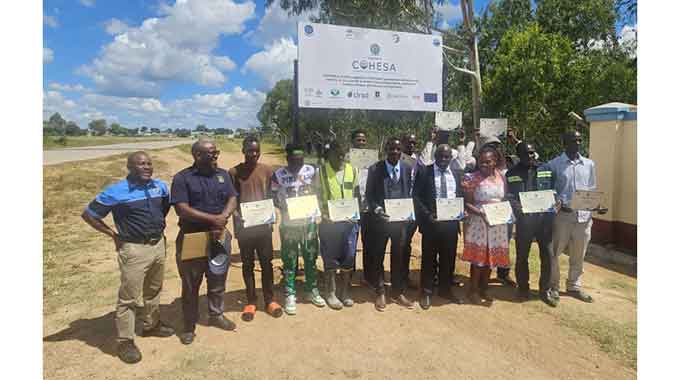
EIGHTEEN people in Guruve rural district were presented with certificates after completing training in the construction of biodigesters to promote the use of clean energy in rural areas.
The participants received the certificates at Chifamba High School in Guruve during a tour by delegates from 12 African countries who were attending the Capacitating One Health in Eastern and Southern Africa (Cohesa) conference, which was held recently in Harare.
Prof Kudakwashe Chitindingu, the Chinhoyi University of Technology lead implementer of the Transforming Waste to Resources (TW2R) project under the Cohesa programme, said the empowerment of rural folks to build biodigesters sought to help local communities to reduce over-reliance on firewood for energy.
He said that when the local community is empowered to build biodigesters, this will increase the country’s use of renewable energy and significantly improve public health.
“Under the TW2R project, we introduced biogas technology here in Gururve rural district as a way of transforming organic waste to clean energy,” he said.
“We managed to train 18 cadres who will replicate the knowledge they gained throughout the district.
“Deforestation is a major problem here in Guruve, and we want rural people to reduce over–reliance on firewood.”
The people were trained how to build new digesters that use agro-waste, such as cow dung, pig and chicken litter, to produce biogas directly used for cooking and heating.
“We honoured the 18 recipients as part of our efforts to bridge research and action around energy and the environment,” he said.
The Government regards the development of a sustainable rural biogas sector as a key mechanism for achieving the reduction of harmful greenhouse gas (GHG) emissions and effectively managing agricultural waste, especially from the livestock industry.
Beneficiaries were taught how to feed and operate the digesters. Deforestation in Guruve district is a serious issue driven primarily by agricultural expansion and the need for fuelwood, particularly for cooking, heating and tobacco curing.
This problem plays out in various parts of the country. The situation is serious in various parts of the country and such small and localised efforts on biogas use could help to stem the deforestation.
Energy is at the heart of all efforts aimed at attaining the country’s Vision 2030 of becoming an upper-middle-income economy, as well as a major driving force behind the attainment of all Sustainable Development Goals (SDGs).
In Zimbabwe, energy still remains a key enabler for many SDGs — from expanding access to electricity, to improving clean cooking fuels, from reducing wasteful energy subsidies to curbing deadly air pollution that each year prematurely kills thousands of people around the country.
Zimbabwe has approved its National Biofuels Policy and National Renewable Energy Policy as it aims to cut carbon emissions by 33 percent by 2030 and meet its projected electricity demand of 11 500 MW by 2030.