

 admin
admin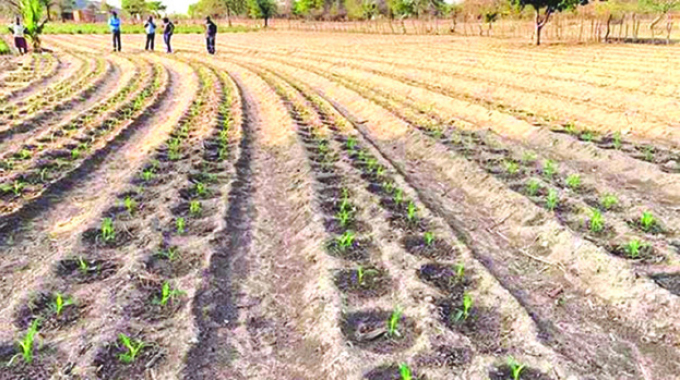
Obert Chifamba-Agri-Insight
IT’S that time of the year again, when bustling and hustling become the order of the day in the farming communities around the country!
All farmers — whether plying their trade on irrigated or dry land are racing to accomplish various tasks to ensure they do not fall behind the rest of their colleagues.
For now, it seems the commonest activity is planting, which is being inspired by the recent rains that left the soil moist enough to support the germination of crops.
It is, however, necessary for the farmers to avoid getting carried away and just do some activities because their counterparts are doing them.
They need to understand that each of them has different circumstances shaping the way they should be doing their work.
It is crucial to appreciate the fact that there are differences in soils and most importantly, the agro-ecological regions that determine the type of crops they have to plant and the time they have to do so.
In rain-fed production with erratic rainfall distribution, the date of the start of effective rain is a crucial factor in deciding when to plant and the crop variety to select.
Planting too early may lead to crop failure as critical growth stages may coincide with extended mid-season dry spells that have become a frequent occurrence while planting too late may reduce the growing season and deprive crops of the chance to utilise growth resources.
Both situations can contribute to yield reductions, hence the need to correctly detect when the effective rains start, the duration of the growing season and the time it will likely end when making important decisions.
It is no rocket science that different places received different rainfall amounts, which means they should logically be doing different activities in line with the moisture content levels in the soil.
Farmers who received less than 10mm of rains have no reason to be planting because the seed will be wasted after failing to germinate well.
Detecting the starting time of the rainy season is also crucial in determining sowing times and the planting criteria.
This will also help in choosing the appropriate varieties to plant in the country’s different agro-ecological regions in which the farmers are situated.
Farmers, therefore, need to work very closely with their extension officers as well as the Meteorological Services Department (MSD) or religiously follow weather bulletins for guidance.
Once a farmer is armed with that information, the risk of missing the expected planting dates becomes minimal, which will enable her to maximise the heat units that crops so direly need to perform optimally.
In Zimbabwe, for instance, the first half of the season — October to December — is known to possess the bulk of the heat units that crops need for optimal growth.
The more the farmer delays planting the less heat units the crops will get because they decrease with each day that passes, as the season edges towards the second and last half — January to March.
Some experts even argue that for every single day the farmer delays planting, there is loss in average yields of 50kg, which will translate to huge losses if the planting delays are not curtailed.
The long and short of it is that farmers must always remember that what their colleagues do elsewhere cannot be used as a guarantee that they can also copy and register the same success as their counterparts.
They need to come to terms with the harsh reality that the law of ‘the particular and the general’ has always set boundaries on what people should do.
If one farmer, for instance, does dry planting every year with his crops germinating with the first rains and growing to maturity tapping into the moisture present in the soil, the next farmer cannot assume that such a scenario can also be necessarily replicated on his field.
The rule of thumb is that when one is in doubt, he or she should seek help from colleagues in the know or extension officers, which in most cases will serve as the proverbial ‘stitch in time that saves nine.’
Some farmers fail not because they would have performed badly but because of making the wrong decisions and choices.
For now, farmers may need to take a cue from what the Government has done when it remodelled the Pfumvudza/Intwasa input distribution programme.
The Government essentially demonstrated that it is critical for farmers to appreciate their geographical locations when they make decisions on what crops to grow or activities to do.
The decision to distribute Pfumvudza/Intwasa inputs in line with the various agro-ecological regions across the country highlights the need to do the appropriate activities that match particular soil and climatic conditions.
This is purely a business informed decision because it seeks to maximise on the available resources rather than look outside for options that may come at a cost.
In a way, such a choice also promotes the use of locally available resources that come at less and affordable costs or even for free.
It does not make sense for a farmer in a region suitable for cattle ranching to try and do crop farming as the major activity but to concentrate on what performs to optimal levels while other options come in to play complementary roles.
Interestingly, the smallholder farmer category, which is key to ending hunger and under nutrition worldwide, is the one increasingly facing barriers to profitability.
Despite having to contend with this painful reality, the smallholder farmers are not a homogeneous lot and should therefore not receive the same kind of support in the event that a sponsor or contractor comes along.
They also do not need the same input requirements given the fact that they are situated in almost every corner of the country where conditions also differ.
Of course some of them need to be supported to move up to commercially oriented and profitable farming systems but in worst case scenarios there are some that should be supported to move out and seek non-farm employment opportunities.
This means that they need to be supported in whatever they would be doing so that they score good returns that will enable them to start something new and still be able to buy food and still support their families effectively.
In cases where food crops do not do well to support the farmer’s socio-economic situation, that farmer has to see, which other crop options can be produced at levels that are profitable enough to allow buying food sustainably, while meeting the socio-economic demands of the family.



 Online Reporter