

 Online Reporter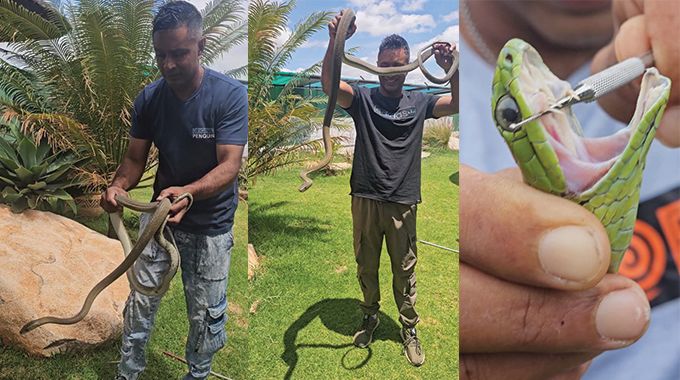
Stanford Chiwanga, [email protected]
FOR most people, a call about a snake in the house is enough to trigger panic. Hearts race, phones come out and everyone keeps a safe distance while waiting for help to arrive. For Ahmed Mohamed Esat, however, it is just another day at work.
Whether it is a cobra under a bed, a python in a garden or a Black Mamba lurking near a home, the Bulawayo snake catcher calmly answers the call, determined to protect both people and wildlife.
The wildlife educator has built a reputation for responding to snake emergencies across the city and surrounding areas. Through his social media videos, many Zimbabweans have come to know the calm, fearless man who removes some of Africa’s most dangerous reptiles from homes, gardens and workplaces. But behind the viral videos is a deeply personal story rooted in family, community service and a lifelong fascination with wildlife.
Growing up in Bulawayo, Ahmed enjoyed what he describes as a simple and happy childhood.
“We had a very carefree and family orientated upbringing with many weekends being spent at family functions either at relatives’ houses or out on picnics,” he recalls.
Interestingly, snakes were not part of his early life. Like many children, he grew up with pets, but reptiles were nowhere on the list. Everything changed when he reached Grade Six.
“As children we had all kinds of pets except snakes but this changed when I reached Grade 6 and my teacher, Mr Crispin Eley, introduced the class to reptiles, in particular snakes; and so the fascination began.”
That classroom introduction sparked a passion that would eventually shape his life’s work.
Unlike many wildlife professionals who receive formal training, Ahmed forged his own path. He learnt through observation, experience and years of dedication.
“I am a self-taught snake handler,” he says.
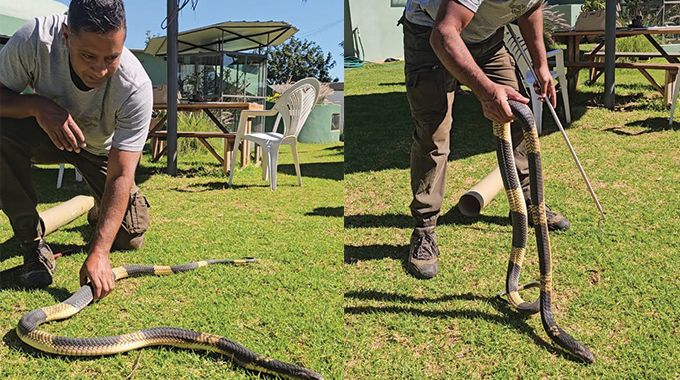
One of his earliest encounters with a dangerous snake remains fresh in his memory. He remembers catching a large Snouted Cobra, an experience that tested both his courage and composure.
“It was nerve-wrecking,” he says with a laugh.
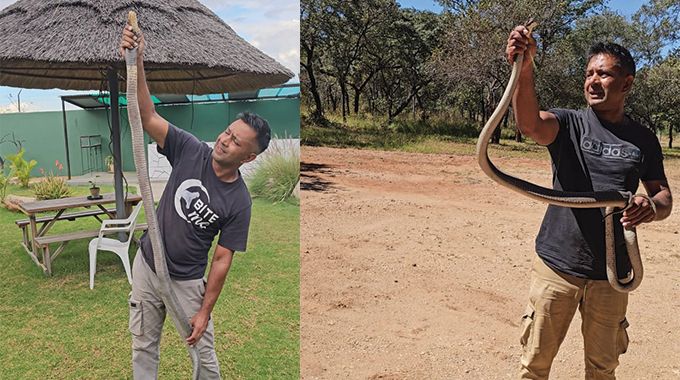
Today, handling snakes has become an everyday reality. Ahmed runs a snake park next to Water World in Bulawayo and divides his time between rescuing reptiles and teaching the public about them. Education, he believes, is just as important as rescue work, especially in a country where fear and misconceptions about snakes remain widespread.
His work follows strict conservation principles. When he catches a snake, the ultimate goal is not to destroy it but to protect both people and wildlife.
If the snake is a python, Ahmed records its weight and length, takes photographs and sends the information to the Zimbabwe Parks and Wildlife Management Authority (ZimParks). The animal is then either released or handed over to the authority for release. Most other species are relocated and released a safe distance away from human settlements.
Despite the risks involved, snake catching is not the lucrative profession many people imagine.
“Many people do not or cannot afford to pay anything but whatever I do receive goes towards fuel expenses,” he says.
The demands of the work consume most of his time, leaving little room for other income-generating activities.
Thankfully, he has a strong support system at home. His family understands the importance of what he does, even if some situations make them nervous.
“My family is very supportive, except when it comes to catching Black Mambas,” he says.
His children have become part of the journey, particularly his daughter, who often films him during snake call-outs. What began as simple documentation has strengthened their relationship and created lasting family memories.
“They enjoy coming on call-outs and are proud of me for helping others and always being there for the community.”
The videos have also introduced Ahmed to a wider audience. While social media fame has not translated into significant financial rewards, it has changed his life in other ways.
“Our videos have not changed my life financially but have definitely had an impact emotionally and socially; I do get a lot of people who recognise me from the videos.”
Wherever he goes, Ahmed is greeted with enthusiasm. Residents often gather to watch the rescue unfold, fascinated by the drama of the moment.
“Most people are very supportive and get excited when I arrive; people love action!”
His work also places him at the crossroads of science and culture. In many communities, snakes are surrounded by traditional beliefs, myths and superstitions. Ahmed has learnt that educating people requires patience and respect.
“I do encounter a lot of traditional beliefs and myths and have learnt how to navigate and educate people without offending.”
While he respects cultural views, his mission remains focused on promoting understanding and helping people see snakes as an important part of the ecosystem.
Ahmed’s connection to Bulawayo runs deep. The city is more than just his workplace; it is part of his identity.
“I am very much a truly proud Bulawayo person passionate about helping my people.”
Over the years, he has responded to hundreds of encounters, many of which remain unforgettable. Yet one stands out above the rest.
“The most memorable one was a huge Black Mamba I caught in an oily, diesel-filled flooded rabbit hutch.”
It was the kind of dangerous situation few people would willingly enter, but for Ahmed it was another opportunity to keep both people and wildlife safe.
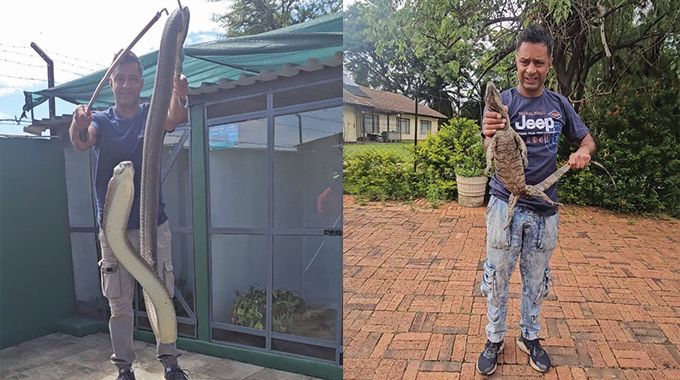
Of course, a profession built around handling reptiles comes with risks. He has suffered bites and injuries, though thankfully none from the deadly species he routinely faces.
“I have been bitten by pythons and leguans, and scratched, with some very close calls from cobras.”
Yet fear has never overshadowed his love for the animals. To Ahmed, snakes represent something far greater than danger.
“Strength, beauty and survival.”
Looking ahead, he has no plans to put down his snake hook anytime soon.
“As long as God keeps me strong I will continue helping others and saving wildlife,” he says.
His hope is to grow his work, expand his reach and eventually attract sponsorship and recognition that can support his conservation efforts. When asked how he would like to be remembered, his answer is simple but powerful.
“That I saved lives, one snake at a time.”


 Blessing Chizhande