

 admin
admina worrying matter in other cities and towns, the chaotic scenes on Harare’s roads were increasingly becoming a source of concern.
The presence of potholes, never-ending roadblocks, chaotic parking culture and dysfunctional traffic lights had added to the confusion.
The debate on whether there are now too many vehicles in the country still rages on and to bring a conclusive hypothesis to that assertion might also be misleading and a damning explanation to the irritating traffic flows, which most of the motorists experience notably during this rainy season.
To get from one end of the city to the other end even outside peak hours had become a nightmare and the City Fathers through their one-way road system presume it will ease the congestion worries in the city.
Lagos, the former capital of Nigeria, was famed for the worst traffic congestions in the world and the federal government had to introduce a new format where cars were authorised to travel on the roads on certain days linked to their number plates.
For instance, vehicles with number plates with the letters A to F will be allowed on the city roads from Monday to Wednesday and thereafter the successive plate digits will be authorised.
This saw the capital city being moved to Abuja after the chaotic structure brought about by years of lawlessness could not be reversed. It is time the Government reviews local authority policies as the quest to replace incompetent and corrupt councillors.
Most of our roads had become too narrow, a factor that will work against the country’s ability to use its centrality within the Sadc region to become the preferred transit route for traffic flowing into and out of the Southern African region.
To come across a haulage truck in the CBD should be a shocking scenario in spite of it being a common sight and no council authority seems to mind.
It is ironic that Municipal Police enjoy engaging in running battles with vendors selling vegetables as opposed to stamping out the rot just behind the Town House where light vehicles ply the Avondale-City route.
The costs of doing business in Zimbabwe is relatively higher than most of our regional peers, a dilapidated road network can only worsen the already higher cost base and the earlier that the Government realises that industry cannot regain its shape without such fundamentals being addressed, the better.
Most of the commuter omnibuses are charging US$1 for a trip within Greater Harare. The authorities seem to have run out of strategies to shield the impoverished populace from such unjustifiable price hikes.
Some traffic police just order commuter omnibuses to drop passengers anywhere even far away from their desired destination without any recourse on alternative transport to ferry passengers. This normally happens when a kombi is not roadworthy.
President Mugabe in his speech at the just-ended Zanu-PF conference bemoaned the corruption being perpetrated by traffic police on our roads.
The President pointed out that the police were allowing unroadworthy vehicles to continue plying the country’s road when they are well aware of their condition. It is high time passengers travelling in public transport were empowered to save their precious lives by even demanding a driving licence if they feel it’s necessary.
It is no longer a secret that there is corruption and this festive season calls for sterner measures against public transport operators.
Returning to the issue of too many cars on our roads, I personally do not subscribe to this assertion.
I believe that our problem is not that we have too many cars, but it is one of poor planning.
A trip to other nations like South Africa, Kenya, Nigeria will reveal the consequences of high traffic volumes.
The 20km journey from Jomo Kenyatta International Airport in Kenya to the CBD in Nairobi can take hours since cars will be moving bumper to bumper all the way.
In Harare, the congestion normally lasts for 2km in most instances, which is a symptom of a dysfunctional road network, and not too many vehicles.
A mere observation on a drive along Masvingo Road in the morning will prove that traffic congestion can only last up to Rothmans and after that the road becomes clear.
Our dilapidated railway system is putting pressure on our road network, by virtue of infrastructure standards, Zimbabwe is only next to South Africa in terms of railway network development but in terms of utilisation of the system, it is certainly the worst.
Transportation of raw materials and finished products continues to be a direct burden to those heavy industrialised companies operating at above 50 percent capacity utilisation as transport costs are both a private cost to the company and a social cost to the economy and the public.
Most of the public works programmes being carried out by the Government could not be completed given the miniscule allocation made in the Budget.
It took a couple of years for a dual carriageway to cover 10km from the CBD along both for Bulawayo and Masvingo highways.
The meagre allocation towards capital expenditure in our budgets in the past three years does not augur well for the development of the road network and the economics of transport remains a less harnessed discipline in our economy.
The one-way system, which is being employed at this juncture, is just but a short-term measure to ease congestion worries without solving the problem.
There is need to pour funds in rehabilitating our roads, the stark contrast between our roads and those that one encounter as they cross into Musina, South Africa, is testimony of how we had under-invested in our road network.
It needs just two metres of a floor transformation for one to notice you had crossed into South Africa, this is not good for our progress as a nation.
Our tollgate model is also embarrassing, leaving one questioning the quality of civil engineers who were awarded the contracts to construct such substandard structures. Let us build our roads as the only path to reinvigorate our economy.
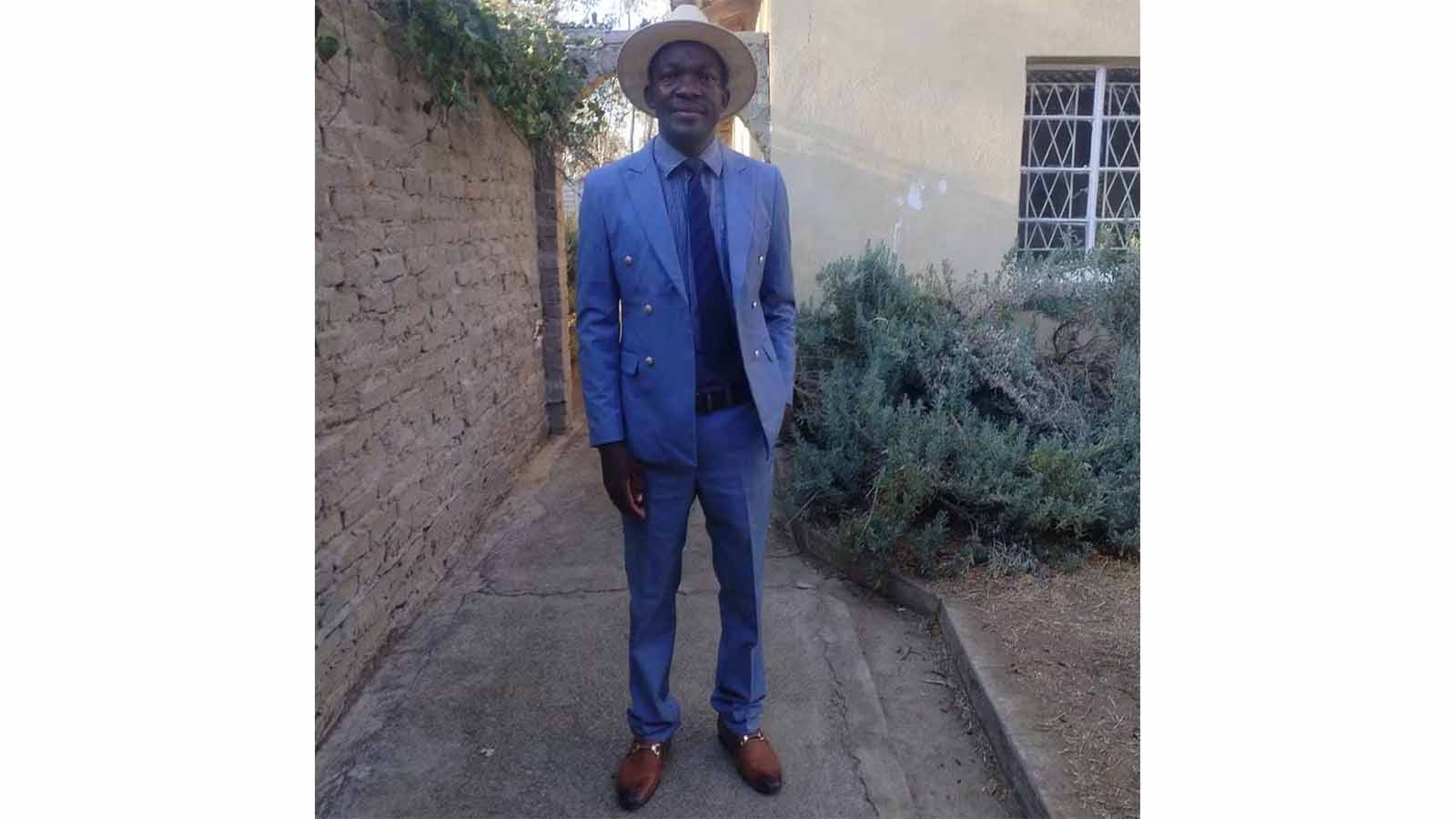
Christopher Takunda Mugaga is an economist. He is also the Head of Research for Econometer Global Capital, a regional finance and economics research firm. He can be contacted on [email protected] or 0772 340 353 / 0776 266 062.


 leeroy
 Online Reporter