Chronicle Editor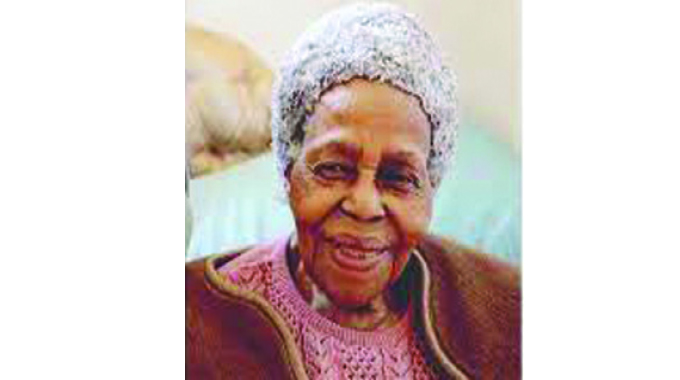
Andile Tshuma, Gender
It is high time we walked the talk on women’s and young people’s participation in politics.
From a gender perspective, the political environment in Zimbabwe is highly toxic and polarised as systemic barriers to the participation and representation of women are widespread.
Politics in Zimbabwe has traditionally been a male-dominated space.
According to the Zimbabwe Gender Commission (ZGC), women do not only constitute around 52% of the total population but are also the majority of voters in Zimbabwe. Despite these facts, women hold only 23% of elective parliamentary seats, 13,3% of local government seats and 48% of the Senate.
These unfortunate statistics are an affront to the aspirations of Zimbabweans for full gender equality (50-50) as captured in the Constitution.
Zimbabwe has registered low participation in politics from women owing to a number of reasons. In the 2018 harmonised elections women constituted only 13,3% of Local Government seats, 23% of Parliamentary seats and 48% of the Senate.
In some of the attempts to address these anomalies, the ZGC has stepped up efforts to rally women to participate in politics by designing a mentorship programme to build their confidence, especially those aspiring to join mainstream politics.
The commission, in a statement issued recently, bemoaned the high level of toxicity in the country’s political space deterring women’s participation, despite the fact that they constitute 52% of the total population, and thus were majority voters.
“The country’s political domain is infested with gender intolerance which often manifests in violence, name calling, body shaming, sexual exploitation and harassment, stereotyping and systemic exclusion — predominantly against women. It is these negative practices that have hindered meaningful participation and representation of women in politics other than as voters,” the commission said.
The programme dubbed “Women Rise in Politics” (WRiP), will be offered in partnership with UN Women, a United Nations agency dedicated to gender equality and the empowerment of women.
The programme is meant to train female candidates aspiring for political careers. The participants will be attached to specific women mentors to assist them with practical guidance and leadership.
The death of national heroine Cde Jane Lungile Ngwenya recently got many people and organisations talking about what a good example she had set and how much she had achieved in the political arena despite the challenges that women faced in political spaces.
However, this should be a pointer that after all efforts, conventions and agreements, women’s representation ought to have improved significantly, to show and reflect what the likes of uMama uJane Ngwenya and her peers fought for.
Cde Ngwenya left a rich legacy to guide gender parity discourse for the empowerment of women as part of her unparalleled contribution to the country.
Speaking at her funeral at the National Heroes Acre, President Mnangagwa said Cde Ngwenya, had left behind a rich and inspiring legacy that will continue to guide the gender parity discourse and associated policies for the empowerment of women and girls in particular.
“She gained a wealth of knowledge from various international and continental conferences on women, peace, politics and development. I thus exhort women and women organisations to continue promoting the ideals of Pan-Africanism and Ubuntu/Hunhu, which the late Cde Jane Ngwenya fought for,” said the President.
In 1960, Cde Ngwenya was the only woman who made it into the National Democratic Party leadership’s executive of 65 members and later became one of the founding members of Zapu. In 1977, she was one of those present when Cde Jason Ziyaphapha Moyo was killed by a parcel bomb in Zambia, an explosion which injured her.
In 1980, Cde Ngwenya was elected a Member of Parliament for Bulawayo and was appointed Deputy Minister of Labour, Manpower Planning and Social Welfare in 1982, during which period she oversaw the rehabilitation of returnees from the liberation struggle before she eventually retired from active politics to provide guidance and counsel on several national development issues.
With all her contributions and struggling, it is disheartening that the political spaces are yet to fully open up for women to enter and make their contributions to improve the lives of Zimbabweans.
Women are still under-represented in politics and in governance, locally and globally.
At every socio-political level, women, especially those in developing countries such as Zimbabwe and others in the Southern African Development Community (Sadc) countries, find themselves under-represented in parliament and far removed from decision-making levels.
South Africa ranks highest in the Sadc region in terms of representation of women in parliament with 45 percent, and is third in the global ranking.
A highlight of the 2018 Zimbabwe elections shows that all the 47 political parties that fielded candidates ignored the commitments to gender balance in the Constitution and national gender policy of Zimbabwe.
This publication recently reported that out of the 47 political parties that fielded candidates in the National Assembly, only 27 fielded at least one woman candidate. Approximately 15 percent (243) of 1 652 candidates contesting in the National Assembly were female and 146 women out of 290 candidates contested for Senate seats.
This is despite the country’s commitment to Sadc’s Declaration on Gender and Development which seeks 50-50 representation of men and women in parliament.
Research has shown that despite many countries signing and committing themselves to promoting gender parity in political participation, they end up shelving the agreements thereby leaving women to play outside the political ground.
The Government’s commitment to promote women’s inclusion in politics as enshrined in conventions, protocols and international agreements went a gear up at the inaugural Zimbabwe Local Government Association of Zimbabwe (Zilga) women councillors’ indaba which was held in December last year in Victoria Falls under the banner of the Women in Local Government Forum (WILGF).
However, for all this to make a difference, all these conventions, international agreements and protocols should be reflected by the status quo at grassroots levels.
As noted in the 2030 Agenda for Sustainable Development women’s equal participation with men in power and decision-making is part of their fundamental right to participate in political life, and at the core of gender equality and women’s empowerment.
It is important to note that strategies to increase women’s participation in politics have also been advanced through conventions, protocols and international agreements for gender mainstreaming, but they are yet to prove effective in achieving gender parity in the highest government rankings.
Given the fact that many developing countries have ratified international conventions and protocols on gender equality and women political participation, the low level of women’s representation in government and politics may be considered as a violation of their fundamental democratic rights.
The world will be a better place if more women and young people are allowed to make their contributions to development if they are given their rightful seats at decision making tables in politics and government. — @andile-tshuma


 Online Reporter