Online Reporter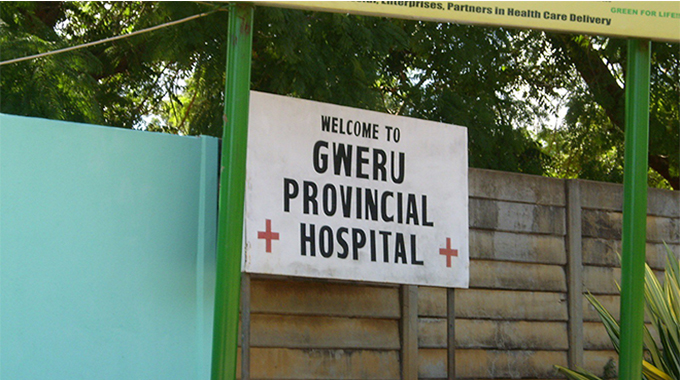
Rumbidzayi Zinyuke in GWERU
THE ongoing orthopaedic surgical camp at Gweru Provincial Hospital is helping clear a growing backlog of trauma-related cases, with dozens of patients receiving life-changing operations for fractures and other injuries sustained mainly through road traffic accidents and mining incidents across the Midlands Province.
The week-long initiative is targeting at least 30 patients who have been waiting for surgery, with 18 operations already completed by Thursday.
Head of Surgery at the hospital, Dr Brian Paketh, said the province’s strategic location along major highways and its extensive mining activities had contributed to a heavy trauma burden.
“Gweru Provincial Hospital is the referral centre in Midlands Province, and we are inundated with trauma cases. We have major roadways passing through the province, and these are sites of many road traffic accidents. We also have a lot of mining activities that result in trauma cases, which need to be managed here,” he said.
Dr Paketh said limited theatre space and shortages of orthopaedic implants often delayed treatment for patients with fractures and other serious injuries.
To address this, he said the hospital had introduced the trauma week, where patients on the waiting list are scheduled for surgery with dedicated theatre time specifically for them.
The surgeries are focusing mainly on bone injuries resulting from road traffic accidents and mining incidents, including hip, knee and upper limb fractures.
Dr Paketh said the Ministry of Health and Child Care had assisted by funding the procurement of implants, while private sector partners had also stepped in under public-private partnerships to support some of the procedures.
“Our concern is that trauma mainly affects the middle-aged working population, who should otherwise be contributing to the country’s economy but are stuck at home because of injuries. We also have elderly patients with fractures who risk losing mobility if they stay too long without treatment,” he said.
Among the beneficiaries was Rumbidzai Musekiwa, who survived a crocodile attack while crossing the Mbembeswane River in February.
“As we were crossing the river, I felt something grab my leg, and I knew that it was a crocodile. As it was trying to pull me toward the deeper end of the river, I managed to hold on to a tree with one arm and continued to push at its jaw with another until my aunt and her son arrived to rescue me. We fought with the crocodile for more than 30 minutes until they managed to insert a stick inside its mouth while attacking it. That is when it let go of me,” she said.
She was taken to Kwekwe hospital, where she received a pint of blood before being referred to Gweru Provincial Hospital.
“I stayed in the hospital from then until I finally got my surgery yesterday. I am grateful that I did not lose my leg,” she said.
Another patient, Mr Evans Dube, said he suffered a fractured thigh bone after an assault and had been transferred from Gokwe South District Hospital for surgery.
“When I came here, I received a donation for the implants used during my surgery, so I did not pay anything,” he said.
Acting Medical Superintendent Dr Johannes Mukwembi said the hospital was facing infrastructure and resource constraints as demand for specialist services continued to grow.
“We are still very much a provincial hospital in terms of infrastructure, although we are operating at the level of a central hospital in terms of the services we are offering. With all these specialists on board and the old ward system that we have, we struggle to accommodate patients. We only have two functional theatres excluding maternity, so dedicating one theatre to orthopaedics strains the system,” he said.
He said plans were underway to expand both ward and theatre space, although the projects required significant resources and longer implementation timelines.
Dr Mukwembi also appealed for support from partners and sponsors to help sustain future camps, particularly in funding patient care and procuring implants and consumables.
“These camps really benefit communities because most of the patients are breadwinners. If someone is hospitalised for months, they cannot fend for their families. Once operated on, they can return to their communities and resume productive lives,” he said.
The hospital plans to hold another orthopaedic camp in September, with hopes of making the initiative a quarterly programme.